

One bottle promises 100 billion CFU. Another highlights 20+ different strains. Some focus on gut health, others claim to support vaginal balance, immunity, or overall wellness.
But when every label sounds impressive, a simple question becomes surprisingly difficult:
Which probiotic is actually right for your body?
The truth is, the best probiotic for women is not always the one with the highest CFU count, the longest ingredient list, or the biggest health claims. What matters more is choosing clinically studied strains that match your specific needs — whether that means digestive comfort, vaginal microbiome support, or everyday wellness.
In this guide, we’ll break down what makes a women’s probiotic different, which strains have scientific support, how to read a supplement label, and how to choose a probiotic that fits your health goals.
Quick Comparison: Best Probiotics for Women
If you want to cut straight to recommendations, here’s the overview. I’ll go deeper on each below.
| Product Type | Best For | Key Strains to Look For | CFU Range | Testing Standard |
|---|---|---|---|---|
| Best Overall | General gut + vaginal health | L. rhamnosus GR-1, L. reuteri RC-14, B. longum | 10–50B | Third-party tested |
| Best for Vaginal Health | BV prevention, yeast balance | L. rhamnosus GR-1 + L. reuteri RC-14 (the clinically studied pair) | 1–10B | Clinically validated strain |
| Best for Digestive Balance | Bloating, IBS, bowel regularity | B. infantis 35624, L. plantarum 299v | 10–20B | IFOS or equivalent |
| Best Budget Option | General maintenance | L. acidophilus NCFM, B. lactis Bl-04 | 5–10B | USP verified |
| Best for Women Over 50 | Immune support + gut motility | B. longum BB536, L. reuteri DSM 17938 | 10–30B | Third-party tested |
A note on this table: I’m not naming brands because what matters is whether a product contains these specific strains — not who makes it. Check the Supplement Facts panel, not the front label.
What Makes a Probiotic Specially Formulated for Women?
Gut Health vs Vaginal Microbiome: Why Women May Have Different Needs
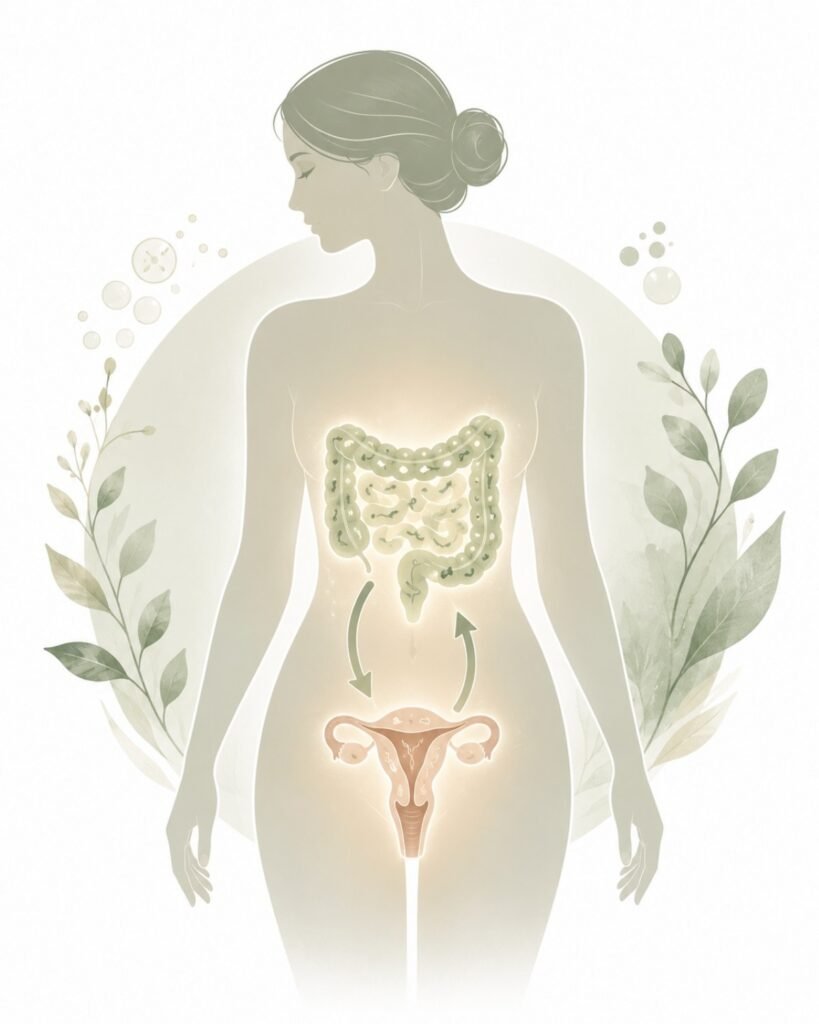
Women have two distinct microbiome systems that influence each other more than most people realize: the gut microbiome and the vaginal microbiome. These aren’t entirely separate. Research has demonstrated that gut Lactobacillus populations influence vaginal Lactobacillus colonization — meaning what happens in your intestines has a downstream effect on vaginal pH, microbial balance, and susceptibility to infections like bacterial vaginosis or yeast overgrowth.
The vaginal microbiome in healthy premenopausal women is uniquely Lactobacillus-dominant — a characteristic almost unique to humans among primates. Lactobacillus crispatus, L. gasseri, L. jensenii, and L. iners are the dominant species in a healthy vaginal environment. They produce lactic acid that keeps vaginal pH below 4.5, a level that’s inhospitable to most pathogens.
Disruptions to this balance — from antibiotics, hormonal changes, sexual activity, or stress — increase susceptibility to BV and yeast infections. This is why certain Lactobacillus strains, taken orally, have been studied specifically for vaginal microbiome restoration.
Men have the same gut probiotics needs (digestive health, immune function, microbiome diversity). They don’t have a vaginal microbiome. So yes — specific probiotic goals can be genuinely different for women.
Are Women’s Probiotics Actually Different From Regular Probiotics?
Some are. Some really aren’t.
Genuinely differentiated women’s probiotics contain clinically studied strains specifically researched for vaginal health outcomes — particularly Lactobacillus rhamnosus GR-1 and Lactobacillus reuteri RC-14, which have the most robust research of any oral probiotics for vaginal microbiome support. If a product labeled “women’s probiotic” contains these specific strains at clinically relevant doses, that label is meaningful.
Many products, however, are standard gut-health probiotic blends in pink packaging with the word “women’s” added to the front. They contain Lactobacillus acidophilus, B. lactis, and maybe a prebiotic — the same ingredients you’d find in any general probiotic — and the “women’s” positioning is marketing, not formulation.
How to tell the difference: flip to the Supplement Facts panel and look for specific strain designations (GR-1, RC-14, 35624, 299v). A product that lists only genus and species without strain identifiers (“Lactobacillus rhamnosus” without a strain code) can’t verify that the bacteria present match any clinical research.
Key Probiotic Strains for Women’s Health Supported by Science
Lactobacillus Strains for Vaginal Microbiome Support
Not all Lactobacillus strains do the same thing. This is the most important concept in this entire guide.
Lactobacillus rhamnosus GR-1 + Lactobacillus reuteri RC-14 (the clinically studied pair): These two strains together are the most rigorously studied oral probiotics for vaginal microbiome support. A randomized controlled trial published in FEMS Immunology & Medical Microbiology found that oral supplementation with this pair for 28 days significantly increased Lactobacillus counts in vaginal flora compared to placebo. Multiple subsequent studies have found reductions in BV recurrence and vaginal dysbiosis. If vaginal health is your primary goal, look for products that contain both of these strains by name, at 1–10 billion CFU per strain.
Why strain designation matters: L. rhamnosus GR-1 is not the same as L. rhamnosus GG (which has excellent evidence for gut infections and antibiotic-associated diarrhea, but different documented properties for vaginal health). The GR-1 in the strain name isn’t decoration — it identifies the specific bacterial population that has been researched and grown for that clinical purpose.
Other Lactobacillus strains relevant to women:
- L. rhamnosus HN001: studied for reducing eczema risk in infants when taken during pregnancy and breastfeeding
- L. reuteri DSM 17938: evidence for gut motility and infant colic; less vaginal-specific
- L. gasseri SBT2055: some evidence for body composition and vaginal colonization support
Bifidobacterium Strains for Digestion and Bloating
For gut-focused goals — bloating, constipation, IBS, bowel regularity — Bifidobacterium strains are generally the more relevant genus. They colonize the large intestine, ferment prebiotic fibers into short-chain fatty acids, and modulate the gut immune environment.
Key strains for women’s digestive health:
Bifidobacterium infantis 35624: The most specifically studied strain for IBS symptom relief, with a landmark RCT showing significant improvements in bloating, abdominal pain, and bowel urgency compared to placebo. If bloating is your primary concern, this is the strain to look for.
Bifidobacterium longum BB536: Evidence for reducing seasonal allergy symptoms, supporting immune function, and improving gut comfort — particularly relevant for women over 50 as Bifidobacterium populations naturally decline with age.
Bifidobacterium lactis DN-173 010: The strain in Activia yogurt; documented evidence for improving gut transit time and reducing constipation. If slow bowel movements are a consistent issue, this strain has specific clinical backing.
Why Strain Names Matter More Than Total CFU Count

Here’s how to decode a probiotic label — because once you understand this, you’ll never be fooled by “50 billion CFU!” marketing again.
Probiotic identity follows a three-level system:
Genus → Species → Strain
Lactobacillus → rhamnosus → GR-1
The genus (Lactobacillus) tells you the broad category. The species (rhamnosus) tells you which member of that category. The strain identifier (GR-1) tells you which specific population has been studied in clinical trials.
When you see a label that says only “Lactobacillus rhamnosus 5 billion CFU” with no strain identifier — that could be any strain of L. rhamnosus. It might have properties similar to GR-1 or GG. It might have no clinical evidence for your specific goal. You genuinely don’t know.
Before buying, flip the bottle and check these three things:
- Is a strain identifier listed after the species name?
- Does the CFU count say “at expiration” or “at time of manufacture”? (At expiration is more reliable — bacteria die over time.)
- Is there a third-party testing seal (IFOS, USP, NSF, Informed Sport)?
How We Selected the Best Probiotics for Women
At Optuvit, we don’t rank based on affiliate commissions or which brands send us samples. Our evaluation framework:
Clinical Evidence Behind Specific Strains
We start with the strain, not the brand. Is the strain present in a product the same strain that was used in published randomized controlled trials? Does the dose match what showed efficacy in those trials? A beautiful product with no clinical evidence for its specific strains gets a low rating regardless of price.
Third-Party Testing and Label Transparency
The supplement industry is loosely regulated. A product that says “50 billion CFU” on the label might contain far fewer viable organisms by the time you buy it, due to poor manufacturing practices, inadequate storage, or inflated manufacture-time counts. Third-party testing by IFOS, NSF International, or USP independently verifies potency, purity, and contamination levels.
Survivability: Can Probiotics Actually Reach Your Gut?
Probiotic bacteria face two major challenges getting from the capsule to your colon alive: stomach acid (pH 1.5–3.5) and bile salts in the small intestine. Technologies that improve survival include:
- Enteric coating (prevents dissolution until the small intestine)
- BIO-tract or MAKTREK technology (controlled-release delivery)
- Spore-forming strains (naturally more resistant to stomach acid)
- Taking with food (food buffers stomach acid and shortens transit time)
A high-CFU product with poor delivery technology may deliver fewer viable bacteria to your gut than a lower-CFU product with good encapsulation.
CFU vs AFU: What Numbers Really Mean
CFU (Colony Forming Units): Traditional measurement — counts viable bacteria capable of reproducing into colonies. Standard and widely used.
AFU (Active Fluorescent Units): A newer flow cytometry-based measurement that can detect both actively reproducing and metabolically active bacteria that might not form traditional colonies. Some manufacturers use AFU counts because they tend to be higher than CFU for the same product — it’s not inherently more meaningful, just a different (and sometimes more favorable) counting method.
For comparison purposes: focus on whether the product lists CFU or AFU “at expiration,” which strain is present, and whether there’s independent verification — not just the headline number.
Before Buying Checklist: What to Check Before Choosing a Probiotic
A probiotic label can be confusing, but a few simple checks can help you choose a formula that fits your needs.
Before adding one to your routine, look for:
✓ Specific Strain Names
Choose products that list the complete strain information, such as Lactobacillus rhamnosus GR-1, not just the bacteria species.
✓ Evidence Over Bigger Numbers
A higher CFU count does not always mean better results. Focus on clinically studied strains and quality.
✓ Third-Party Testing
Look for transparent brands that verify purity, potency, and label accuracy.
✓ Storage & Daily Convenience
Consider refrigeration needs, capsule size, travel use, and whether it fits your routine.
✓ Give Your Body Time
Most probiotics need consistent use for several weeks before you can fairly evaluate results.
Simple takeaway:
The best probiotic is not the one with the biggest number — it is the one that matches your body’s needs.
Our Top Evidence-Based Probiotic Recommendations for Women
Best Overall Women’s Probiotic
What to look for: A product containing L. rhamnosus GR-1 + L. reuteri RC-14 for vaginal health support, combined with one or more Bifidobacterium strains for gut health, at 10–50 billion CFU total, with third-party testing verification.
- Best for: Women who want both gut and vaginal microbiome support in one product
- Key strains: L. rhamnosus GR-1, L. reuteri RC-14, B. longum or B. lactis
- CFU range: 15–50 billion at expiration
- Why it may be a good fit: Covers the two primary women’s health probiotic goals without requiring separate supplements. Most convenient for daily compliance.
- Who should consider: Women with a history of recurring vaginal infections who also want general digestive support
Best for Vaginal Health Support
What to look for: Products containing specifically L. rhamnosus GR-1 and L. reuteri RC-14 — the pair with the strongest RCT evidence for oral supplementation and vaginal microbiome benefit.
- Best for: Women with recurrent BV, yeast infections, or vaginal dysbiosis
- Key strains: L. rhamnosus GR-1 + L. reuteri RC-14 (both must be present)
- CFU range: 1–10 billion per strain is sufficient; research didn’t show benefit from dramatically higher doses
- Why it may be a good fit: Most targeted option for vaginal microbiome goals; smaller capsules than multi-strain products
- Who should consider: Women whose primary concern is vaginal health rather than gut symptoms
Best for Sensitive Digestion
What to look for: Single-strain or simple two-strain products with gentle, well-studied strains. Simpler formulas tend to cause less initial GI adjustment.
- Best for: Women with IBS, sensitive gut, or who’ve had bad reactions to complex multi-strain products
- Key strains: B. infantis 35624 (for IBS/bloating) or L. plantarum 299v (for abdominal pain)
- CFU range: 10–20 billion
- Why it may be a good fit: Fewer strains means less fermentation disruption during the adjustment period; cleaner products for sensitive systems
- Who should consider: Women who’ve tried probiotics before and experienced significant gas or bloating that didn’t resolve
Best Synbiotic Formula
What to look for: Products that pair a well-studied probiotic strain with a specific prebiotic fiber known to feed that strain — not just any fiber blend, but a targeted pairing.
- Best for: Women who want to support both microbiome diversity and bacterial activity
- Key strains: B. longum or B. infantis paired with FOS or inulin (which specifically feed Bifidobacterium)
- Why it may be a good fit: The prebiotic helps the probiotic establish and remain active longer; more complete microbiome support than probiotic alone
- Caveat: If you’re FODMAP-sensitive, the prebiotic fiber component (inulin, FOS) may cause bloating; start with a lower dose
Best Affordable Daily Option
What to look for: Products with two to three well-studied strains (not 20 underdosed strains), third-party verified, at a price that makes daily supplementation sustainable.
- Best for: Women who want a reliable daily probiotic without spending $60/month
- Key strains: L. acidophilus NCFM + B. lactis Bl-04 — both well-studied, widely available, and effective for general gut health
- CFU range: 5–15 billion is sufficient for maintenance
- Why it may be a good fit: Fewer strains often means higher dose per strain; more affordable long-term
- Who should consider: Healthy women without specific gut or vaginal concerns who want general microbiome maintenance
Best for Mature Women (Over 50)

What to look for: Products that address the specific microbiome changes that occur with menopause and aging — declining Bifidobacterium populations, changes in gut motility, and shifting immune function.
- Best for: Women over 50, perimenopausal and postmenopausal women
- Key strains: B. longum BB536 (immune support, gut comfort), L. reuteri DSM 17938 (gut motility), B. lactis HN019 (bowel regularity)
- CFU range: 10–30 billion
- Why it may be a good fit: Bifidobacterium decline is measurably associated with aging; targeted support for this genus addresses age-specific microbiome changes
- Who should consider: Women experiencing more frequent constipation, increased susceptibility to infections, or vaginal dryness associated with menopause (vaginal microbiome also changes significantly after menopause)
How to Choose the Best Women’s Probiotic for Your Body
For Frequent Vaginal Discomfort
If you deal with recurring BV or yeast infections, your primary goal is vaginal microbiome restoration. The most direct path: L. rhamnosus GR-1 + L. reuteri RC-14 taken daily for at least 4–8 weeks. These strains are taken orally — they don’t need to be applied vaginally to influence the vaginal microbiome through the gut-vaginal axis. Take them consistently regardless of whether you’re in a symptom-free period; the goal is prevention, not just reactive treatment.
Also worth knowing: antifungal medication (like fluconazole for yeast infections) doesn’t kill Lactobacillus bacteria — you can take a probiotic during a yeast infection treatment course without interference.
For Bloating and Digestive Issues
If bloating, unpredictable bowels, or IBS are your primary concerns, shift your focus to Bifidobacterium-dominant products rather than Lactobacillus-dominant ones. Bifidobacterium infantis 35624 has the strongest IBS-specific evidence. Pair it with adequate prebiotic fiber intake (garlic, oats, legumes) to fuel the bacteria once they arrive.
Give it 6–8 weeks minimum. Most women who report probiotics “don’t work” for bloating assessed results at 2 weeks — right in the middle of the gut adjustment period.
For Busy Working Women Under Stress
Chronic stress affects gut microbiome composition through the HPA axis — cortisol increases gut permeability, alters motility, and shifts bacterial populations. The gut-brain connection is real, and there’s emerging evidence for probiotics supporting stress resilience through the gut-brain axis (particularly B. longum 1714 in one notable trial).
But let’s be honest about the magnitude: probiotic supplementation for stress management is an adjunct, not a solution. If you’re running on 4 hours of sleep and back-to-back meetings, a probiotic won’t fix that. It might help at the margins — supporting gut comfort when stress flares your digestion, maintaining immune function when you’re depleted. That’s a reasonable expectation.
What actually helps for stress-related gut symptoms: consistent daily probiotic use (consistency matters more than dose), adequate prebiotic fiber, and reducing alcohol — all three support a more resilient microbiome under stress conditions.
For Women Over 50
Menopause changes everything about the microbiome. Estrogen decline directly affects both the gut microbiome diversity and the vaginal Lactobacillus dominance that characterized younger years. Women in perimenopause and beyond often experience more frequent UTIs, vaginal dryness, changed bowel habits, and increased susceptibility to illness — all microbiome-influenced.
For this group, I’d prioritize Bifidobacterium restoration (BB536 or similar strains) for gut health and immune support, alongside L. rhamnosus GR-1 + L. reuteri RC-14 for vaginal microbiome support. The combination addresses the age-specific shifts rather than treating a 55-year-old woman’s microbiome with a product designed for the challenges of someone in their 30s.
Synbiotics and Postbiotics: Helpful Upgrade or Marketing Trend?
When Prebiotics Can Help
A synbiotic — a product combining a probiotic with a prebiotic fiber — genuinely makes sense when the prebiotic is matched to the probiotic strain it accompanies. Bifidobacterium species specifically ferment FOS and inulin; a product pairing B. longum with inulin is giving that strain its preferred fuel source, which can enhance its survival and activity in the colon.
If you’re already eating a high-fiber diet with garlic, onions, oats, and legumes, you’re essentially creating this synergistic effect through your diet — the prebiotic supplement component may be less necessary.
When Extra Ingredients Aren’t Necessary
Some products add enzymes, vitamins, adaptogens, and herbal extracts to a probiotic formula and charge $70 for the combination. In most cases, these additions haven’t been tested alongside the probiotic strains in combination — you’re paying for a compound product where the individual ingredient evidence is far stronger than any evidence for the combination.
My take: if you need digestive enzymes, get them separately at a validated dose. If you want ashwagandha, get a standardized extract. Stacking everything into one capsule often means each component is present at a dose that’s below what showed clinical benefit in standalone research.
For most women, the highest-value probiotic purchase is a transparent product with 1–3 well-studied strains, adequate CFU at expiration, and independent testing verification.
Potential Side Effects and How to Take Probiotics Safely
Common First-Week Changes
Starting a new probiotic — especially a higher-CFU product or one with strains your gut hasn’t encountered before — often produces a week or two of increased gas, bloating, and changed bowel habits. This is a fermentation adjustment effect, not a sign that the product is wrong for you.
The gut microbiome is recalibrating to new bacterial populations. New bacteria alter the fermentation dynamics, producing more short-chain fatty acids in the adjustment period. Most women find this peaks around days 3–7 and then gradually improves through week 2.
If you tend toward a sensitive gut: start at half the labeled dose for the first two weeks, then build to full dose. This dramatically reduces the adjustment period discomfort.
How Long Before You Notice Results?
For vaginal health: some women notice changes in 4 weeks; the most robust research used 8-week supplementation periods.
For bloating and IBS: clinical trials showing significant benefit ran for 4–12 weeks. Assess at 8 weeks, not 2.
For general maintenance: it’s less about noticing a dramatic change and more about the gradual composition shift in your gut microbiome over months of consistent use.
Taking Probiotics With Antibiotics
Take your probiotic at least 2 hours away from your antibiotic dose — if taking an antibiotic in the morning, take the probiotic at midday. The antibiotic will reduce bacterial probiotic viability if taken simultaneously.
Exception: Saccharomyces boulardii (a yeast probiotic) is antibiotic-resistant and can be taken at the same time as your antibiotic dose. This makes it the most practical choice for antibiotic-associated diarrhea prevention during the course.
After finishing antibiotics: continue the probiotic for at least 2 weeks post-course to support microbiome restoration.
Who May Not Need a Women’s Probiotic?
This matters — and most probiotic content doesn’t say it.
If you eat fermented foods daily: A bowl of yogurt with live cultures, a serving of kimchi, a glass of kefir — these provide meaningful probiotic exposure. If this is genuinely your daily reality, and you don’t have specific gut or vaginal health concerns, a probiotic supplement may not add meaningfully to your existing exposure.
If your digestion is reliably comfortable: Not everyone needs to supplement. A diverse diet high in prebiotic fiber, fermented foods, and minimal processed food is a more powerful gut health intervention than any supplement. If that description fits you, save the $40/month.
If you’re taking probiotics “just because”: Probiotics work for specific goals. If you can’t articulate what you’re taking it for, you won’t know whether it’s working, whether to continue, or whether to adjust. Be specific about the goal — then assess whether the evidence supports that goal.
None of this means probiotics are unnecessary or oversold across the board. For women with recurring vaginal infections, IBS, post-antibiotic gut disruption, or menopausal microbiome changes, the evidence for benefit is real and meaningful. But “I should probably be taking a probiotic” isn’t a strong enough rationale for ongoing supplementation if nothing specific is driving it.

Frequently Asked Questions
How long does it take for women’s probiotics to start working? It depends on your goal. For digestive symptoms like bloating and IBS, expect 4–8 weeks of consistent use before meaningful improvement. For vaginal microbiome support, research used 4–8 week supplementation windows. For immune support and general microbiome changes, benefits are cumulative over months rather than weeks. Don’t assess at two weeks — it’s too early to draw conclusions.
What probiotic strains are best for vaginal health? Lactobacillus rhamnosus GR-1 and Lactobacillus reuteri RC-14, taken together, have the most rigorous clinical evidence for oral probiotic support of vaginal microbiome health. These two specific strains — not just any L. rhamnosus or L. reuteri — have been studied in multiple RCTs for reducing BV recurrence and supporting vaginal Lactobacillus dominance.
Is a higher CFU count always better? No — and this is the most widespread misconception in the probiotic market. A well-studied strain at 5 billion CFU outperforms an unstudied strain at 100 billion CFU for any specific health goal. What matters is strain identity, dose matching clinical research, CFU at expiration (not at manufacture), and independent testing verification. Focus on those before looking at the CFU headline.
Can I take probiotics while taking antibiotics? Yes — take them at least 2 hours apart from your antibiotic dose. The antibiotic will reduce viability of bacterial probiotics if taken simultaneously. Saccharomyces boulardii is the exception — as a yeast, it’s antibiotic-resistant and can be taken at the same time. Continue the probiotic for 2 weeks after finishing the antibiotic course to support microbiome recovery.
Should women’s probiotics be refrigerated? It depends on the formulation. Some probiotic strains require refrigeration to maintain viability; others use stabilization technology (freeze-drying, spore forms, or specialized encapsulation) that allows room-temperature storage. Check the product label — if it says refrigerate, refrigerate it. Shelf-stable products stored properly (away from heat and humidity) are generally fine at room temperature.
Are probiotics safe to take every day? Yes, for healthy adults — daily use is appropriate and often recommended for ongoing conditions like IBS where the benefit depends on continuous bacterial presence. There are no established harmful effects of long-term daily probiotic use in healthy women. People with severely compromised immune systems should discuss probiotic use with their physician first.
Do probiotics help with bloating? Yes, for many women — particularly those with IBS or functional gut symptoms. Bifidobacterium infantis 35624 and Lactobacillus plantarum 299v have the strongest strain-specific evidence for IBS-related bloating. Give it 6–8 weeks before evaluating; bloating often worsens slightly in the first week as the microbiome adjusts before improving.
What’s the difference between probiotics, prebiotics, and postbiotics? Prebiotics are non-digestible fibers that feed beneficial gut bacteria — found in garlic, oats, and bananas. Probiotics are the live beneficial bacteria themselves. Postbiotics are the bioactive compounds those bacteria produce during fermentation — particularly short-chain fatty acids like butyrate that nourish colon cells and regulate immune function. They work sequentially: prebiotics feed probiotics, which produce postbiotics. For more detail, see our full guide: Prebiotics vs. Probiotics vs. Postbiotics: What’s the Difference? (C4)
Final Thoughts
There is no single best probiotic for every woman — and that is exactly why understanding your own needs matters.
Your microbiome is influenced by your lifestyle, age, diet, stress, medications, and daily habits. The right probiotic is not always the one with the highest CFU count, the longest strain list, or the biggest claims on the bottle.
Start with your goal — whether that is vaginal health, bloating, digestive balance, immune support, or recovery after antibiotics. Look for clinically studied strains, transparent labels, and third-party testing. Most importantly, give your body enough time and consistency before deciding what works for you.
At Optuvit, we believe supplements should support your health journey — not complicate it. Better choices begin with understanding your body, not chasing every new wellness trend.
Because lasting wellness is not about adding more. It is about choosing what truly helps you feel your best, one small step at a time.
🦠 Optuvit Probiotic Notes: The Science Behind This Guide
Choosing the right probiotic is not just about finding the highest CFU count or the longest strain list.
The goal is to understand which strains match your body’s needs — whether that’s digestive balance, vaginal microbiome support, or everyday wellness.
This guide is based on research covering:
🧬 Probiotic Strains & Microbiome Health
Clinical studies on Lactobacillus, Bifidobacterium, and strain-specific benefits for women’s health.
🔬 Supplement Quality & Safety
Evidence on strain identification, CFU accuracy, survivability, and third-party testing standards.
🌿 Everyday Probiotic Use
Research-backed guidance on timing, consistency, antibiotics, and safe long-term supplementation.
Better health is rarely about taking more.
It’s about choosing what actually supports your body.
Complete Probiotic Guide Series
Each article below covers one aspect of probiotic supplementation in greater depth:
- What Are Probiotics? Strains, CFU, and How They Actually Work (C1)
- Probiotic Benefits: What the Research Actually Shows (C2)
- Probiotic Strains Explained: Lactobacillus, Bifidobacterium, and Saccharomyces (C3)
- Prebiotics vs. Probiotics vs. Postbiotics: What’s the Difference? (C4)
- How Long Do Probiotics Take to Work? A Realistic Timeline by Goal (C5)
- Probiotics for IBS, Bloating, and Gut Health (C6)
- Can Probiotics Cause Diarrhea, Gas, and Bloating? Side Effects Explained (C7)
At Optuvit, we believe better health starts with understanding your body — not overwhelming it.
Small, informed choices today can become the foundation of a healthier tomorrow.
Listen to your body, choose with knowledge, and build a healthier routine that truly works for you.