

Most products labeled “vegan collagen” don’t actually contain collagen—and that’s where much of the confusion begins.
The phrase vegan collagen is often used to describe products that are fundamentally different. Some are built around nutrients that help your body make collagen naturally. A much smaller number involve advanced biotechnology that produces real collagen without using animal ingredients. Understanding which is which can save you from paying premium prices for a product that isn’t what you think it is.
If you’ve ever compared two vegan collagen supplements and wondered why they look similar on the shelf but have completely different ingredient lists, you’re asking the right question. The name on the front of the bottle tells you very little. The ingredient list tells you almost everything.
This guide explains what vegan collagen actually means, how to evaluate ingredient labels with confidence, what current research says about effectiveness, and the practical steps you can take to support your body’s collagen—whether you choose a supplement or not.
Overview
Choosing a vegan collagen supplement isn’t as simple as reading the front of the label. Products sold under the same name can be built on completely different ingredients and supported by very different levels of scientific evidence.
In this guide, you’ll learn:
- what vegan collagen actually means—and why the term is often misunderstood
- how collagen boosters differ from true recombinant vegan collagen
- which ingredients have the strongest scientific support
- how vegan formulas compare with animal-derived collagen peptides
- practical ways to protect your body’s natural collagen through diet and lifestyle
- what to look for before buying a supplement
Whether you’re trying to support your skin, joints, or overall healthy aging, this guide will help you make an evidence-based decision rather than relying on marketing claims.
What Most People Get Wrong About Vegan Collagen
At first glance, the term vegan collagen sounds straightforward—but it’s one of the most misunderstood phrases in the supplement industry. Many people assume it refers to collagen made from plants, while others believe all vegan collagen products work the same way. Before comparing ingredients or evaluating claims, it’s important to understand what the term actually means and why it causes so much confusion.
Why Collagen Naturally Comes From Animals
Collagen is a structural protein produced by fibroblast cells in connective tissue. It’s found in skin, bones, tendons, ligaments, and cartilage. In dietary terms, it comes from animal sources — primarily the skin, bones, and connective tissue of cattle, pigs, fish, and poultry.
There is no collagen in plants. Not in algae, not in bamboo, not in berries. Plants don’t have connective tissue or fibroblast cells, and they don’t produce collagen. This isn’t a limitation of current food science — it’s basic biology.
Why the Name “Vegan Collagen” Is Confusing
The confusion is almost entirely a marketing creation. Because “collagen” became one of the most searched wellness terms over the past decade, supplement brands needed a way to serve vegan consumers without technically lying about the ingredient. The solution: use “vegan collagen” as a product category name, while selling something categorically different inside the bottle.
Most shoppers assume the word “collagen” on the label means the product contains collagen. In this category, that assumption is usually wrong.
The Two Very Different Meanings Behind the Term
When you see “vegan collagen,” you’re encountering one of two very different things:
Meaning 1 — Collagen boosters: Products containing vitamins, minerals, and amino acids that support your body’s own collagen synthesis. These don’t contain collagen; they support the biological processes that make it. This is the vast majority of products in this category.
Meaning 2 — Recombinant collagen: Laboratory-produced collagen made without animals, using bioengineered yeast or bacteria that have been given human collagen genes. This is genuinely vegan collagen — real collagen, made without animal ingredients — but it’s rare in consumer supplements and often prohibitively expensive.
Understanding this distinction is the most important thing you can take from this article.
Is There Actually Such a Thing as Vegan Collagen?
Genuine animal-free collagen has been developed through biotechnology, yet it’s still uncommon in everyday dietary supplements. Most products marketed as vegan collagen are actually designed to support your body’s own collagen production rather than provide collagen itself. Understanding this distinction is the key to evaluating ingredient lists, marketing claims, and whether a product is worth your money.
Laboratory-Made Recombinant Collagen
Yes — genuine vegan collagen exists, but it’s produced in a laboratory, not extracted from plants.
Recombinant collagen is made by inserting human collagen genes into microorganisms — typically yeast (Pichia pastoris) or bacteria — which then produce collagen protein through fermentation. The resulting collagen is structurally identical to human collagen, genuinely animal-free, and has significant potential in medical applications like wound care, corneal tissue repair, and cosmetic procedures.
Vollagen® is one branded example of this technology: a fermented amino acid matrix developed to mimic the amino acid profile of collagen without animal sources. Unlike most herbal blends, it’s produced through a controlled fermentation process and has a more defined composition. However, current clinical evidence on its oral effectiveness for skin or joint outcomes in humans remains limited. It’s a more sophisticated approach than bamboo extract or cucumber powder — but “more sophisticated” isn’t the same as “proven equivalent.”
Why It’s Rarely Found in Consumer Supplements Today
Recombinant collagen production is technically complex and expensive. Scaling it for mass-market oral supplements at commercially viable prices hasn’t happened yet. The technology is primarily used in medical and cosmetic applications where the cost per unit is justified by the application.
This means the recombinant collagen you might find in a $35 supplement is likely present in very small amounts — or the product is using the term loosely to mean something other than true recombinant collagen.
What Most “Vegan Collagen” Products Actually Contain
The realistic answer: a combination of vitamins and minerals that support collagen synthesis, often alongside herbal ingredients that have varying levels of evidence.
Common ingredients in vegan collagen products:
- Vitamin C (ascorbic acid) — well-established role in collagen synthesis
- Zinc — cofactor for collagen-related enzymes
- Copper — essential for cross-linking collagen fibers
- Biotin — often included for hair and nail marketing claims
- Hyaluronic acid — supports skin hydration
- Bamboo extract (silica source) — limited clinical evidence for skin outcomes
- Amla, rosehip, or acerola — natural vitamin C sources
- Horsetail extract — touted as a silica source; evidence for skin benefit is weak
These aren’t useless. Vitamin C genuinely matters for collagen production. Zinc and copper genuinely matter. The issue is whether the product is giving you therapeutic amounts of the ingredients that have evidence — or whether it’s giving you trace amounts of exotic botanicals that sound impressive on packaging.
Vegan Collagen vs. Collagen Boosters: How to Read the Ingredient List Without Being Fooled
| Marketing Claim | What’s Actually Inside | Evidence Level |
|---|---|---|
| “Vegan Collagen Complex” | Vitamin C, zinc, copper, herbal extracts | Moderate for vitamins/minerals; weak for most botanicals |
| “Plant-Based Collagen Builder” | Amino acids (glycine, proline, lysine) + vitamin C | Reasonable; these are actual collagen precursors |
| “Marine-Free Collagen Peptides” | Usually doesn’t exist; likely a booster formula | Check label carefully |
| “Vollagen® Technology” | Fermented amino acid matrix mimicking collagen profile | Emerging; limited oral efficacy trials in humans |
| “100% Vegan Collagen” | Almost never actual collagen; read the label | Depends entirely on what’s inside |
| “Bioavailable Vegan Collagen” | Marketing language with no regulatory definition | Meaningless without ingredient specifics |
Here’s a real-world scenario that plays out constantly on retail sites: you find two “vegan collagen” products. One is $18, one is $45. You flip to the ingredient list. Both contain vitamin C, zinc, biotin, and bamboo extract. The $45 one also has rosehip powder and Vollagen® listed near the bottom of the formula. Whether that $27 difference is worth it depends entirely on the doses involved — and most labels don’t make that easy to determine.
Signs You’re Buying a Collagen Booster — Not Collagen
- The ingredient list contains no collagen peptides, hydrolyzed collagen, or recombinant collagen
- The front of the label says “supports collagen production” or “collagen formula” rather than “contains collagen”
- The first ingredients are vitamin C, biotin, or zinc
- The product is marketed primarily through skin or hair benefits rather than structural protein claims
None of this means the product is bad. It means you’re buying a collagen booster — which may or may not be what you intended.
Ingredients Supported by Better Evidence
Vitamin C: Absolutely essential for collagen synthesis. Fibroblasts require vitamin C to hydroxylate proline and lysine during collagen formation. Without adequate vitamin C, collagen chains can’t form properly. This is the most evidence-backed ingredient in the category.
Glycine, Proline, Lysine: These are the primary amino acids in collagen. Supplementing them provides raw material for collagen synthesis, though your body can also obtain them from dietary protein. A product that provides these as a defined amino acid matrix (rather than just suggesting you eat more protein) has a more specific mechanism.
Copper: Essential for lysyl oxidase, the enzyme that cross-links collagen fibers into stable structures. Deficiency impairs collagen maturation.
Zinc: Cofactor for collagen-related matrix metalloproteinases that regulate collagen remodeling. Also involved in wound healing.
Ingredients That Sound Impressive but Have Limited Evidence
Bamboo silica: Silicon has a theoretical role in collagen synthesis, and bamboo is high in silica. But clinical evidence specifically linking bamboo silica supplements to improved skin collagen in humans is thin. Biosil® (a specific silica formulation) has better human trial data than generic bamboo extract.
Horsetail extract: Another silica source. Similar limitations to bamboo — the mechanism is plausible, but the specific human clinical evidence is limited.
Cucumber extract: Commonly appears in beauty supplements; evidence for meaningful collagen-related outcomes is weak.
Understanding Advanced Vegan Collagen Ingredients Like Vollagen®
While many products rely on vitamins or plant extracts to support collagen production, others use fermented amino acid technologies designed to more closely mimic collagen’s natural building blocks. Understanding how these newer ingredients differ can help you separate genuine innovation from marketing buzz.
What Vollagen® Is
Vollagen® is a patented ingredient produced through fermentation — specifically, a combination of fermented amino acids designed to replicate the amino acid profile of collagen (high glycine, proline, and hydroxyproline content) without using animal-derived raw materials.
Unlike plant extracts, which support collagen synthesis indirectly, Vollagen® is intended to provide the actual building blocks of collagen in a vegan-compatible form.
How Fermented Amino Acid Matrices Differ From Herbal Blends
The conceptual difference is meaningful. Herbal blends (bamboo, horsetail, rosehip) work by providing vitamins, minerals, or compounds that may support collagen production pathways. Vollagen® and similar fermented amino acid products provide the direct precursor amino acids — the actual raw material from which collagen is constructed.
This makes them more analogous to hydrolyzed collagen peptides in their intended mechanism, even though they don’t contain actual collagen protein.
Current Evidence and Remaining Questions
Published human clinical trials specifically on Vollagen® for skin or joint outcomes are limited at the time of writing. The ingredient is relatively new to market, and robust, independently replicated RCT data isn’t yet available at the scale that exists for hydrolyzed bovine or marine collagen.
The formulation rationale is sound. Whether oral Vollagen® at the doses found in consumer products produces measurable improvements in skin elasticity or joint comfort — comparable to what’s been shown with hydrolyzed collagen — remains an open question. Worth watching as the research matures; worth being cautious about until it does.
Do Vegan Collagen Boosters Work as Effectively as Animal-Derived Peptides?
This is the question that shows up repeatedly in forums and comment sections — and the honest answer is: we don’t know yet with the same level of evidence.
| Feature | Vegan Collagen Booster | Hydrolyzed Collagen Peptides |
|---|---|---|
| Contains actual collagen | No (unless recombinant) | Yes |
| Provides collagen amino acids directly | Partially (if amino acid matrix) | Yes, in peptide form |
| Stimulates fibroblast activity | Indirectly (via nutrients) | Yes (peptide signaling shown in vitro) |
| Absorption evidence | Moderate (nutrients) | Strong (for peptides specifically) |
| Human RCT data for skin outcomes | Limited | Moderate to strong |
| Human RCT data for joint outcomes | Limited | Moderate |
| Vegan-compatible | Yes | No (animal-derived) |
| Cost | Variable; often similar or higher | Moderate |
What Current Studies Suggest
Hydrolyzed collagen peptides — specifically those from bovine or marine sources — have been studied in multiple randomized controlled trials for skin elasticity, hydration, and wrinkle depth outcomes. A 2019 systematic review in the Journal of Drugs in Dermatology found that oral collagen supplementation improved skin hydration, elasticity, and collagen density in several trials.
Vegan collagen boosters haven’t been studied at this scale for comparable outcomes. Vitamin C supplementation has been shown to increase collagen synthesis when combined with adequate protein intake. But a formulation combining vitamin C, zinc, and herbal extracts hasn’t been directly compared to hydrolyzed collagen in a well-powered RCT for skin outcomes.
What Researchers Still Don’t Know
Whether the collagen-stimulating effect of vitamin C and amino acid supplementation in vegan boosters is equivalent, inferior, or conditionally comparable to hydrolyzed peptides for specific outcomes remains unstudied. The mechanisms are different — peptides may signal fibroblasts directly; boosters work through nutrient provision. Whether outcomes diverge significantly in practice is an open research question.
The Science of Collagen Synthesis: Nutrients Every Vegan Should Prioritize
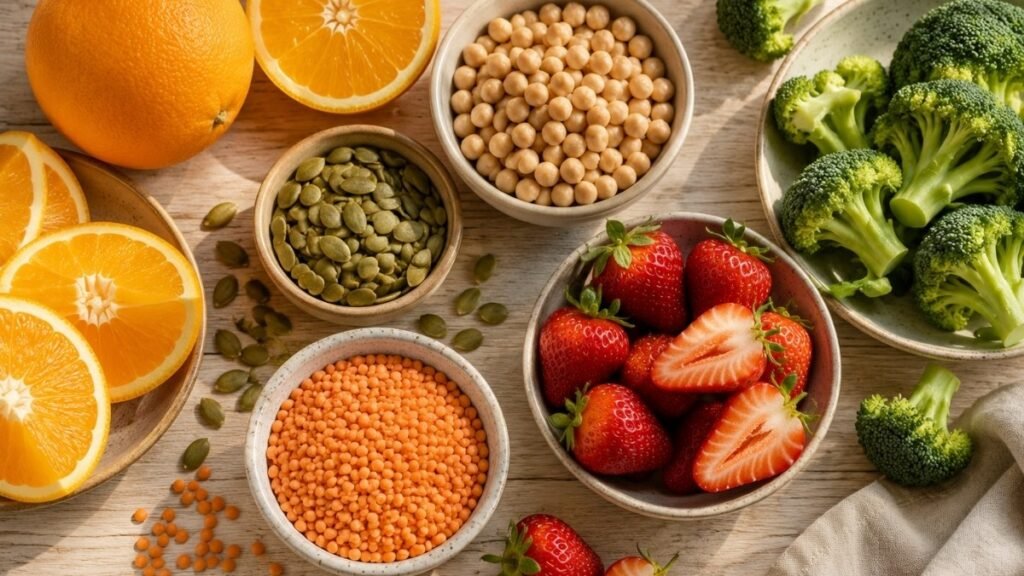
Understanding this process makes it much easier to evaluate whether a product actually makes sense.
Step 1 — Fibroblasts receive signals to produce collagen, triggered by growth factors, mechanical stress, and nutritional availability.
Step 2 — Amino acids are assembled into procollagen chains. Glycine, proline, and lysine are the most abundant amino acids in collagen and must be available in adequate quantities.
Step 3 — Vitamin C hydroxylates proline and lysine residues — a step that’s essential for collagen’s triple helix structure to form. Without vitamin C, this modification doesn’t occur and collagen is structurally unstable. This is why scurvy (severe vitamin C deficiency) causes collagen breakdown.
Step 4 — Copper-dependent enzymes (lysyl oxidase) cross-link collagen fibers into stable, functional structures. Without copper, collagen lacks tensile strength.
Step 5 — Zinc regulates matrix metalloproteinases that control collagen remodeling and turnover.
For vegans, key nutrients to prioritize:
- Glycine: Found in soy protein, legumes, tofu, spirulina, and seeds. Often limited in diets that rely primarily on grains and vegetables without adequate legume intake.
- Lysine: Often the limiting amino acid in plant-based diets. Best plant sources: legumes (particularly lentils, chickpeas, soy), quinoa, and pumpkin seeds.
- Proline: Found in legumes, cabbage, asparagus, mushrooms. Generally not a limiting amino acid in well-rounded vegan diets.
- Vitamin C: Citrus, bell peppers, kiwi, strawberries, broccoli. Most vegans get adequate vitamin C if they eat a varied diet.
- Copper: Cashews, sesame seeds, sunflower seeds, lentils, dark chocolate.
- Zinc: Pumpkin seeds, hemp seeds, legumes, tofu. Note that phytates in plant foods reduce zinc bioavailability; soaking and sprouting legumes improves absorption.
Can You Support Collagen Naturally Without Supplements?
For many people, the answer is yes — at least partially.
Daily Nutrition
A diet that provides adequate total protein (from legumes, tofu, tempeh, soy, whole grains, nuts, and seeds) gives your body the amino acid raw materials for collagen synthesis. Combined with sufficient vitamin C from vegetables and fruit, the basic requirements for collagen production are met through food in most well-planned vegan diets.
Where people tend to fall short: consistently low lysine intake (common in grain-dominant diets without adequate legumes) and inconsistent vitamin C intake if vegetable consumption varies.
Protein Intake
Total protein adequacy matters more than most people realize in this context. Fibroblasts need adequate nitrogen availability — meaning sufficient dietary protein — to produce structural proteins like collagen. Chronically low protein intake suppresses collagen synthesis regardless of how many supplements you take.
For adults: 0.8–1.2g of protein per kg of body weight daily from varied plant sources covers collagen precursor needs for most people.
Sleep
Collagen synthesis peaks during sleep, driven by growth hormone release in the first few hours of deep sleep. Consistently poor sleep quality measurably reduces collagen production. This is one of the more underappreciated factors in skin aging.
Exercise
Resistance training and load-bearing exercise stimulate collagen synthesis in tendons, ligaments, and bones through mechanical signaling. Vitamin C taken around exercise time (pre- or post-workout) appears to enhance this effect based on some research — not a large effect, but a real one.
Stress
Chronic stress elevates cortisol, which directly suppresses collagen synthesis and increases collagen degradation. Managing chronic stress has more impact on long-term skin and tissue quality than most supplements.
Protect What You Have: The Most Cost-Effective Ways to Prevent Collagen Loss
Here’s something that gets overlooked: preventing collagen breakdown is often more impactful than trying to rebuild what’s been lost. And the most effective anti-collagen-loss strategies cost nothing.

UV Damage
UV radiation is the leading external cause of collagen degradation in skin. It activates matrix metalloproteinases that break down collagen fibers and generates reactive oxygen species that damage collagen-producing fibroblasts. Daily SPF 30+ broad-spectrum sunscreen prevents more collagen loss than almost any supplement on the market. This isn’t a metaphor — the research is unambiguous.
Sugar and Glycation
Advanced glycation end products (AGEs) form when excess blood sugar reacts with collagen fibers, causing cross-linking that makes them stiff and dysfunctional. Chronically high sugar intake accelerates this process. Diets lower in refined carbohydrates and added sugar reduce glycation-driven collagen degradation.
Smoking
Tobacco smoke impairs vitamin C availability (smokers need roughly 35mg more vitamin C daily than non-smokers just to maintain equivalency), reduces blood flow to skin, and directly activates enzymes that degrade collagen. Smoking cessation produces measurable improvements in skin collagen density.
Alcohol
Excessive alcohol consumption impairs collagen synthesis, reduces vitamin A and zinc availability (both involved in collagen production), and contributes to systemic inflammation. Moderate consumption has a smaller effect, but heavy drinking consistently shows up as a collagen-depleting factor.
Chronic Inflammation
Systemic inflammation — driven by processed food, poor sleep, chronic stress, or untreated health conditions — upregulates the same matrix metalloproteinases that UV exposure activates. Anti-inflammatory dietary patterns (high in vegetables, legumes, whole grains, and omega-3s) support the collagen-protective environment.
Daily habits checklist:
- ☐ Apply SPF 30+ sunscreen daily (including cloudy days)
- ☐ Eat adequate protein from varied plant sources
- ☐ Include vitamin C-rich foods at most meals
- ☐ Prioritize 7–9 hours of sleep consistently
- ☐ Limit added sugar and refined carbohydrates
- ☐ Manage chronic stress through consistent habits
- ☐ Avoid or significantly limit smoking and heavy alcohol
Who May Benefit Most From a Vegan Collagen Booster?
Long-term vegans with limited dietary variety: If your diet is heavy on grains and light on legumes, you may have chronically low lysine intake. A product providing a defined amino acid matrix — specifically including lysine, glycine, and proline — alongside vitamin C and copper addresses a real dietary gap.
Older adults on plant-based diets: Collagen synthesis declines with age, and older adults often have lower total protein intake. The combination of adequate amino acids and cofactors becomes more relevant as endogenous production naturally slows.
People with low total protein intake: If you’re consistently under 0.8g/kg body weight in protein, a collagen booster won’t compensate — but addressing protein intake generally (not just with a collagen supplement) will have more impact than any specific supplement.
Beauty-focused consumers who can’t or won’t use animal products: If hydrolyzed bovine or marine collagen is off the table for ethical or dietary reasons, a well-formulated vegan booster with clinically meaningful amounts of vitamin C, zinc, copper, and amino acids is a reasonable alternative — with the caveat that the evidence base isn’t as strong.
Athletes with high connective tissue demands: Some research suggests that vitamin C combined with amino acids (glycine specifically) taken around training time supports tendon and ligament collagen synthesis. This is a reasonable application for vegan athletes, though dose and timing matter.
Who may see limited benefit: Healthy adults under 35 with well-rounded diets, adequate protein intake, good sleep habits, and consistent sun protection are already supporting collagen production through their lifestyle. Adding an expensive supplement to a foundation that’s already solid is unlikely to produce noticeable additional benefit.
Before Buying: A Quick Checklist for Choosing a Science-Based Vegan Collagen Product
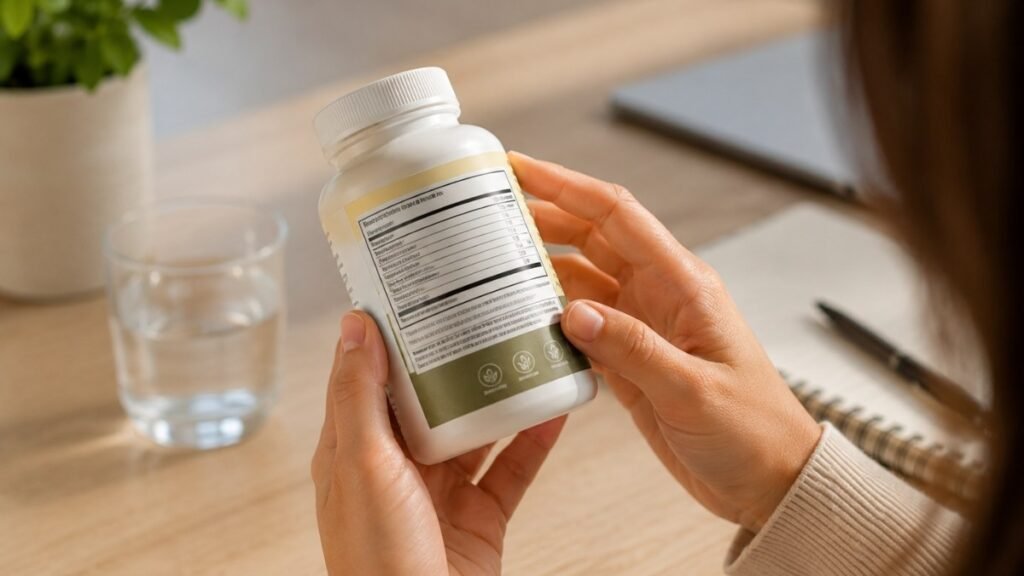
Use this before purchasing:
- ☐ Ingredient transparency: Can you see the specific ingredients and doses? Proprietary blends that hide individual amounts are a red flag.
- ☐ Amino acid profile: Does it provide glycine, proline, and lysine at defined amounts? Or just trace amounts at the bottom of a long list?
- ☐ Vitamin C dose: Is it at a therapeutically relevant dose (100–1,000mg)? Or 15mg from a fruit powder listed for marketing purposes?
- ☐ Third-party testing: NSF, USP, or Informed Sport certification verifies potency and purity. Important for any supplement.
- ☐ Clinical evidence: Are the specific ingredients (not just the category) backed by human trials? Check if the brand cites research — and whether it’s on the actual ingredients or vaguely on “collagen support.”
- ☐ Realistic claims: Does the brand make claims like “rebuilds collagen” or “reverses aging”? These are red flags. Legitimate products say “supports collagen synthesis” or “provides collagen-building nutrients.”
One editor’s note: if a product’s front label prominently says “100% Vegan Collagen” without explaining the source, the amino acid composition, or citing any clinical evidence — that’s worth investigating further before purchasing. The claim isn’t necessarily wrong, but it’s incomplete in a way that deserves scrutiny.
Frequently Asked Questions
Can my body absorb vegan collagen boosters as well as animal collagen peptides? The mechanisms are different, which makes direct comparison complicated. Hydrolyzed collagen peptides are absorbed as small peptides that may signal fibroblasts directly. Vegan collagen boosters provide vitamins and amino acids that support collagen synthesis through nutrient pathways. Both can contribute to collagen health; current evidence for specific skin or joint outcomes is stronger for hydrolyzed peptides than for most booster formulas.
Is there any real vegan collagen available today, or is it mostly a marketing term? Real vegan collagen exists — recombinant collagen made through bioengineering — but it’s primarily used in medical applications. Most consumer products called “vegan collagen” contain collagen-supporting nutrients rather than collagen itself. Vollagen® is a more sophisticated formulation than typical plant extracts, but it’s a fermented amino acid matrix, not true collagen protein.
What is Vollagen®, and how is it different from plant extracts? Vollagen® is a fermented amino acid ingredient designed to replicate collagen’s amino acid profile (high glycine, proline, hydroxyproline) without animal sources. Unlike plant extracts that provide vitamins or minerals, Vollagen® provides direct collagen precursor amino acids through a controlled fermentation process. It’s more mechanistically analogous to collagen peptides, though human clinical data specifically on Vollagen® remains limited.
How can I tell whether a supplement contains collagen or just collagen-supporting nutrients? Check the Supplement Facts panel. If you see “hydrolyzed collagen,” “collagen peptides,” or “recombinant collagen” listed as ingredients, it contains collagen. If you see vitamin C, biotin, zinc, bamboo extract, and amino acids — it’s a booster. The front label marketing language is not a reliable indicator.
Can I build healthy collagen through food alone on a vegan diet? Yes, for most people with well-planned diets. Adequate total protein (with attention to lysine from legumes), regular vitamin C from vegetables and fruit, and adequate zinc and copper from nuts, seeds, and legumes provides the raw materials for collagen synthesis. Where plant-based diets commonly fall short: lysine (if legumes are consistently low) and zinc bioavailability (addressed through soaking and sprouting).
Does vegan collagen help with skin, hair, nails, and joints? Well-formulated vegan collagen boosters — those with clinically meaningful amounts of vitamin C, amino acids, zinc, and copper — can support the body’s collagen production for all these tissues. The evidence is stronger for skin outcomes than hair, nails, or joints specifically when it comes to supplement research in this category. Results depend heavily on whether the product contains therapeutic doses of the active ingredients rather than token amounts.
Does topical vegan collagen in skincare actually increase collagen in the skin? No. Collagen molecules are too large to penetrate intact skin. Topical products containing collagen provide surface-level hydration benefits but don’t increase dermal collagen levels. Retinoids (vitamin A derivatives) are the topical ingredient with the strongest evidence for stimulating collagen synthesis in skin.
How long does it usually take to notice results from a vegan collagen booster? If results occur, they typically take 8–12 weeks of consistent use — similar to hydrolyzed collagen peptide trials. Skin hydration changes may appear earlier; changes in elasticity or fine lines take longer. If you’re supplementing primarily for joint support, the timeline is similar or longer. Expecting visible changes within two to four weeks is generally unrealistic for any collagen-related supplement.
Final Thoughts
The most useful reframe for evaluating vegan collagen products isn’t “does it work?” — it’s “what exactly is it, and does the evidence support this specific formula at these doses?”
True recombinant vegan collagen remains largely unavailable in mass-market oral supplements. Most products in this category are collagen boosters — which may be genuinely useful, depending on the quality of the formulation. A product with therapeutic doses of vitamin C, a defined amino acid matrix, copper, and zinc addresses real nutritional gaps that affect collagen synthesis. A product with trace amounts of exotic botanicals dressed up in scientific-sounding names is mostly marketing.
For many people — particularly those eating a well-varied plant-based diet with adequate protein, sleeping consistently, managing stress, and protecting skin from UV — the most impactful “collagen strategy” doesn’t come in a capsule. It comes from the daily habits that protect what their body is already producing.
Supplements can fill genuine gaps. But they work best when they’re chosen with knowledge, not pressure from packaging.
🌿 Optuvit Notes: The Thinking Behind This Guide
Understanding vegan collagen shouldn’t require a background in nutrition or biochemistry. Yet many supplements use similar names while containing completely different ingredients, making it difficult for consumers to know what they’re actually buying.
That’s why this guide focuses on evidence rather than marketing. Instead of asking which product is “best,” we begin with a simpler question: what does the product actually contain, and what does current research support?
This guide is built around three core principles:
- 🧬 Scientific Accuracy — Explaining how collagen is produced, what vegan collagen really means, and where today’s evidence is strongest.
- 🔍 Smarter Product Choices — Helping you read ingredient labels with confidence and recognize the difference between meaningful formulations and marketing language.
- 🌱 Long-Term Collagen Health — Showing how nutrition, lifestyle, and daily habits work together to support your body’s natural collagen production.
Because choosing a supplement shouldn’t start with advertising.
It should start with understanding the science.
Continue Learning About Healthy Aging
If you’re interested in supporting healthy skin, joints, and connective tissue through evidence-based nutrition, these guides may also help:
- Types of Collagen: Type I, II, III and Which One You Need
- Collagen Peptides vs. Gelatin vs. Whole Food Collagen: What’s the Difference?
- Vitamin D and K2
- omega-3 fatty acids and inflammation
🌿From the Optuvit Team
Good health isn’t built by one supplement—it’s built by informed choices made consistently. We hope this guide helps you make yours with confidence.