
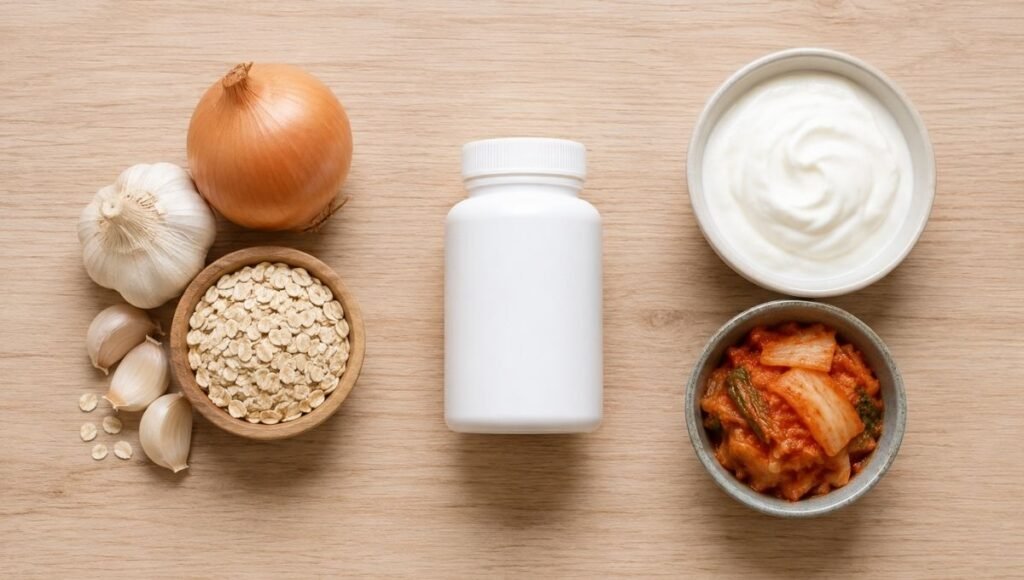
The supplement aisle has expanded. A few years ago, probiotics were the main event. Now there are prebiotics, postbiotics, and synbiotics — each with their own packaging, their own claims, and their own scientific terminology. If you’re genuinely trying to understand what each one does (rather than just buying whatever has the most impressive-sounding label), the confusion is understandable.
Here’s the thing: these three categories aren’t competing products. They’re part of the same biological sequence. Prebiotics feed the bacteria. Probiotics are the bacteria. Postbiotics are what those bacteria produce. Understanding this relationship turns a confusing supplement landscape into a logical system — and helps you decide what, if anything, you actually need to supplement.
This guide covers the difference between prebiotics vs. probiotics clearly, explains what postbiotics are and why they matter, and gives you a practical framework for deciding which of the three deserves your attention first.
Key Takeaways
- Prebiotics are non-digestible dietary fibers and compounds that selectively feed beneficial gut bacteria. They are not alive — they’re food.
- Probiotics are live beneficial microorganisms that provide health benefits when consumed in adequate amounts. They are the bacteria (and yeasts) themselves.
- Postbiotics are the bioactive compounds produced by probiotics during their metabolic activity — including short-chain fatty acids (SCFAs), lactic acid, vitamins, and peptides. They are the output of probiotic activity.
- The relationship is sequential: prebiotics → feed probiotics → which produce postbiotics. Optimizing one affects all three.
- A 2023 review in MedComm (Ji et al.) concluded that “probiotics are live beneficial microbes, prebiotics are food for these microbes, and postbiotics are the beneficial compounds produced by probiotics” — and that all three play distinct but interconnected roles in gut health.
- Most healthy adults don’t need all three as supplements. Prioritize prebiotic-rich foods first, consider probiotic supplementation for specific conditions, and reserve postbiotic supplements (like butyrate) for targeted therapeutic purposes.
The Difference Between Prebiotics and Probiotics: A Clear Framework
If you only take one thing from this article, make it this: prebiotics and probiotics are not the same thing, and they’re not interchangeable.
| Prebiotics | Probiotics | Postbiotics | |
|---|---|---|---|
| What they are | Non-digestible fibers/compounds | Live beneficial microorganisms | Bioactive compounds from probiotic activity |
| Are they alive? | No | Yes | No |
| Found in | Plant foods (garlic, oats, bananas) | Fermented foods, supplements | Fermented foods, some supplements |
| Primary function | Feed beneficial gut bacteria | Colonize gut, modulate immune function | Regulate inflammation, nourish gut cells |
| Stability | Heat-stable, no refrigeration needed | Temperature-sensitive, may need refrigeration | Stable, no living organisms to maintain |
| Examples | Inulin, FOS, GOS, pectin | L. rhamnosus, B. longum, S. boulardii | Butyrate, lactic acid, SCFAs, peptides |
The most important relationship to understand: these three are not alternative approaches to the same goal. They operate sequentially. When you eat prebiotic fiber, it travels to the colon undigested (your digestive enzymes can’t break it down — that’s the point). In the colon, beneficial bacteria ferment it, using it as fuel. During this fermentation, they produce postbiotics — metabolic byproducts that directly benefit your health.
Disrupt any link in this chain and the others are affected. Low fiber intake → beneficial bacteria have less to ferment → fewer SCFAs produced → gut barrier integrity weakens → inflammation increases. This is why the simplest gut health intervention isn’t a supplement at all — it’s eating more diverse plant foods.
What Are Prebiotics and How Do They Work?
Prebiotics are compounds — primarily dietary fibers, but also some polyphenols and other plant compounds — that resist digestion in the small intestine and arrive in the colon intact, where they selectively stimulate the growth and activity of beneficial bacteria.
The “selectively” part is important. Not all fibers are prebiotic. A true prebiotic, by the International Scientific Association for Prebiotics and Probiotics (ISAPP) definition, must be selectively utilized by host microorganisms to confer a health benefit. Inulin and fructooligosaccharides (FOS), for example, specifically feed Bifidobacterium and Lactobacillus species — the same genera that dominate healthy gut microbiomes and that probiotic supplements try to bolster.
The main types of prebiotics:
Inulin and FOS (fructooligosaccharides): Found in chicory root (the most concentrated dietary source), garlic, onions, leeks, asparagus, and bananas. Inulin is the most commonly used prebiotic in supplements — it’s also one of the most studied, with documented effects on Bifidobacterium population growth and bowel regularity.
GOS (galactooligosaccharides): Naturally present in small amounts in human breast milk; commercially produced from lactose. GOS specifically promotes Bifidobacterium growth and has evidence for reducing IBS symptoms and supporting infant gut microbiome development.
Pectin: Found in apples, citrus fruits, and berries. Fermented in the colon to produce SCFAs, particularly butyrate.
Resistant starch: Found in cooked-and-cooled potatoes, green bananas, legumes, and whole grains. One of the most effective butyrate producers — when Bifidobacterium and Ruminococcus ferment resistant starch, they produce substantial butyrate, which is the primary energy source for colon cells.
Beta-glucan: Found in oats and barley. Evidence for both gut health and cholesterol-lowering effects; feeds Lactobacillus and Bifidobacterium.
Prebiotic Foods: The Best Dietary Sources
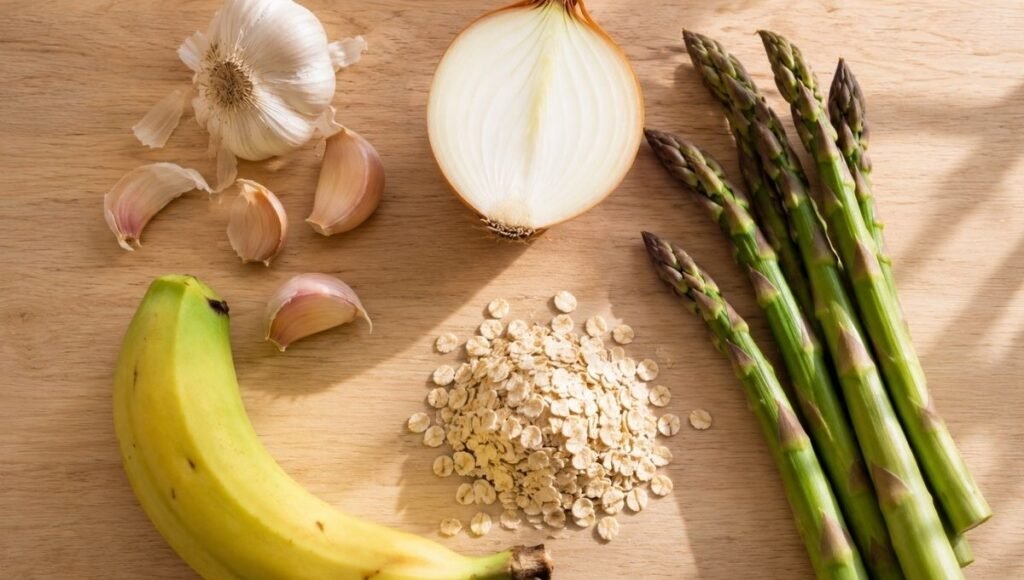
The most direct way to consume prebiotics is through food — no supplement required. The following foods have documented prebiotic fiber content:
Highest prebiotic content:
- Chicory root (inulin content: 35–47% by weight) — the richest natural source, but rarely eaten directly; most often consumed as chicory coffee or inulin supplement
- Jerusalem artichoke (inulin: 14–19%) — more accessible and genuinely delicious roasted
- Garlic (inulin: 9–16%) — easiest daily prebiotic source for most people; one clove provides meaningful prebiotic content
- Leeks and onions (inulin: 3–10%) — everyday cooking staples that consistently feed Bifidobacterium
- Asparagus (inulin: 2–3%) — lower concentration but also contains FOS
Moderate prebiotic content:
- Unripe bananas — ripe bananas convert resistant starch to simple sugars; slightly green bananas preserve more prebiotic content
- Oats — beta-glucan content provides prebiotic benefit alongside documented cholesterol effects
- Cooked-and-cooled potatoes and rice — the cooling process converts digestible starch back into resistant starch (retrograde starch); reheating doesn’t fully reverse this
Editorial note: The simplest practical advice for prebiotic intake is to eat more vegetables across more variety. A diverse diet containing different fiber types feeds a more diverse microbiome. The goal isn’t optimizing one fiber type — it’s covering the full range of substrates that different beneficial bacterial species prefer.
Prebiotic Supplements: When Food Isn’t Enough
Most people in Western diets consume 10–15 grams of dietary fiber per day — well below the recommended 25–38 grams. If you’re consistently below the target, prebiotic supplements can fill the gap.
The main prebiotic supplement types:
Inulin and FOS powders: The most widely available prebiotic supplements. Typically derived from chicory root. Can be mixed into drinks or food. Start low (3–5g/day) and increase gradually — too much too fast causes significant bloating and gas as gut bacteria adjust. This side effect is normal and typically resolves within 1–2 weeks.
GOS supplements: Less common but specifically useful if Bifidobacterium populations are a target (as measured by microbiome testing or inferred from conditions like IBS or infant microbiome support).
Partially hydrolyzed guar gum (PHGG): A soluble fiber with evidence for IBS and constipation; gentler on the gut than inulin for people with sensitive digestion.
Psyllium husk: Technically a functional fiber rather than a classical prebiotic (its selectivity is more limited), but it supports bowel regularity and feeds certain beneficial bacteria. One of the best-documented fibers for IBS-constipation.
Key selection consideration: Look for clearly identified fiber types on the label — the same logic applies as with probiotic strain identity. “Contains prebiotic fiber” is less useful than “contains 5g inulin (chicory root).”
What Are Postbiotics? The Most Misunderstood of the Three
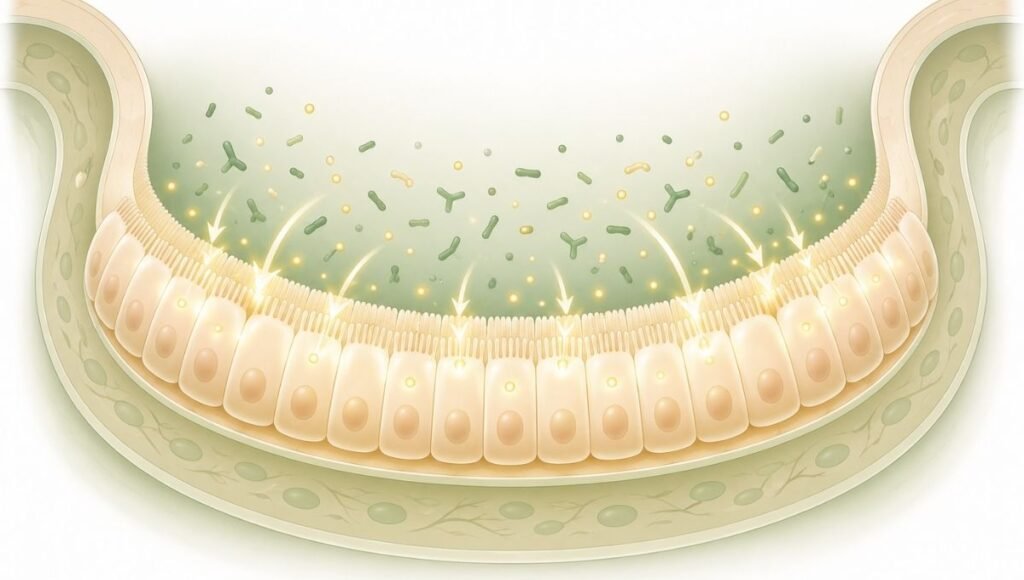
Postbiotics are the newest of the three categories — and the least understood by most consumers, despite arguably being the most directly active in producing gut health benefits.
The ISAPP consensus definition (2021): “a preparation of inanimate microorganisms and/or their components that confers a health benefit on the host.” More practically: postbiotics are the bioactive compounds that probiotics produce during fermentation and metabolic activity.
The main types of postbiotics:
Short-chain fatty acids (SCFAs) — particularly butyrate, propionate, and acetate: The most important postbiotics for gut health. Produced when gut bacteria ferment prebiotic fibers in the colon. Butyrate is the primary energy source for colonocytes (colon cells) and plays a critical role in maintaining intestinal barrier integrity, reducing colon inflammation, and regulating immune function. Propionate signals satiety hormones in the brain. Acetate has systemic effects on metabolic function.
Lactic acid: Produced by Lactobacillus species; lowers intestinal pH, creating an inhospitable environment for pathogens.
Vitamins: Gut bacteria produce vitamin K2 and several B vitamins (B12, folate, B6) as metabolic byproducts — contributing meaningfully to host vitamin status.
Bacteriocins: Antimicrobial peptides produced by probiotic bacteria that selectively inhibit pathogen growth.
Exopolysaccharides: Complex carbohydrates produced by bacterial cell walls that modulate immune responses and protect the intestinal mucosa.
Enzymes: Including lactase (improving lactose digestion) and proteases that affect protein metabolism.
Why postbiotics matter: They represent the mechanism by which probiotics actually exert their health effects. When Bifidobacterium ferments inulin and produces butyrate, it’s the butyrate that directly nourishes the colon cell — the Bifidobacterium is the factory; the butyrate is the product. Understanding postbiotics helps explain why dietary fiber (which generates more endogenous SCFAs) is often more impactful than a probiotic supplement.
Postbiotic Supplements: Do They Work?
Postbiotic supplements are an emerging category. The concept: rather than taking live bacteria (which must survive digestion, colonize the gut, and then produce beneficial compounds), why not take the beneficial compounds directly?
The main postbiotic supplements currently available:
Butyrate (sodium butyrate or tributyrin): The most studied postbiotic supplement. Evidence for reducing gut permeability (“leaky gut”), supporting colon health, and reducing inflammatory markers in IBD patients. Tributyrin (butyrate esterified to glycerol) has better bioavailability than sodium butyrate and is better tolerated.
Heat-killed probiotics (paraprobiotics): Inactivated probiotic bacteria that still confer some immune-modulating benefits because their cell components (peptidoglycans, lipoteichoic acid) are recognized by immune receptors. May be safer for immunocompromised individuals who need benefits without live bacteria.
Fermented milk products with documented postbiotic content: Products like certain kefir brands now measure and standardize their postbiotic content (SCFAs, lactic acid) — a step toward quality control in the fermented food category.
The honest assessment of postbiotic supplements: The research is promising but less mature than probiotics. For most healthy adults, generating postbiotics endogenously — by eating adequate prebiotic fiber and fermented foods — is more effective and less expensive than supplementing postbiotics directly. Postbiotic supplements become relevant when the gut microbiome is significantly compromised or when a specific postbiotic (like butyrate for IBD-related barrier function) is the therapeutic target.
Synbiotics: Prebiotics and Probiotics Together
A synbiotic is a combination of prebiotics and probiotics in a single product — designed so the prebiotic component specifically supports the survival and activity of the included probiotic strain.
The logic is sound: if you’re supplementing Bifidobacterium longum for IBS, including FOS (which specifically feeds Bifidobacterium) in the same product may improve its colonization and activity. Some synbiotic products are designed this way — the prebiotic is specifically chosen for the probiotic strain included.
The caveat: Many products labeled “synbiotic” simply contain a probiotic and a prebiotic fiber without evidence that the specific pairing enhances the probiotic’s effects. Read ingredient labels — is the prebiotic fiber type specified? Is there research on that fiber-strain combination?
Should you take a synbiotic? If you’re already taking a probiotic supplement and regularly eating prebiotic-rich foods, you’re effectively creating a synbiotic effect through your diet. A dedicated synbiotic supplement may be more convenient; whether it’s meaningfully more effective than a good probiotic plus a prebiotic-rich diet is less clear.
Do You Need All Three? A Decision Framework

Start here: Are you eating enough prebiotic fiber?
Most people aren’t. If your vegetable intake is low and you’re not eating garlic, onions, legumes, or oats regularly, this is the highest-leverage gut health intervention available — and it costs nothing extra. Aim for 25–38 grams of total dietary fiber daily, with variety across sources.
If you’re eating well but have a specific gut concern:
Add a probiotic supplement for specific, evidence-backed uses: antibiotic course (start during, with S. boulardii), IBS symptoms (B. infantis 35624 or L. plantarum 299v), post-antibiotic recovery, or persistent bloating that doesn’t respond to dietary changes alone.
If you have a specific gut barrier or inflammatory bowel concern:
Butyrate supplementation (as tributyrin) may be worth discussing with a gastroenterologist, particularly for IBD-related barrier function support. This is a more targeted, clinical use case rather than general wellness supplementation.
The honest hierarchy:
- Diverse, high-fiber diet → generates your own postbiotics endogenously
- Fermented foods daily → provides probiotics with confirmed live cultures
- Probiotic supplement → for specific, strain-targeted conditions
- Prebiotic supplement → if dietary fiber intake is consistently low
- Postbiotic supplement → specific therapeutic use cases, not general wellness
Frequently Asked Questions
What is the difference between prebiotics and probiotics? Prebiotics are non-digestible dietary fibers that feed beneficial gut bacteria — they are not alive. Probiotics are live beneficial microorganisms (bacteria and yeasts) that provide health benefits directly. The relationship is complementary: prebiotics are food for probiotic bacteria. Consuming both creates the conditions for maximum gut health benefit.
What are postbiotics? Postbiotics are bioactive compounds produced by probiotics during their metabolic activity — including short-chain fatty acids (especially butyrate), lactic acid, vitamins, bacteriocins, and enzymes. They are the mechanism through which probiotics exert many of their health effects. Butyrate, for example, is the primary energy source for colon cells and plays a critical role in maintaining gut barrier integrity.
Should I take prebiotics and probiotics together? Taking both is logical — prebiotics support the activity and colonization of probiotic bacteria. You don’t need both as supplements; eating prebiotic-rich foods (garlic, onions, oats, bananas, legumes) while taking a probiotic supplement achieves the same effect. A product that contains both is called a synbiotic.
Do postbiotic supplements work? Some postbiotic supplements — particularly butyrate in tributyrin form — have evidence for specific uses like supporting gut barrier integrity and reducing IBD-related inflammation. For general wellness, generating postbiotics endogenously through adequate prebiotic fiber intake is more effective. The postbiotic supplement category is newer and less established than probiotics.
What are the best prebiotic foods? The richest sources are chicory root (highest concentration), garlic, Jerusalem artichoke, onions, leeks, and asparagus (all high in inulin/FOS). Oats and barley (beta-glucan), cooked-and-cooled potatoes and rice (resistant starch), and legumes are also excellent. The goal is variety across fiber types, not maximizing one source.
What is inulin prebiotic and is it worth supplementing? Inulin is a fructan fiber found naturally in chicory root, garlic, and onions. It selectively feeds Bifidobacterium species and has documented effects on gut microbiome composition, bowel regularity, and calcium absorption. As a supplement, it’s effective but should be introduced gradually (starting at 3–5g/day) to avoid initial bloating as gut bacteria adjust.
The Bottom Line
Prebiotics vs. probiotics isn’t really a competition — it’s a sequence. Prebiotics feed the bacteria; probiotics are the bacteria; postbiotics are what those bacteria produce. Each has a role, but they’re not all equally urgent for every person.
For most people, the highest-impact change is the most boring one: eat more varied, fiber-rich plants consistently. This is the foundation that makes everything else work better — whether or not you add a probiotic supplement or a postbiotic product on top.
When you do supplement, choose with specificity. The right probiotic strain for your condition. The right prebiotic fiber type for your microbiome targets. And for postbiotics, a clear therapeutic rationale rather than general wellness marketing.
Want to know which specific probiotic strains have the strongest research for specific conditions? Probiotic Strains Explained: Lactobacillus, Bifidobacterium, and Saccharomyces (C3)
Not sure how much probiotic CFU you need or when to take it? What Are Probiotics? Strains, CFU, and How They Actually Work (C1)
References
- Ji J, Jin W, Liu SJ, Jiao Z, Li X. Probiotics, prebiotics, and postbiotics in health and disease. MedComm. 2023;4(6):e420. doi:10.1002/mco2.420
- Swanson KS, Gibson GR, Hutkins R, et al. The International Scientific Association for Probiotics and Prebiotics (ISAPP) consensus statement on the definition and scope of synbiotics. Nature Reviews Gastroenterology & Hepatology. 2020;17(11):687-701. doi:10.1038/s41575-020-0344-2
- Salminen S, Collado MC, Endo A, et al. The International Scientific Association of Probiotics and Prebiotics (ISAPP) consensus statement on the definition and scope of postbiotics. Nature Reviews Gastroenterology & Hepatology. 2021;18(9):649-667. doi:10.1038/s41575-021-00440-6
- National Institutes of Health Office of Dietary Supplements. Probiotics: Fact Sheet for Consumers. Updated June 2026. https://ods.od.nih.gov/factsheets/Probiotics-Consumer/
- Holscher HD. Dietary fiber and prebiotics and the gastrointestinal microbiota. Gut Microbes. 2017;8(2):172-184. doi:10.1080/19490976.2017.1290756