

Living with IBS means learning to read your body like a weather forecast — never quite certain what today will bring. Some mornings the bloating is already there before breakfast. Some afternoons, a meal that was fine last week triggers pain that ruins the rest of the day. You’ve probably already tried the low-FODMAP diet, the food diaries, the elimination periods. And at some point, someone suggested probiotics.
Here’s the honest framing: probiotics for IBS do work — for most people, most of the time, with the right strain. A 2022 network meta-analysis published in Frontiers in Cellular and Infection Microbiology that analyzed 43 randomized controlled trials and 5,531 IBS patients found that probiotics significantly improved overall IBS symptoms, abdominal pain, and bloating compared to placebo. That’s a meaningful body of evidence.
But “most people, most of the time” also means some people don’t respond, and a small subset actually feel worse. Understanding why — and which strains work best for which IBS subtype — is the difference between a probiotic that helps and one that becomes another thing you tried and abandoned.
Key Takeaways
- A 2022 network meta-analysis of 43 RCTs (5,531 IBS patients) found probiotics significantly reduced overall IBS symptoms, abdominal pain (mean difference -1.66), and bloating (mean difference -2.13) compared to placebo.
- IBS subtype matters for strain selection: IBS-D (diarrhea-predominant) responds best to Saccharomyces boulardii and Lactobacillus-dominant formulas; IBS-C (constipation-predominant) responds best to Bifidobacterium-dominant formulas; IBS-M (mixed) benefits from multi-strain approaches.
- The most evidence-backed strains for IBS are Bifidobacterium infantis 35624, Lactobacillus plantarum 299v, and Bifidobacterium lactis DN-173 010.
- Probiotics for SIBO require specific caution — some bacterial probiotics can worsen small intestinal bacterial overgrowth. Saccharomyces boulardii (a yeast) is generally considered safer for people with suspected SIBO.
- Commit to 8 weeks of consistent use before evaluating. Most IBS trials showing significant benefit ran for 4–12 weeks.
- If symptoms worsen significantly after starting probiotics, this may indicate SIBO, gut dysbiosis requiring a different approach, or strain incompatibility — not a reason to try a higher dose of the same product.
Why IBS and Gut Microbiome Are Connected
Irritable bowel syndrome affects approximately 10–15% of the global population and involves a frustrating combination of abdominal pain, bloating, altered bowel habits, and digestive unpredictability — without any detectable structural disease. For years it was classified primarily as a functional disorder driven by the gut-brain axis. More recent research has added a third dimension: the gut microbiome.
People with IBS consistently show a different microbiome composition than healthy controls — less diverse overall, with altered populations of Lactobacillus, Bifidobacterium, and Faecalibacterium prausnitzii (a key butyrate-producing species). The dysbiosis isn’t identical across IBS patients — someone with IBS-D tends to have a different microbiome pattern than someone with IBS-C — which is part of why there’s no single probiotic solution for all IBS.
The gut-brain axis layer adds more complexity: stress signals from the brain alter gut motility and microbiome composition; gut microbiome signals influence mood, anxiety, and pain sensitivity through the vagus nerve. This bidirectional communication means that gut dysbiosis can perpetuate IBS symptoms even when the original trigger has resolved, which is why microbiome support can be helpful as part of a broader approach.
Probiotics for IBS: What the Research Actually Shows
The 2022 network meta-analysis by Zhang et al. (Frontiers in Cellular and Infection Microbiology) is currently the most comprehensive evidence synthesis available — 43 RCTs, 5,531 participants, comparing multiple probiotic species directly against each other and against placebo.
Key findings:
Overall symptom improvement: Probiotics as a class significantly outperformed placebo for global IBS symptom scores. The effect was consistent across trials, though the magnitude varied by strain and subtype.
Abdominal pain: Significant reduction (mean difference -1.66, 95% CI -2.39 to -0.93, p<0.0001) compared to placebo.
Bloating: Significant reduction (mean difference -2.13, 95% CI -3.96 to -0.30, p=0.0224) — one of the more practically meaningful findings given that bloating is consistently the symptom IBS patients rate as most disruptive to daily life.
Treatment length matters: The meta-regression revealed that treatment duration significantly influences efficacy. Longer treatment courses were associated with greater benefit — which is clinically important for setting patient expectations.
The honest caveat: Not all IBS patients respond. Approximately 20–30% of participants in IBS probiotic trials don’t show meaningful improvement, and a small subset experience symptom worsening. Predicting individual response remains challenging, which is why an 8-week trial with careful symptom tracking is more useful than a 2-week assessment.
Best Probiotics for IBS: The Evidence by Strain
The strain specificity lesson from IBS research: Not all probiotics work equally for IBS, and species-level differences matter. Here’s what the evidence shows for specific strains.
Bifidobacterium infantis 35624: The IBS Specialist
This strain — sold under the brand name Align — has the most IBS-specific evidence of any single probiotic strain. A landmark randomized controlled trial by Whorwell et al. found that B. infantis 35624 significantly improved composite IBS symptom scores including bloating, abdominal pain, and bowel urgency compared to placebo.
The mechanism: B. infantis 35624 has documented anti-inflammatory effects in the gut, reducing pro-inflammatory cytokine production and normalizing the Th1/Th2 immune balance that’s altered in IBS. It also appears to support gut barrier function, reducing the intestinal permeability that’s elevated in many IBS patients.
Best suited for: IBS-M and IBS-D subtypes; people whose primary symptoms include bloating and abdominal pain rather than constipation alone.
Lactobacillus plantarum 299v: The Abdominal Pain Specialist
Multiple trials have found L. plantarum 299v specifically reduces abdominal pain and flatulence in IBS patients. A 4-week RCT found that 299v produced significantly greater reductions in abdominal pain scores than placebo, with effects sustained for 4 weeks after stopping supplementation.
L. plantarum is also one of the most environmentally resilient Lactobacillus strains — it survives gut transit well and tolerates a wide range of pH conditions, which means more of what you swallow actually reaches the colon alive.
Best suited for: Any IBS subtype with prominent abdominal pain and gas; also appropriate for post-antibiotic IBS flares.
Bifidobacterium lactis DN-173 010: The Constipation and Transit Specialist
This strain (found in Activia yogurt) has documented effects on gut transit time — the speed at which food moves through the intestine. Multiple trials found meaningful improvements in stool frequency and consistency in IBS-C and functional constipation.
Best suited for: IBS-C (constipation-predominant); IBS with slow transit as a dominant feature.
Saccharomyces boulardii: For IBS-D and Post-Antibiotic IBS
S. boulardii (a yeast, not a bacterium) has specific evidence for IBS-D — diarrhea-predominant IBS. It produces anti-inflammatory proteins that reduce gut permeability and has documented effects on reducing stool frequency and improving stool consistency in IBS-D patients.
Its additional advantage: it’s unaffected by antibiotics, making it the logical choice when IBS symptoms have been triggered or worsened by a recent antibiotic course.
Best suited for: IBS-D; post-antibiotic IBS; IBS with food-triggered diarrhea.
Probiotics for Bloating: Why Your Gut Produces Gas and How Probiotics Help
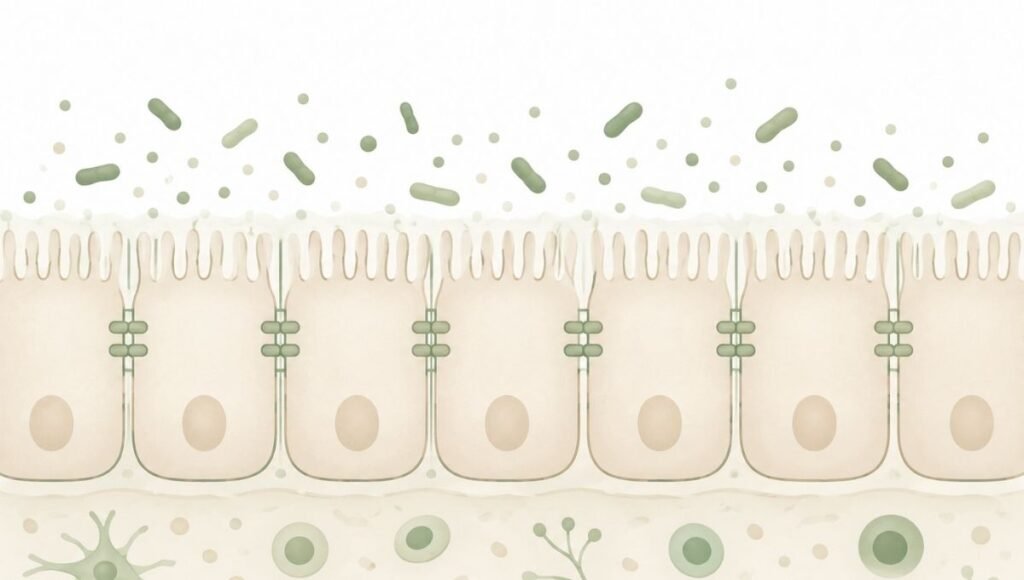
Bloating in IBS isn’t just about gas volume — it’s about gas distribution and gut sensitivity. IBS patients often produce similar gas volumes to healthy controls but experience it as more painful and distending due to visceral hypersensitivity (the gut’s pain signaling is amplified).
Probiotics address IBS bloating through two mechanisms:
Competitive exclusion: Beneficial bacteria occupy intestinal attachment sites and produce antimicrobial substances that reduce populations of gas-producing bacteria (particularly Clostridia species and sulfate-reducing bacteria). Less fermentation by gas-producing species means less gas production.
Motility improvement: Some probiotic strains — particularly L. plantarum and B. lactis — improve gut motility, meaning gas moves through the intestine more efficiently rather than pooling and causing pressure.
Timeline for bloating improvement: In IBS trials, meaningful bloating reduction typically emerged between weeks 2–6 of consistent probiotic use. Don’t assess at one week. Track bloating on a 1–10 scale daily to get objective data on whether it’s improving.
The important caveat for high-FODMAP diets: If you’re consuming large amounts of prebiotic fibers (inulin, FOS, GOS) — particularly from supplements — while starting a probiotic, the initial adjustment period can temporarily worsen bloating. This is a normal fermentation increase as new bacterial populations establish, not an indication that the probiotic is wrong for you.
Probiotics for IBS-D: Diarrhea-Predominant IBS
IBS-D is characterized by frequent loose stools, urgency, and post-meal diarrhea. The gut microbiome in IBS-D typically shows reduced Bifidobacterium and Lactobacillus populations alongside increased gas-producing species.
Most evidence-backed approach for IBS-D:
- Saccharomyces boulardii — produces anti-secretory proteins that reduce intestinal fluid secretion and has documented effects on stool consistency
- Lactobacillus rhamnosus GG — reduces diarrhea duration and severity
- Multi-strain formulas combining Lactobacillus and Bifidobacterium species — broader microbiome support
Practical note: For post-meal diarrhea specifically (a common IBS-D pattern), timing the probiotic 30 minutes before the largest meal may help — the probiotic has time to buffer the intestinal environment before the meal-triggered gut response occurs.
Probiotics for IBS-C: Constipation-Predominant IBS
IBS-C involves infrequent, hard stools, straining, and a sense of incomplete evacuation. Gut transit is typically slower than normal.
Most evidence-backed approach for IBS-C:
- Bifidobacterium lactis DN-173 010 — documented transit time improvement and stool frequency increase
- Bifidobacterium longum — evidence for functional constipation and IBS-C symptom reduction
- Multi-strain formulas with Bifidobacterium emphasis — combined with adequate prebiotic fiber to feed the bacteria
The fiber connection for IBS-C: Probiotics work better for constipation when paired with adequate fiber intake. Bifidobacterium species ferment prebiotic fibers to produce short-chain fatty acids (SCFAs) that stimulate colon motility — without sufficient fiber substrate, the bacteria have less fuel to generate this motility stimulus.
Probiotics for SIBO: A Nuanced Picture
Small intestinal bacterial overgrowth (SIBO) is a condition where bacteria that normally reside in the colon colonize the small intestine in abnormal numbers. SIBO symptoms — bloating (particularly severe after meals), gas, and altered bowel habits — overlap significantly with IBS, and it’s estimated that 30–80% of IBS patients may have concurrent SIBO.
The probiotics-SIBO controversy: This is one of the most debated topics in gut health. The concern: some bacterial probiotic strains may add to the bacterial load in the small intestine, potentially worsening SIBO rather than improving it. This is why some IBS patients feel significantly worse after starting certain probiotics.
The evidence-based approach:
Saccharomyces boulardii is generally considered the safest option for people with suspected SIBO — as a yeast rather than a bacterium, it doesn’t contribute to bacterial overgrowth and has evidence for competitive inhibition of pathogenic bacteria.
Some Lactobacillus and Bifidobacterium strains have shown benefit in SIBO management in preliminary studies, but results are mixed. If you have confirmed or suspected SIBO (particularly if probiotics consistently worsen your bloating), discuss with a gastroenterologist before supplementing bacterial probiotics.
Signs that probiotics might be worsening SIBO:
- Bloating that dramatically worsens within 30–60 minutes of taking a probiotic
- Increased brain fog alongside digestive worsening
- Symptoms that improve when stopping probiotics, then worsen when restarting
Probiotics for Leaky Gut: Supporting the Gut Barrier
“Leaky gut” — more formally, increased intestinal permeability — describes a state where the tight junction proteins that normally seal the gaps between intestinal wall cells become compromised, allowing bacterial products (particularly lipopolysaccharides) to cross into the bloodstream and trigger systemic inflammation.
Intestinal permeability is measurably elevated in many IBS patients, particularly IBS-D. Some research suggests this permeability is a cause of IBS symptoms (through immune activation and visceral sensitization) rather than just a consequence.
Probiotics with documented gut barrier effects:
L. plantarum has the strongest evidence for maintaining and restoring tight junction protein expression — specifically occludin and claudin-1, the proteins that form the physical seal between cells.
B. infantis 35624 also has documented barrier-supporting effects through its anti-inflammatory mechanisms.
Postbiotics connection: The short-chain fatty acids (particularly butyrate) produced when Bifidobacterium ferments prebiotic fiber are the primary fuel for colonocytes (intestinal wall cells) — butyrate directly supports tight junction protein production. This is why adequate prebiotic fiber intake alongside probiotics is important for gut barrier support.
Probiotics for Stomach Bug: When Acute GI Illness Meets Your Gut
When you’re dealing with acute gastroenteritis — whether from a food-borne pathogen, a virus, or traveler’s diarrhea — probiotics can shorten the duration and reduce the severity.
Lactobacillus rhamnosus GG has the most evidence for shortening acute infectious diarrhea duration (by approximately 1 day). Saccharomyces boulardii has specific evidence for traveler’s diarrhea and may also reduce the risk of post-infectious IBS — the IBS that develops following a significant gut infection.
Post-infectious IBS: This is an underappreciated connection. A significant proportion of new IBS diagnoses develop in the months following a severe gut infection (gastroenteritis, food poisoning, travelers’ diarrhea). If your IBS started after a gut illness, this post-infectious pattern often responds well to probiotic supplementation — the infection disrupted the microbiome, and probiotics support its restoration.
If Probiotics Aren’t Working for Your IBS
Before concluding they don’t work for you:
Wrong strain: Are you taking a strain with IBS-specific evidence? Generic “gut health” probiotics may not contain the strains studied for IBS. Look for B. infantis 35624 or L. plantarum 299v specifically.
Too short a trial: Have you been consistent for at least 6–8 weeks? IBS trials showing significant benefit ran for 4–12 weeks. A 2-week assessment is premature.
Unaddressed SIBO: If probiotics consistently worsen your symptoms, particularly with rapid bloating after each dose, SIBO may be a complicating factor. Switch to S. boulardii or seek a SIBO breath test from a gastroenterologist.
High-FODMAP diet without knowing it: If you’re taking inulin-based prebiotics alongside your probiotic, the initial fermentation response can temporarily worsen IBS symptoms. Reduce prebiotic intake and give the probiotic 2–3 weeks before reintroducing.
The 50–70% response rate expectation: Research suggests approximately 50–70% of IBS patients see meaningful improvement with probiotics. If you fall in the 30–50% who don’t, probiotics may not be the primary tool for your particular gut situation — which is useful information that points toward other approaches (dietary, medication, stress management) rather than a failure.
When to See a Doctor About IBS and Gut Health

Probiotics are supportive measures, not diagnostic tools. See a doctor if:
- IBS symptoms are severe, rapidly worsening, or significantly affecting quality of life — gastroenterology evaluation is appropriate
- You notice blood in stool, significant unintentional weight loss, or fever alongside gut symptoms — these are red flags requiring prompt evaluation
- You suspect SIBO — a hydrogen/methane breath test can confirm this and guide treatment
- IBS symptoms started after age 50 — new-onset gut symptoms in older adults warrant colonoscopy to rule out structural disease
- You’ve tried two or more well-chosen probiotics consistently for 8+ weeks with no improvement — this warrants discussion with a gastroenterologist about additional IBS management strategies
Frequently Asked Questions
Do probiotics help with IBS? Yes — for most people with IBS. A 2022 network meta-analysis of 43 RCTs found that probiotics significantly improved overall IBS symptoms, abdominal pain, and bloating compared to placebo. The effect is strain-dependent and requires at least 4–8 weeks of consistent use to evaluate properly. Approximately 50–70% of IBS patients see meaningful improvement.
What are the best probiotics for IBS? The most evidence-backed strains are: Bifidobacterium infantis 35624 (for IBS-D and IBS-M; sold as Align), Lactobacillus plantarum 299v (for abdominal pain and flatulence in any subtype), Bifidobacterium lactis DN-173 010 (for IBS-C and slow transit), and Saccharomyces boulardii (for IBS-D and post-antibiotic IBS).
Can probiotics make IBS worse? In some cases, yes. Some bacterial probiotic strains can worsen symptoms in people with underlying SIBO (small intestinal bacterial overgrowth). If you notice rapid, severe bloating within an hour of taking a probiotic — especially if it improves when you stop — SIBO may be a factor. Saccharomyces boulardii (a yeast) is generally safer for SIBO-suspected individuals.
How long do probiotics take to work for IBS? Most clinical trials showing significant IBS benefit ran for 4–12 weeks, with meaningful changes typically emerging at 4–8 weeks. Don’t assess results at 2 weeks. Track your key symptoms daily on a simple 1–10 scale to get objective data on whether improvement is occurring.
Should I take probiotics for IBS every day? Yes — consistent daily use is important. Most probiotic strains are transient colonizers that pass through the gut rather than permanently establishing. Daily use maintains their ongoing activity. Sporadic use doesn’t produce the consistent microbiome modulation that generates IBS symptom benefit.
Are probiotics good for bloating from IBS? Probiotics for IBS-related bloating show consistent evidence across multiple trials. The most effective mechanisms are competitive exclusion of gas-producing bacteria and improvement in gut motility. B. infantis 35624 and L. plantarum 299v have the strongest specific evidence for IBS bloating. Expect 2–4 weeks before meaningful bloating improvement.
The Bottom Line
Probiotics for IBS work — but the specifics matter enormously. The right strain for your IBS subtype, given adequate time (6–8 weeks minimum), will produce meaningful improvement for most people. The wrong strain, given inadequate time, will appear not to work even when the approach is sound.
Match your subtype to the evidence: B. infantis 35624 for IBS-M/D bloating and pain; B. lactis DN-173 010 for IBS-C transit; S. boulardii for IBS-D and post-antibiotic situations; L. plantarum 299v for abdominal pain across subtypes.
And if symptoms worsen significantly after starting — particularly with rapid bloating after each dose — that’s information worth acting on: consider SIBO testing before continuing.
Want to understand which probiotic strains have the strongest evidence for specific conditions — and how to read a probiotic label to find them? Probiotic Strains Explained: Lactobacillus, Bifidobacterium, and Saccharomyces (C3)
Not sure how long to take probiotics or what CFU count you need? How Long Do Probiotics Take to Work? A Realistic Timeline by Goal (C5)
References
- Zhang T, Zhang C, Zhang J, Sun F, Duan L. Efficacy of Probiotics for Irritable Bowel Syndrome: A Systematic Review and Network Meta-Analysis. Frontiers in Cellular and Infection Microbiology. 2022;12:859967. doi:10.3389/fcimb.2022.859967
- Whorwell PJ, Altringer L, Morel J, et al. Efficacy of an encapsulated probiotic Bifidobacterium infantis 35624 in women with irritable bowel syndrome. American Journal of Gastroenterology. 2006;101(7):1581-1590. doi:10.1111/j.1572-0241.2006.00734.x
- Ford AC, Harris LA, Lacy BE, Quigley EMM, Moayyedi P. Systematic review with meta-analysis: the efficacy of prebiotics, probiotics, synbiotics and antibiotics in irritable bowel syndrome. Alimentary Pharmacology & Therapeutics. 2018;48(10):1044-1060. doi:10.1111/apt.15001
- National Institutes of Health Office of Dietary Supplements. Probiotics: Fact Sheet for Consumers. Updated June 2026. https://ods.od.nih.gov/factsheets/Probiotics-Consumer/
- Hungin APS, Mitchell CR, Whorwell P, et al. Systematic review: probiotics in the management of lower gastrointestinal symptoms — an updated evidence-based international consensus. Alimentary Pharmacology & Therapeutics. 2018;47(8):1054-1070. doi:10.1111/apt.14539