
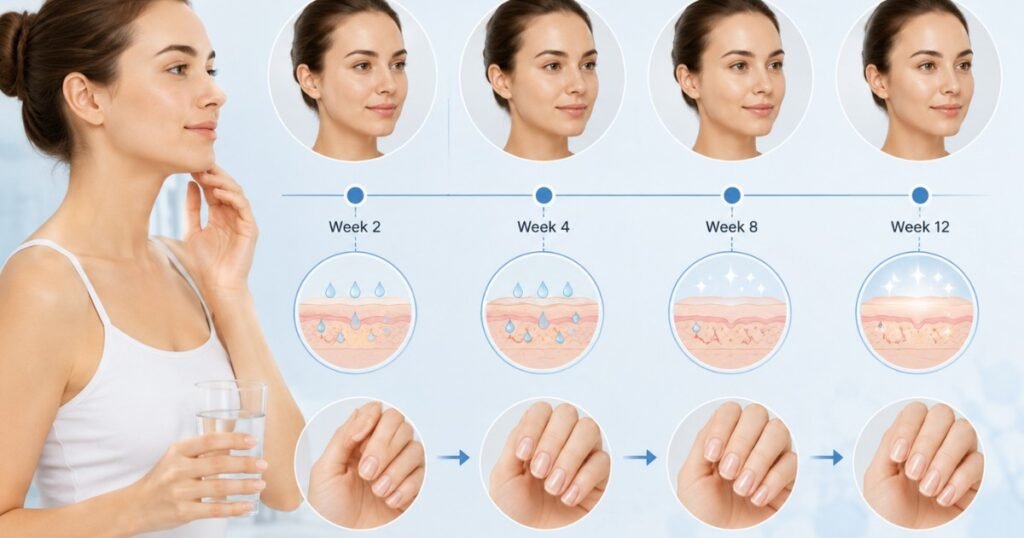
When you search for collagen before and after results, you’ll find everything from dramatic transformation photos to people saying they noticed no difference at all. It’s no wonder so many people end up wondering what collagen can realistically do—and how long it actually takes to work.
The truth is much less dramatic than many social media posts suggest. Collagen supplements may help support skin hydration, elasticity, nail strength, hair health, and joint comfort, but the changes usually happen gradually over several weeks. Your results also depend on factors like daily consistency, the amount you take, your overall diet, and your individual health.
In this guide, you’ll learn what current research says about collagen supplements, what a realistic 4–12 week timeline looks like, and which habits can make the biggest difference. By the end, you’ll know what improvements are worth expecting—and which claims are better left to marketing.
Overview: The Quick Answer
Looking for the quick answer? Here’s what you can realistically expect from collagen before and after results based on current research:
- Skin hydration, elasticity, and wrinkle appearance: often improve after roughly 8–12 weeks of consistent use.
- Hair and nails: tend to show changes earlier, sometimes within 4–8 weeks.
- Joint comfort: usually takes longer, often 8–16 weeks, and varies more by individual.
- Results vary based on age, baseline nutrition, sun exposure, and the quality of the product you choose.
- Best outcomes happen when collagen is paired with adequate protein, vitamin C, sun protection, and consistent daily use — not taken in isolation.
The Golden Rules for Realistic Collagen Before & After Results
- Take hydrolyzed collagen peptides daily (typically 2.5–10 g, depending on your goal)
- Stay consistent for at least 8–12 weeks before judging results
- Make sure your diet includes enough vitamin C
- Maintain adequate overall protein intake
- Wear sunscreen daily — sun damage undermines collagen support
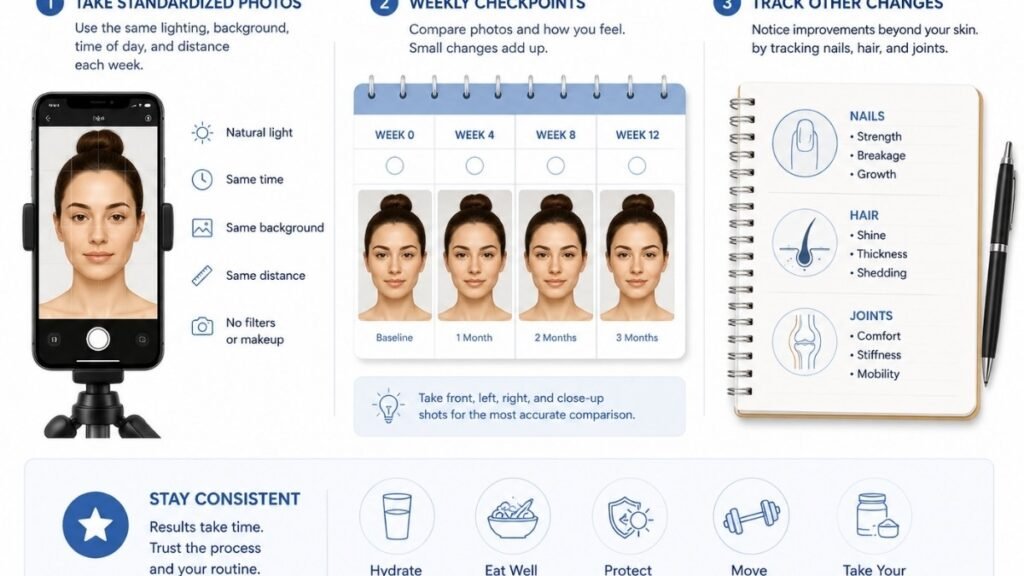
- Track progress with standardized photos, not memory
Collagen supplements are a support tool for your body’s own collagen production. They don’t reverse aging, and they’re not a substitute for medical treatment — but used consistently, they can make a measurable, realistic difference.
Does Collagen Actually Work? What the Research Says
Collagen is the structural protein that gives skin its firmness, cartilage its cushioning, and hair and nails their strength. Your body produces less of it every year after your mid-20s, which is part of why skin gradually loses elasticity and joints can feel less resilient over time.
Why Collagen Declines With Age
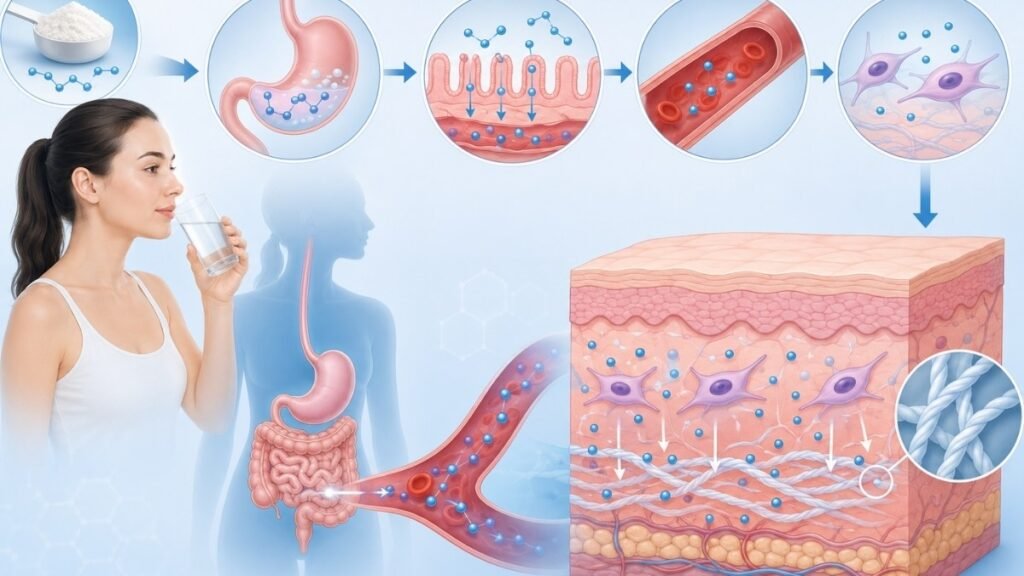
Collagen production slows gradually rather than dropping off a cliff. Most people lose roughly 1% of their skin’s collagen per year starting in their mid-to-late twenties, with a steeper decline around menopause for women. This is a normal biological process, not a sign that something is wrong — but it does explain why the demand for collagen supplements rises sharply in the 30s and 40s.
What Hydrolyzed Collagen Peptides Are
Whole collagen molecules are too large to be absorbed intact. That’s why most supplements use hydrolyzed collagen peptides — collagen that’s been broken down into smaller chains of amino acids so your digestive system can absorb them more efficiently. This is the form used in the vast majority of clinical trials on skin, hair, nail, and joint outcomes.
What Clinical Studies Have Found
Randomized controlled trials — the gold standard of nutrition research — have generally found modest but measurable improvements in skin hydration, elasticity, and the appearance of fine lines after consistent daily use. Evidence for nail strength and joint comfort is also promising, though the number of high-quality studies is smaller than for skin.
Clinical Evidence Summary
| Benefit Area | Evidence Strength | Typical Timeframe |
|---|---|---|
| Skin hydration | Moderate to strong | 8–12 weeks |
| Skin elasticity | Moderate | 8–12 weeks |
| Wrinkle appearance | Moderate | 12+ weeks |
| Nail strength | Moderate | 4–8 weeks |
| Joint comfort | Emerging, moderate | 8–16 weeks |
They won’t erase deep wrinkles, replace dermatological treatments, cure joint disease, or produce the kind of transformation you sometimes see in heavily edited social media posts. Many of those dramatic “before and after” photos rely on lighting changes, makeup, filters, or simply aren’t attributable to collagen alone — which is worth remembering the next time a 2-week transformation photo seems too good to be true.
Key takeaway: Collagen supplements have supportive scientific evidence, but improvements are gradual and modest rather than dramatic.
Collagen Before and After Timeline: What Changes to Expect in 1–12+ Weeks
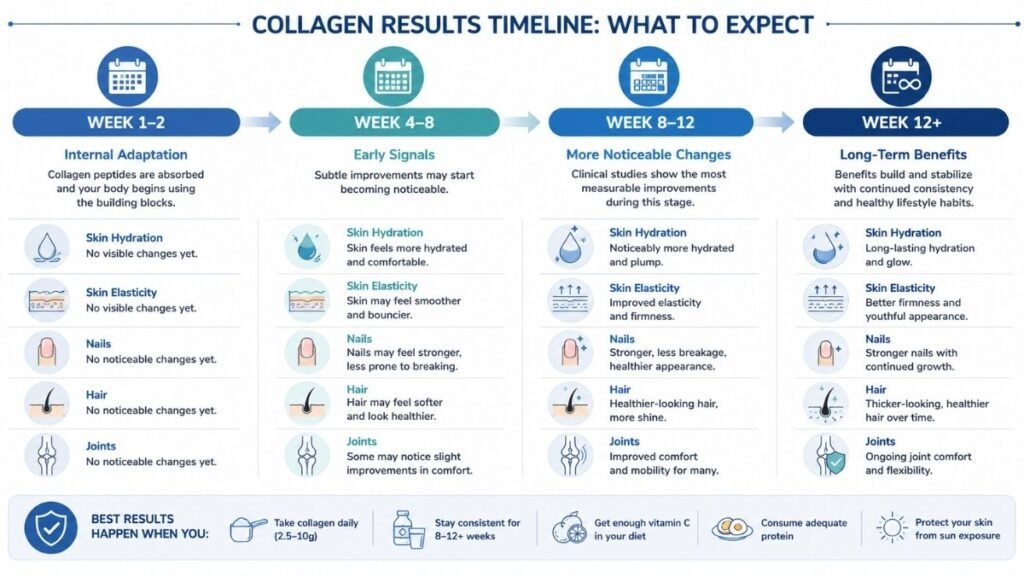
No visible changes after the first week or two? That’s completely normal. Collagen takes time to work, and knowing the typical timeline helps you set realistic expectations from the start.
Weeks 1–2: Internal Adaptation
During this early phase, collagen peptides are being absorbed and used by your body, but visible changes are rare. This is an internal adjustment period — your fibroblasts (the cells responsible for producing collagen) are just beginning to respond to the extra building blocks you’re providing. It’s surprisingly common for people to stop here, right before changes would have started to appear.
Weeks 4–8: Early Signals
By this stage, many people start noticing subtler shifts: skin that feels slightly more hydrated, nails that seem less prone to breaking, and occasionally improved hair texture. These changes are often felt before they’re visually obvious in photos.
Weeks 8–12: More Noticeable Changes
This is typically when clinical studies show the most measurable improvements — better skin elasticity, a softer appearance of fine lines, and for some people, early improvements in joint comfort. If you’re going to compare before-and-after photos meaningfully, this is the point where a difference is more likely to be visible.
Beyond 12 Weeks: Maintenance
Collagen isn’t a one-time fix — it’s an ongoing input, similar to protein or vitamin D. Benefits tend to plateau and then require continued use to maintain, rather than “topping up” permanently. Many people realize after a few months that stopping supplementation gradually reverses some of the gains, which reinforces that consistency is doing more work than any single dose.
12-Week Collagen Timeline
| Time | Skin | Hair | Nails | Joints | Evidence Level |
|---|---|---|---|---|---|
| Weeks 1–2 | No visible change | No visible change | No visible change | No visible change | N/A (adaptation phase) |
| Weeks 4–8 | Mild hydration increase | Possible texture improvement | Reduced breakage | Rarely noticeable yet | Emerging |
| Weeks 8–12 | Elasticity, fine lines improve | More noticeable growth/strength | Stronger, less brittle | Early comfort improvements | Moderate |
| 12+ weeks | Continued benefit with maintenance | Continued benefit with maintenance | Continued benefit with maintenance | Continued benefit with maintenance | Moderate, ongoing |
A practical tip: rather than checking your skin or nails daily (which makes changes nearly impossible to detect), take a photo under the same lighting every four weeks. Gradual change is much easier to see across a month than across a day.
Key takeaway: Most clinically observed improvements become noticeable after approximately 8–12 weeks of consistent supplementation.
How Collagen Is Absorbed—and Why Vitamin C Matters
Seeing results isn’t just about taking collagen every day—it also depends on how your body processes and uses it. Once collagen is digested, several nutrients, especially vitamin C, help support your body’s natural collagen production. Understanding this process can also explain why consistency and a balanced diet matter just as much as the supplement itself.
Why Collagen Isn’t Absorbed as Whole Collagen
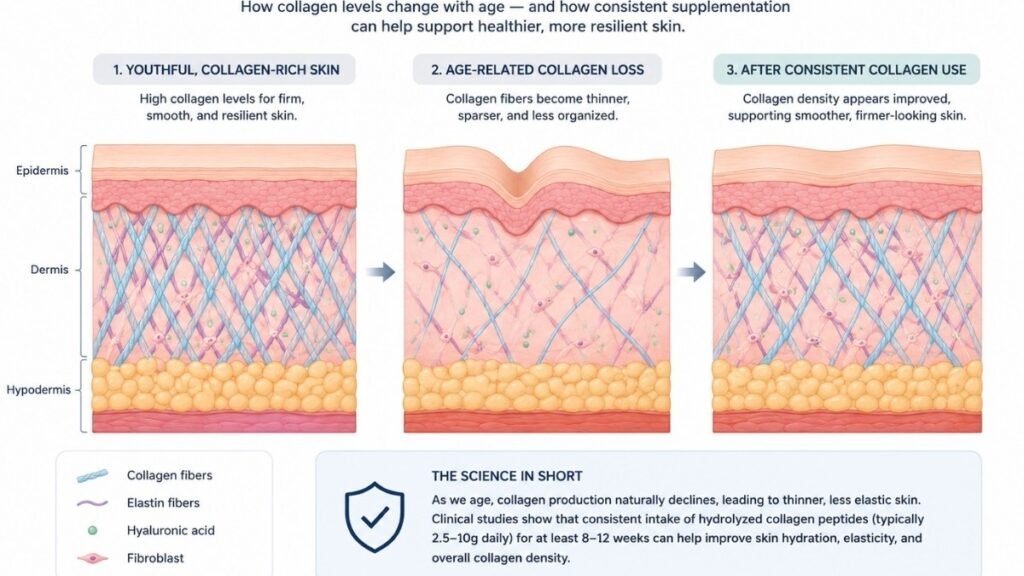
When you consume collagen, your body doesn’t absorb it as an intact protein and route it directly to your skin or joints. Instead, digestion breaks it down into individual amino acids and small peptide fragments, which are absorbed into the bloodstream and distributed throughout the body based on where they’re needed.
How Collagen Peptides Work
Some of these peptide fragments appear to act as signals that stimulate fibroblasts — the cells responsible for producing your body’s own collagen, elastin, and hyaluronic acid. In simple terms: collagen supplements don’t directly “become” your skin’s collagen. They provide raw materials and signals that support your body’s own production process.
Collagen peptides → Digestion → Absorption → Fibroblast stimulation → Collagen production
Nutrients That Support Collagen Production
Vitamin C is essential for collagen synthesis — without adequate levels, your body cannot properly form new collagen, regardless of how much collagen peptide you consume. Zinc and copper also play supporting roles as cofactors in the process. This is one reason people who eat a vitamin-C-poor diet sometimes report underwhelming results, even with a good-quality supplement.
Collagen vs. Regular Dietary Protein
| Feature | Collagen Peptides | Standard Dietary Protein |
|---|---|---|
| Amino acid profile | Rich in glycine, proline, hydroxyproline | More balanced, varies by source |
| Muscle-building efficiency | Lower (incomplete amino acid profile) | Higher |
| Skin/joint-specific signaling | Some evidence of targeted benefit | Limited direct evidence |
| Best used as | A targeted addition | The foundation of daily protein needs |
Assume that simply adding collagen powder to their routine, without paying attention to their overall diet, will be enough. In practice, collagen tends to work best as one piece of a broader nutritional pattern — including adequate protein, vitamin C-rich foods, and hydration — rather than as a standalone fix. If you’re building out a fuller nutrition strategy, it’s also worth understanding how vitamin D deficiency symptoms can independently affect skin and overall wellbeing, since deficiencies in other areas can mask or dilute the benefits you’re hoping to see from collagen alone.
Key takeaway: Collagen works best as part of an overall nutrition strategy rather than as a standalone solution.
What Real Before & After Results Look Like for Different Health Goals
Collagen can support your skin, hair, nails, and joints, but they don’t all respond at the same speed. Some changes may become noticeable within a few weeks, while others can take a couple of months or longer.
Skin
Skin improvements are usually the most gradual. Many people notice better hydration before seeing visible changes in elasticity or fine lines, which often require several weeks of consistent use.
Hair
Hair responds more slowly because growth cycles are naturally long. Any improvements in thickness or texture tend to be subtle and vary from person to person.
Nails
Nails are often the first area where people notice results. Reduced breakage and stronger nails may become noticeable before visible skin changes.
Joints
Joint comfort typically takes the longest to improve and depends on factors such as age, activity level, and overall joint health. Consistent daily use is especially important for this goal.
Expected Improvement by Category
| Area | Typical Onset | Visibility |
|---|---|---|
| Nails | 4–8 weeks | High |
| Skin hydration | 4–8 weeks | Moderate |
| Hair | 8–12 weeks | Low to moderate |
| Skin elasticity | 8–12 weeks | Moderate |
| Joints | 8–16 weeks | Varies |
Key takeaway: Nails often show the earliest visible changes, while skin and joints usually require more patience and consistent daily use.
Factors That Affect Your Before and After Results
Collagen doesn’t work exactly the same for everyone. Factors like your age, diet, lifestyle, and daily consistency all play a role in how quickly you notice results—and how noticeable those results are.
Lifestyle Factors
- Smoking accelerates collagen breakdown and can blunt the benefits of supplementation
- Unprotected sun exposure degrades collagen faster than it can be rebuilt
- Poor sleep is linked to slower tissue repair processes generally
- Regular exercise supports circulation, which may help nutrient delivery to skin and joints
Nutrition Factors
- Inadequate protein intake limits the raw materials available for collagen synthesis
- Low vitamin C intake directly limits collagen production, regardless of supplementation
- Chronic under-eating or restrictive diets can undermine results across the board
Product Factors
- Dosage matters — many studies use 2.5–10 g daily depending on the target outcome
- Hydrolyzed peptides are generally better absorbed than non-hydrolyzed collagen
- Inconsistent use (skipping days, stopping and starting) is one of the most common reasons people report disappointing results
Checklist: Habits That Maximize Collagen Effectiveness
- [ ] Take your collagen dose at the same time each day to build a habit
- [ ] Pair it with a vitamin C source (citrus, berries, or a supplement)
- [ ] Eat adequate total protein throughout the day
- [ ] Apply sunscreen daily, even indoors near windows
- [ ] Avoid smoking or reduce exposure where possible
- [ ] Prioritize consistent sleep
- [ ] Commit to at least 8–12 weeks before evaluating results
One common mistake is treating collagen like a fast-acting remedy rather than a long-term nutritional habit. People who supplement inconsistently — a few days on, then a week off — are the ones most likely to conclude that “collagen doesn’t work,” when in reality the product was never given a fair, uninterrupted trial.
Key takeaway: Consistency and healthy lifestyle habits influence results as much as the supplement itself.
Choosing the Right Type of Collagen Supplement
Once you understand what affects your results, the next step is choosing a collagen supplement that matches your goals. Different types of collagen are designed to support different areas of the body, so knowing the differences can help you make a more informed choice instead of relying on marketing claims.
Type I vs. Type II vs. Type III
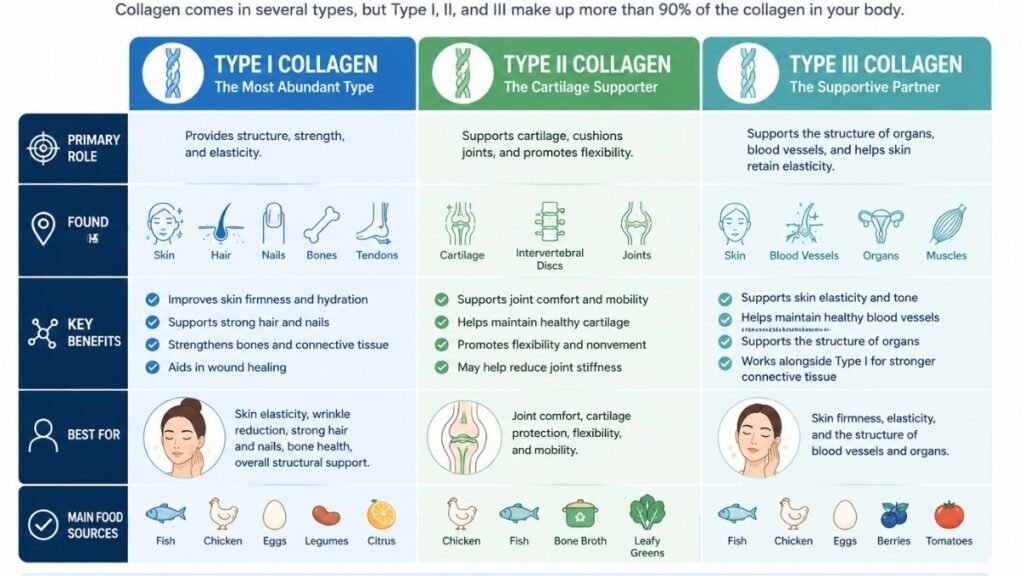
Type I collagen is the most abundant in the body and is most associated with skin, hair, and nail benefits. Type II collagen is concentrated in cartilage and is more commonly studied for joint comfort. Type III often works alongside Type I and is found in skin, blood vessels, and organs. Most skin-focused supplements use Type I (sometimes blended with Type III), while joint-focused products typically use Type II.
Marine vs. Bovine
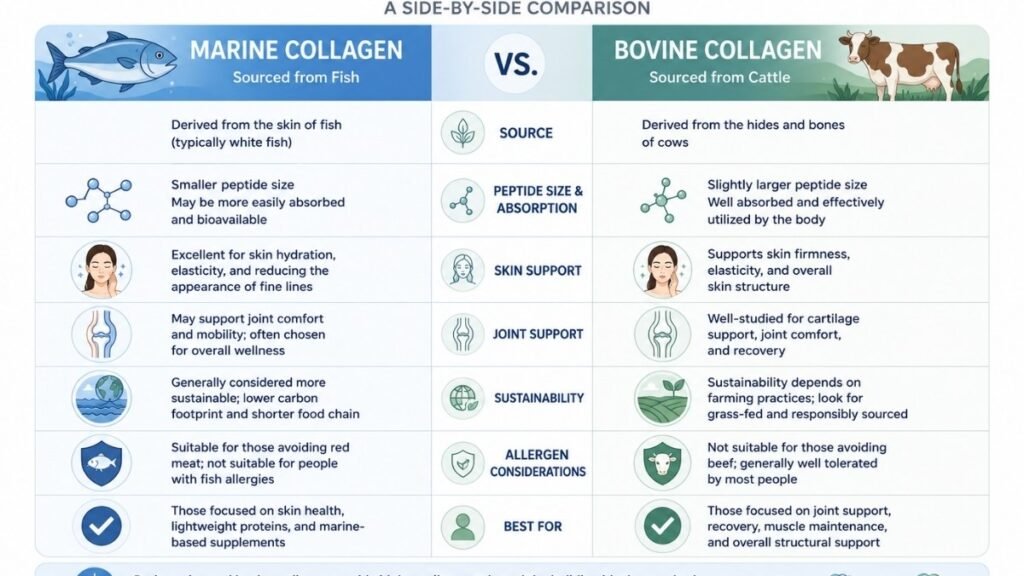
Marine collagen (sourced from fish) is predominantly Type I and is often marketed for skin benefits, with some research suggesting it may be absorbed slightly more efficiently due to a smaller peptide size. Bovine collagen (sourced from cows) contains a mix of Type I and Type III and tends to be more widely available and often more affordable.
Marine vs. Bovine vs. Type II Collagen
| Feature | Marine | Bovine | Type II |
|---|---|---|---|
| Primary type | Type I | Type I & III | Type II |
| Main focus | Skin, hair, nails | Skin, hair, nails | Joint comfort |
| Absorption | Often smaller peptide size | Standard hydrolyzed peptide size | Standard |
| Common concerns | Fish allergies | Sourcing/sustainability | Fewer large-scale studies |
| Best for | Skin-focused goals | General, budget-friendly use | Joint-focused goals |
It’s a common misconception that marine collagen is automatically “better” simply because it’s marketed as premium. In practice, the right choice depends on your specific goal — skin, joints, or general support — rather than which type carries the higher price tag.
If you’re avoiding animal-derived ingredients altogether, it’s worth knowing that traditional collagen supplements are always animal-sourced (marine, bovine, or otherwise) — there is no plant collagen, since collagen doesn’t exist in plants. Readers looking for alternatives often explore vegan collagen options, which typically work by providing the building blocks (like vitamin C, silica, and specific amino acids) that support your body’s own collagen production rather than supplying collagen directly.
Powder vs. Liquid vs. Capsules
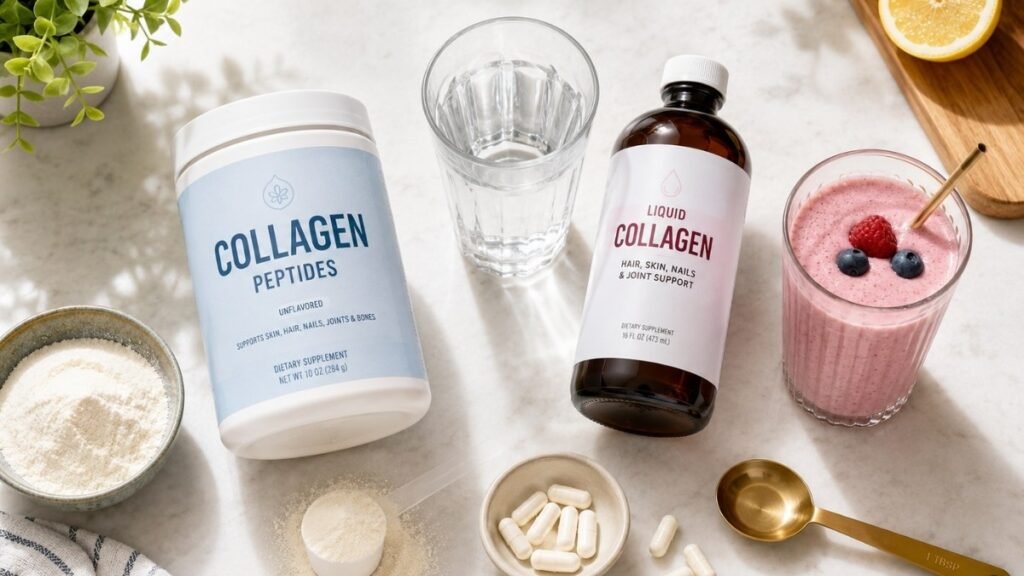
Powder is the most versatile and commonly studied format, easy to mix into coffee, smoothies, or water. Liquid collagen is often marketed as “faster absorbing,” but there’s limited independent evidence that liquid form offers a meaningful absorption advantage over a well-formulated powder — much of this claim comes from marketing rather than comparative research. Capsules are convenient for travel but often require taking several to reach an effective dose, since capsule size limits how much collagen fits per pill.
Key takeaway: The best collagen supplement depends on your health goal rather than marketing claims.
Nutrition Pairings That May Support Better Results
Taking collagen is only part of the picture. The nutrients you eat every day also help support your body’s natural collagen production, which is why a balanced diet can make a difference over time.
Essential Cofactors
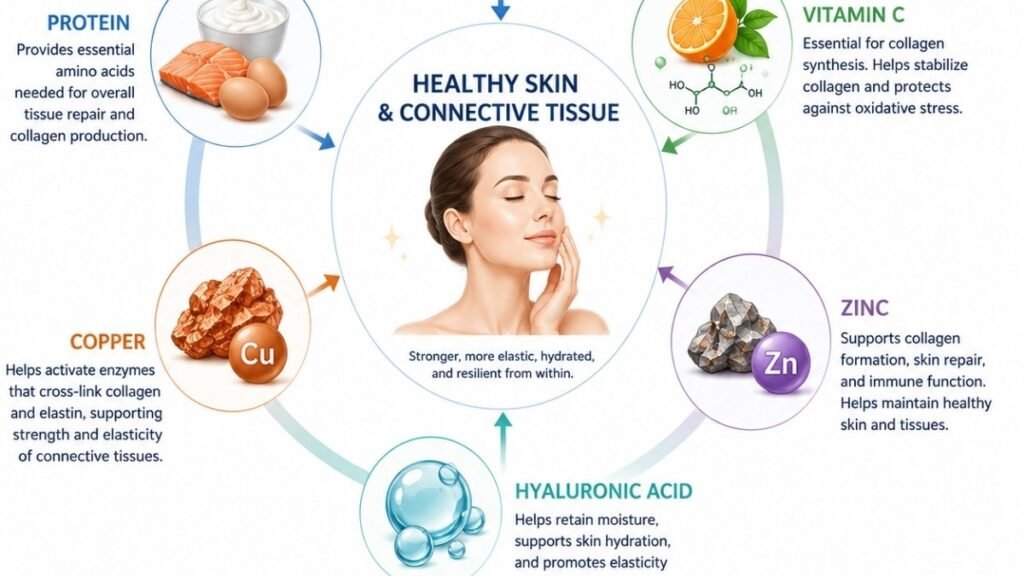
- Vitamin C: Essential for collagen synthesis. Pair your collagen with vitamin C-rich foods like oranges, kiwi, strawberries, or bell peppers.
- Zinc and Copper: These minerals help support collagen formation and maintain healthy connective tissues.
Helpful Nutrition Habits
- Protein: Provides the amino acids your body needs for tissue repair and collagen production.
- Hydration: Drinking enough water supports overall skin health and hydration, even though it doesn’t directly increase collagen levels.
- Hyaluronic Acid (Optional): Often combined with collagen in skincare supplements to support skin moisture through a different mechanism.
Instead of overhauling your routine, keep it simple. Many people find it easy to stir collagen into their morning coffee or smoothie and pair it with a vitamin C-rich breakfast. Small, consistent habits are usually more sustainable than chasing complicated supplement routines.
Key takeaway: Collagen works best when it’s part of an overall healthy diet that includes enough protein, vitamin C, and daily consistency.
Common Mistakes That Prevent Visible Results
High-quality collagen supplement won’t deliver the results you expect if it’s used inconsistently or paired with unrealistic expectations. Avoiding a few common mistakes can make a noticeable difference over time.
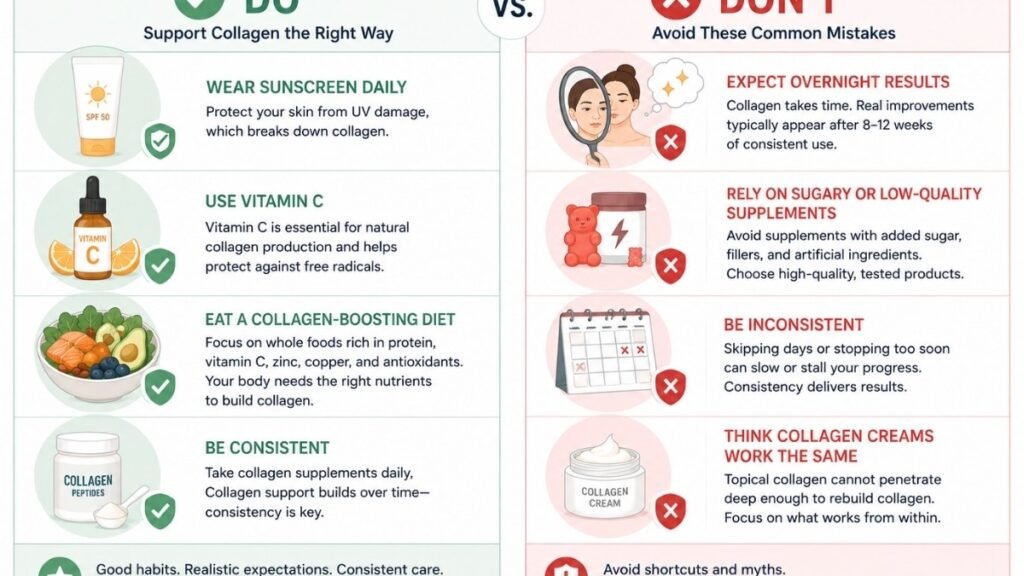
Common Mistakes to Avoid
- Expecting instant results. Most benefits take 8–12 weeks of consistent use.
- Skipping doses or stopping too early. Consistency matters more than taking a large dose occasionally.
- Ignoring vitamin C and overall nutrition. Your body needs supporting nutrients to produce collagen efficiently.
- Skipping sunscreen. Daily UV exposure breaks down collagen faster than your body can replace it.
- Choosing low-quality products. Look for hydrolyzed collagen peptides with minimal added sugar or fillers.
- Confusing topical and oral collagen. Collagen creams moisturize the skin but don’t work the same way as oral collagen supplements.
Track your progress with photos taken every four weeks under the same lighting. Comparing consistent photos is far more reliable than relying on memory and makes gradual improvements much easier to notice.
Key takeaway: Consistent use, realistic expectations, and good daily habits are just as important as the supplement itself.
Frequently Asked Questions
How long does it take to see “before and after” results from drinking collagen powder? Most people begin noticing early changes — like improved nail strength or slightly better skin hydration — within 4–8 weeks, with more noticeable skin elasticity and joint comfort improvements typically appearing between 8–12 weeks. Give it a full 12-week trial before deciding whether it’s working for you.
Can taking collagen supplements really help reduce wrinkles and firm aging skin for women over 45? Clinical research suggests collagen peptides may modestly improve skin elasticity and the appearance of fine lines after consistent use, including in women over 45. It won’t eliminate deep-set wrinkles or replace dermatological treatments, but it can be a reasonable, low-risk addition to an overall skincare and nutrition routine.
Is marine collagen better than bovine collagen for visible skin benefits? Marine collagen has a smaller peptide size in some formulations, which may offer a slight absorption advantage, but current evidence doesn’t show it’s dramatically more effective than bovine collagen for skin benefits. Choosing between them often comes down to dietary preference, allergies, and budget rather than a clear performance gap.
Should I drink collagen peptides while getting microneedling treatments to boost results? There’s no strong evidence that oral collagen supplementation directly enhances microneedling outcomes, though maintaining good overall nutrition — including adequate protein and vitamin C — supports your skin’s natural healing process during any in-office treatment. It’s reasonable to continue your usual collagen routine, but treat it as a general support habit rather than a guaranteed booster for the procedure itself.
Final Thoughts
Collagen supplements aren’t a miracle fix, but they aren’t hype either. Used consistently — alongside adequate protein, vitamin C, sun protection, and realistic expectations — they can offer modest, meaningful support for skin, hair, nails, and joint comfort over a period of 8 to 12 weeks or more. The people who tend to be satisfied with their results are usually the ones who commit to the full timeline, track progress objectively, and treat collagen as one part of a broader, balanced approach to nutrition — not a standalone solution or a substitute for medical care when it’s needed.
🏠 Behind This Guide
Many people start taking collagen hoping for quick, dramatic changes, only to feel disappointed when results don’t appear right away.
That’s why this guide focuses on realistic timelines, everyday habits, and practical ways to get the most from a collagen routine—without unrealistic promises or marketing hype.
This guide is built around three essentials:
- 🕒 Realistic Expectations — What changes you may notice and when they’re most likely to happen.
- 🥣 Daily Habits — Nutrition, consistency, and lifestyle choices that support better results.
- 🧴 Choosing the Right Supplement — Simple guidance for finding a collagen product that fits your goals.
Because the goal isn’t to chase dramatic before-and-after photos.
It’s to understand what realistic collagen progress actually looks like.
Continue Your Wellness Journey
If you’re exploring ways to support healthy aging, stronger joints, or better everyday nutrition, these guides are a great place to continue learning:
- Vegan Collagen Explained — Understand whether plant-based collagen alternatives work and how they compare with traditional collagen supplements. (→ Vegan Collagen Explained: What’s Real, What Works, and How to Choose)
- Fish Oil for Joint Pain — Learn how omega-3 fatty acids may help support joint comfort and manage everyday inflammation. (→ Fish Oil for Joint Pain: What Omega-3 Actually Does for Inflammation)
- Vitamin D Deficiency Symptoms — Discover the early warning signs of low vitamin D and when it may be worth getting your levels checked. (→ Vitamin D Deficiency Symptoms: How to Recognize the Signs)
- Omega-3 Deficiency Symptoms — Find out the common signs that may indicate you’re not getting enough omega-3s in your diet. (→ Omega-3 Deficiency Symptoms: Signs Your Body May Not Be Getting Enough)
- Magnesium and Vitamin D — See why these two nutrients work together and how magnesium supports vitamin D absorption and function. (→ Magnesium and Vitamin D: Why Your Body Can’t Use One Without the Other)
❤️ A Final Note
The best wellness habits are the ones you can keep.
At OptuVit, we believe nutrition should feel simple, practical, and approachable—not overwhelming. Every guide we publish is designed to help you build healthier routines with confidence, using advice that fits real life.
Our goal is simple: helping you make better everyday health choices, one habit at a time.