
You bought the fish oil. Good. Now you’re staring at the bottle, wondering: do I take this with breakfast or dinner? One capsule or two? Does it matter if I eat first? The label says “take daily with food” but doesn’t explain why, or what counts as “food” for this purpose, or whether the timing actually makes a difference to what you’re trying to accomplish.
These aren’t trivial questions. Omega-3 fatty acids are fat-soluble nutrients — how you take them genuinely affects how much your body actually absorbs. And the dose that makes sense for general health maintenance is completely different from the dose that shows up in clinical trials for inflammation or triglyceride management. Most people are taking fish oil without knowing either of these things, which means they may be getting meaningfully less benefit than the supplement is capable of providing.
This guide covers the best time to take fish oil, why that timing actually matters mechanistically, and how much EPA and DHA you need based on what you’re actually trying to achieve.
Key Takeaways
- The best time to take fish oil is with your largest fat-containing meal of the day — morning, lunch, or dinner all work; the key is dietary fat, not the clock. A 2019 review found that taking omega-3 concentrates with a fat-containing meal significantly increased bioavailability; a 2015 review found that low-fat meals reduced absorption.
- For general health maintenance: 500 mg combined EPA+DHA daily is the most commonly cited minimum. Most standard fish oil capsules provide 300 mg combined EPA+DHA — meaning two capsules is often the appropriate starting dose, not one.
- For targeted purposes: doses differ significantly — 1–2 g EPA for mood support, 2–4 g combined EPA+DHA for triglyceride reduction (often prescription-level), 200 mg DHA above normal intake for pregnancy.
- There is no official RDA for EPA and DHA. The 250–500 mg range often cited comes from the European Food Safety Authority as a general guidance — not from clinical trial data on specific health outcomes.
- Fishy burps? Four strategies that actually work: refrigerate the capsules, take them mid-meal (not after), choose enteric-coated formulations, and verify your oil isn’t oxidized.
Why Taking Fish Oil With Food Actually Matters
This is the most practically impactful piece of information in this guide, and it’s almost never explained properly.
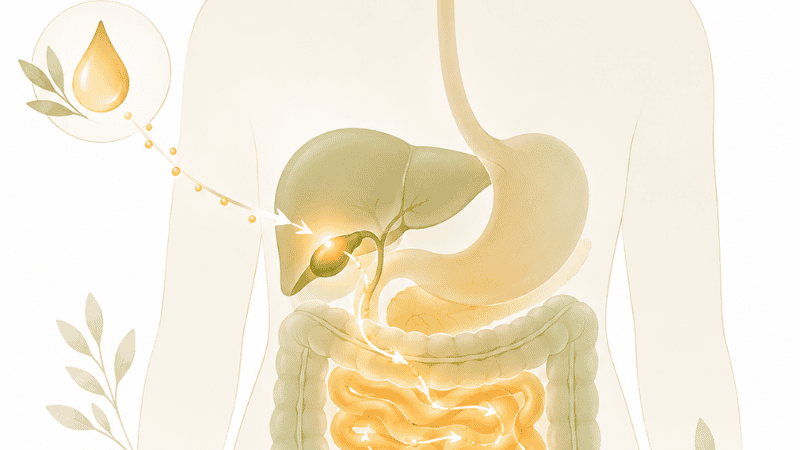
Fish oil is a fat-soluble supplement — it requires dietary fat to be absorbed effectively. Here’s the specific mechanism: when you eat a fat-containing meal, your gallbladder is signaled to release bile acids into the small intestine. Bile acids are amphiphilic molecules (they have both water-attracting and fat-attracting ends) that emulsify fats into micelles — tiny droplets that can be absorbed through the intestinal lining. Without adequate bile acid secretion, fat-soluble nutrients including EPA and DHA have limited access to the absorption machinery.
When you take fish oil without dietary fat — on an empty stomach or with a very low-fat meal — bile secretion is minimal. The result: meaningful portions of your EPA and DHA pass through the gut without being absorbed.
The research is specific on this. A 2019 review in the European Journal of Nutrition found that taking omega-3 fatty acid concentrates with fat-rich food significantly increased their bioavailability. A 2015 review in Prostaglandins, Leukotrienes and Essential Fatty Acids found that omega-3 absorption was significantly reduced when taken with a low-fat meal compared to a high-fat one. The practical implication: the same capsule taken with a fat-containing meal versus without could deliver meaningfully different amounts of EPA and DHA to your bloodstream.
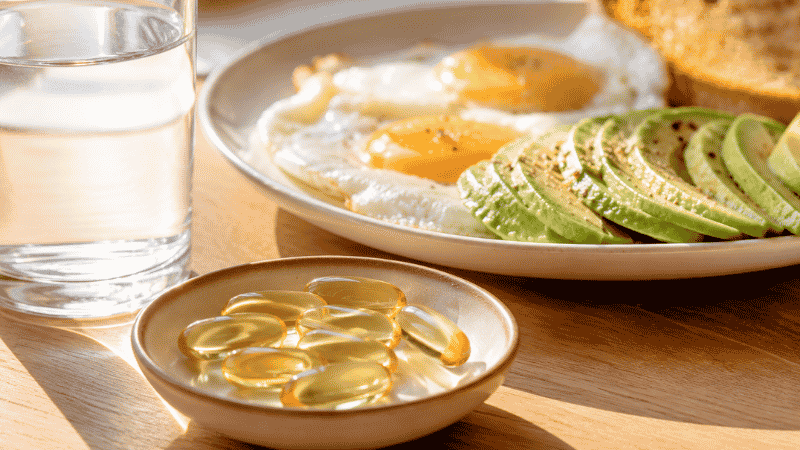
What counts as “fat-containing” for this purpose? You don’t need a full meal. A meal or snack containing any of the following provides sufficient fat for good absorption: eggs, avocado, nuts, cheese, olive oil dressing, butter, meat, full-fat dairy, or fatty fish. A small handful of nuts or a tablespoon of olive oil is enough to trigger adequate bile secretion.
What doesn’t work well: plain toast, plain rice, or taking fish oil with only water. Black coffee alone is not sufficient.
What Is the Best Time to Take Fish Oil?
Morning, afternoon, or evening — the time of day matters less than the presence of dietary fat. That said, a few practical considerations can help you choose:
Take it with your largest meal. Your largest meal of the day is typically your highest-fat meal, which means it provides the best absorption environment. For most people, that’s dinner. Taking fish oil with dinner is both practically convenient and metabolically optimal.
Split the dose if you’re taking more than 1 gram. At higher doses (2+ grams EPA+DHA), dividing into two doses taken at different mealtimes can reduce the GI side effects that some people experience at single large doses. This also spreads the absorption across two bile-secretion events, which may improve total uptake.
Morning has one advantage: consistency. People who take supplements with breakfast tend to be more consistent because breakfast timing is more routine for most people. If you’re frequently skipping meals or eating irregular dinners, morning with breakfast is more reliable even if it’s not the theoretically optimal window.
Evening has one advantage: some people find fish oil mildly stimulating in the morning — possibly related to the fatty acid content’s effect on cell membrane fluidity and neurotransmitter function. If morning doses feel activating rather than neutral, shifting to dinner solves this without any absorption cost.
There’s no evidence that morning versus evening timing produces meaningfully different outcomes when taken consistently with food either way.
How Much Omega-3 Per Day: Dosage by Goal
The amount of EPA and DHA that makes sense for you is not one-size-fits-all. Here’s how to think about it by goal:
For General Health Maintenance
Target: 500 mg combined EPA+DHA daily.
This is the most commonly cited general guidance for cardiovascular and health maintenance support — derived from the European Food Safety Authority’s review. Most standard 1,000 mg fish oil capsules contain approximately 300 mg of combined EPA+DHA (the other 700 mg is other fats), meaning one capsule doesn’t quite reach this threshold. Two capsules of a standard product, or one capsule of a concentrated formulation, typically provides 500–600 mg combined EPA+DHA.
Always check the Supplement Facts panel for the specific EPA and DHA amounts — the front-label milligrams refer to total oil, not EPA+DHA content.
For Mood Support and Anxiety
Target: 1–2 g EPA daily, in an EPA-predominant formulation (>60% EPA of total omega-3).
The meta-analysis evidence for omega-3’s effect on mood specifically favors EPA-dominant formulations at these doses. High-EPA fish oil concentrates or pure EPA supplements are more targeted for this goal than standard fish oil. See our EPA vs. DHA guide for the full breakdown.
For Anti-Inflammatory Support (Joint Health, Inflammatory Conditions)
Target: 2–3 g combined EPA+DHA daily.
Clinical trials in rheumatoid arthritis and inflammatory conditions typically used doses in this range. This is above standard OTC dosing and may require a concentrated fish oil supplement or multiple capsules of standard products.
For Triglyceride Reduction
Target: 2–4 g combined EPA+DHA daily.
This is the range used in the clinical trials that established omega-3’s effect on triglycerides — and the dose range of FDA-approved prescription omega-3 medications (Vascepa at 4g EPA/day; Lovaza at 4g EPA+DHA/day). Standard OTC fish oil is typically insufficient to reach triglyceride-relevant doses without taking many capsules. For people specifically targeting triglycerides, discussing prescription-strength options with a physician is often more practical.
For Pregnancy and Breastfeeding
Target: At least 200 mg DHA daily above normal intake.
This is the European Commission recommendation specifically for pregnant and breastfeeding women, reflecting the active transfer of DHA to the fetus during the third trimester and into breast milk. Many prenatal vitamins include DHA — check the label for the specific amount. Women who don’t regularly eat fatty fish should consider a separate DHA supplement or algal oil (the vegan/vegetarian direct DHA source) to ensure they’re reaching this target.
How Much DHA During Pregnancy: A More Complete Answer
The 200 mg above normal intake figure is a conservative minimum. Some researchers suggest higher intake — 300–400 mg DHA daily — may be beneficial for fetal neurodevelopment, though evidence for benefit beyond 200 mg is less consistent. The European Food Safety Authority’s safe upper limit for DHA from supplements during pregnancy is approximately 1 gram/day. Most prenatal DHA supplements fall in the 200–300 mg range, which is appropriate.
For Cognitive Health in Aging Adults
Target: 1–2 g DHA daily (DHA-predominant formulation).
Most intervention trials in cognitive aging and mild cognitive impairment used DHA-focused supplementation in this range. Standard fish oil provides some DHA, but concentrated DHA supplements or algal oil products provide a more targeted dose for this goal.
Omega-3 With Food: What Actually Happens If You Don’t
You forget your fish oil in the morning and take it mid-afternoon on an empty stomach. Does it matter?
For a single missed-with-food dose, the impact is modest. Your body will absorb some EPA and DHA even without a fat-containing meal — absorption isn’t zero, it’s just meaningfully lower. For occasional lapses, don’t stress.
For consistent daily dosing on an empty stomach over months: yes, it matters. If you’re systematically taking fish oil without food, you’re potentially absorbing 30–40% less EPA and DHA than you would with a fat-containing meal, which changes whether you’re actually reaching the dose thresholds associated with your intended benefits.
The fix is simple: habit-stack fish oil with a specific meal you reliably eat most days.
How to Take Fish Oil Without the Fishy Burp
This is the complaint that makes people abandon otherwise useful supplements, and it’s worth addressing directly because the solutions are more effective than most people realize.
Why it happens: The fishy aftertaste and burping occur when fish oil capsules begin dissolving in the stomach, releasing omega-3 fatty acids that come back up with stomach acid during normal GI movement. This is more likely with oxidized fish oil (which also smells worse before you even take it) and with capsules taken on an empty stomach.
Four strategies that actually work:
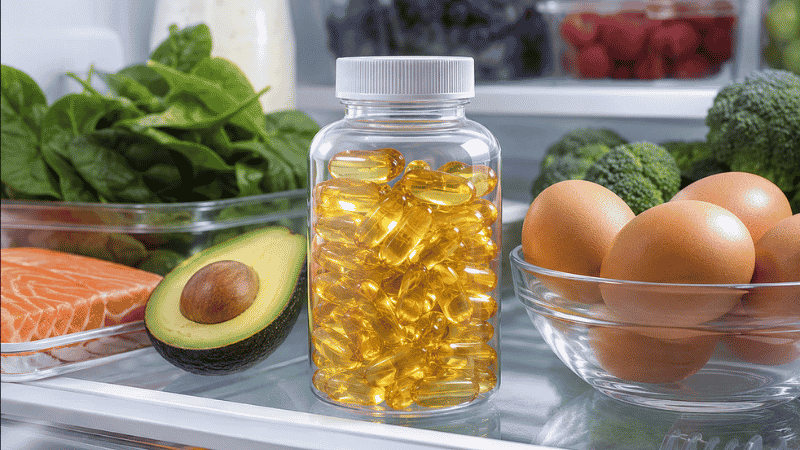
1. Refrigerate or freeze the capsules. Cold capsules dissolve more slowly in the stomach, giving the fats time to move further into the GI tract before they release. Many people find this eliminates the burp problem entirely. This works for standard gelatin softgels and doesn’t affect potency.
2. Take fish oil mid-meal, not at the end. When you take a capsule at the end of your meal, it sits on top of the food mass in the stomach. Taking it in the middle of eating means it gets mixed into the food content, which slows digestion and buffers the release. Counterintuitive but effective.
3. Choose enteric-coated formulations. Enteric coatings prevent the capsule from dissolving until it reaches the small intestine — bypassing the stomach entirely. The downside: enteric-coated forms absorb slightly differently, and some coating materials may slightly reduce absorption. For people with significant reflux or burp sensitivity, the trade-off is often worth it.
4. Check for oil oxidation. Oxidized fish oil smells distinctly rancid — not mildly oceanic, but aggressively “fishy” or off-putting before you’ve even taken it. Oxidized oil produces more volatile compounds that cause GI irritation and the fishy aftertaste. Fresh, high-quality fish oil should smell mild. If your bottle smells bad, that’s a quality issue, not just a normal side effect. Refrigerating after opening, checking expiration dates, and choosing third-party certified products (IFOS certification verifies oxidation levels) reduces this significantly.
Is There Such a Thing as Too Much Omega-3?
Fish oil at typical OTC doses (1–3 g/day total oil, providing 300–900 mg EPA+DHA) is well tolerated by most healthy adults. At higher doses, a few considerations apply:
Blood-thinning effects: EPA and DHA have mild antiplatelet effects. At standard doses, this is not clinically significant. At doses above 3 g EPA+DHA daily, the effects become more relevant — the REDUCE-IT trial at 4 g EPA/day found slightly higher rates of bleeding events in the treatment group compared to placebo. If you’re on anticoagulant medications (warfarin, aspirin therapy, clopidogrel), discuss high-dose fish oil with your prescribing physician.
GI side effects at high doses: Nausea, loose stools, and heartburn occur in some people at doses above 3 g/day. Splitting doses across two meals and refrigerating capsules helps.
LDL increase with some formulations: High-dose EPA+DHA (not pure EPA alone) has been shown in some studies to modestly increase LDL cholesterol, which is why some cardiologists prefer pure EPA formulations for people with cardiovascular risk. If you’re taking high doses for a specific cardiovascular indication, this nuance is worth discussing with your doctor.
The NIH Office of Dietary Supplements notes that the FDA considers supplements providing up to 3 g/day of EPA+DHA from food and supplements to be generally recognized as safe (GRAS). Above this, medical supervision is appropriate.
When to Talk to a Doctor
Most people can self-select an appropriate fish oil dose without medical involvement. Talk to a doctor if:
- You’re targeting triglyceride reduction — the doses involved (2–4 g EPA+DHA) are often better managed with prescription monitoring, and prescription-strength formulations may be more appropriate
- You take anticoagulant medications (warfarin, aspirin therapy, clopidogrel, heparin)
- You have a bleeding disorder or upcoming surgery
- You’re pregnant and unsure whether your prenatal vitamin covers your DHA needs
- You have a diagnosed inflammatory condition and are considering therapeutic doses
Frequently Asked Questions
What is the best time to take fish oil? With your largest fat-containing meal of the day — this is the primary factor that affects absorption, not the time of day. Morning, midday, or evening all work if taken with a meal containing dietary fat. Consistency matters more than the specific timing.
How much EPA and DHA per day should I take? For general health maintenance: 500 mg combined EPA+DHA. For mood support: 1–2 g EPA in an EPA-dominant formulation. For inflammation: 2–3 g combined. For triglycerides: 2–4 g (often prescription-level). For pregnancy: at least 200 mg DHA above normal intake.
How much fish oil is too much? The FDA considers up to 3 g/day EPA+DHA from supplements as generally recognized as safe. Above that, medical supervision is appropriate. Side effects at high doses include GI discomfort and mild blood-thinning — relevant if you take anticoagulant medications.
Should I take fish oil with food or without? Always with food containing dietary fat. Bile acids released in response to dietary fat are required for optimal absorption of fat-soluble nutrients including EPA and DHA. Taking fish oil without fat can meaningfully reduce how much your body actually absorbs.
Can I take fish oil at night? Yes. Evening with dinner is a practical and effective timing option. There’s no evidence that nighttime dosing reduces efficacy — some people find it more convenient and consistent than morning dosing.
How much DHA should I take during pregnancy? At least 200 mg DHA daily above your normal intake, per European Commission guidance. Many prenatal vitamins include DHA — check the specific amount on the label. If yours doesn’t include DHA or the amount is low, a separate DHA supplement or algal oil is appropriate. Discuss with your OB or midwife.
Why does fish oil make me burp? Fish oil burping occurs when capsules dissolve in the stomach and omega-3 fatty acids come back up with normal GI movement. The most effective solutions: refrigerate the capsules before taking, take them mid-meal rather than at the end, and ensure your oil isn’t oxidized (fresh fish oil should smell mildly oceanic, not strongly rancid). Enteric-coated formulations bypass the stomach entirely and eliminate this problem for most people.
The Bottom Line
The best time to take fish oil is simple: with your largest fat-containing meal of the day, consistently. Morning or evening matters less than having dietary fat present — that’s what triggers the bile secretion that makes absorption effective.
The dose question is more nuanced. If you’re taking standard fish oil for general health, check how much EPA+DHA is actually in each serving (not the total oil weight) and ensure you’re reaching 500 mg combined. If you have a specific target — mood, inflammation, triglycerides, pregnancy — the appropriate dose is different and often higher than standard OTC recommendations.
And if the fishy burp is the reason you’ve given up on fish oil before: refrigerate the capsules and take them mid-meal. It’s a remarkably effective fix for something that derails a lot of otherwise good supplement habits.
Want to understand whether you need more EPA or DHA specifically — and how to read your supplement label? EPA vs. DHA: What’s the Difference and Which One Do You Actually Need? (C3)
Comparing fish oil, krill oil, and algae oil? See which source works best for your situation: Fish Oil vs. Krill Oil vs. Algae Oil: How to Choose (C4)
References
- Schuchardt JP, Hahn A. Bioavailability of long-chain omega-3 fatty acids. Prostaglandins, Leukotrienes and Essential Fatty Acids. 2013;89(1):1-8. doi:10.1016/j.plefa.2013.03.010
- Dyerberg J, Madsen P, Møller JM, Aardestrup I, Schmidt EB. Bioavailability of marine n-3 fatty acid formulations. Prostaglandins, Leukotrienes and Essential Fatty Acids. 2010;83(3):137-141. doi:10.1016/j.plefa.2010.06.007
- National Institutes of Health Office of Dietary Supplements. Omega-3 Fatty Acids: Fact Sheet for Health Professionals. Updated May 2026. https://ods.od.nih.gov/factsheets/Omega3FattyAcids-HealthProfessional/
- Bhatt DL, Steg PG, Miller M, et al. Cardiovascular Risk Reduction with Icosapentaenoic Acid for Hypertriglyceridemia (REDUCE-IT). New England Journal of Medicine. 2019;380(1):11-22. doi:10.1056/NEJMoa1812792
- European Food Safety Authority. Scientific Opinion on the Tolerable Upper Intake Level of Eicosapentaenoic Acid (EPA), Docosahexaenoic Acid (DHA) and Docosapentaenoic Acid (DPA). EFSA Journal. 2012;10(7):2815. doi:10.2903/j.efsa.2012.2815