
You’ve likely optimized your calendar, switched to a standing desk, and cleared your morning of digital distractions. Yet, two hours into a deep-work session, the words on the screen start to blur. Your decision-making feels heavy, and that creative spark has been replaced by a persistent, “shrouded” mental fatigue.
If you’ve ruled out simple sleep deprivation, you’re likely fighting an internal battle against chronic inflammation. For the high-performer, this isn’t a vague medical buzzword; it is a systemic biological tax. It reroutes metabolic resources away from the prefrontal cortex to fuel a low-grade immune response, effectively placing an invisible ceiling on your cognitive output.

The Mechanism: From Cytokines to Cognitive Friction
To address the root cause, we have to move beyond “sickness behavior.” Normally, acute inflammation is a survival mechanism—it heals a wound or clears a pathogen. However, when systemic inflammation becomes chronic—driven by chronic work stress, poor lipid ratios, or sedentary behavior—it alters the very architecture of your thought process.
Microglial Activation and Brain Fog
Systemic inflammation is mediated by pro-inflammatory proteins called cytokines, such as IL-6 and TNF-alpha. When these cross the blood-brain barrier, they trigger the microglia—the brain’s resident immune cells.
In a healthy state, microglia support neuronal health. When “primed” by inflammation, they shift into a defensive mode, releasing reactive oxygen species that interfere with synaptic plasticity. This is the physiological basis for brain fog. It’s not a lack of willpower; it’s a reduction in neural “bandwidth” because your prefrontal cortex—the seat of executive function—is physically struggling to communicate.
The Dopamine Drain
Chronic inflammation also hijacks your motivation. Research suggests that high inflammatory markers can reduce dopamine synthesis and release in the basal ganglia. This makes the “perceived effort” of a task feel significantly higher than it actually is. This is why a simple email can feel like an insurmountable mountain when you are systemically inflamed.
[Internal Link: Is your diet the culprit? Why Swai Fish might be fueling your inflammation → /what-is-swai-fish-nutrition-safety-guide/]
User Segmentation: The Performance Impact
The High-Level Professional
For the executive, inflammation manifests as decision fatigue. When the brain is under inflammatory load, it prioritizes “low-energy” cognitive paths. You become less likely to innovate and more likely to rely on safe, repetitive, or impulsive choices.
The Student or Researcher
For those in high-stakes learning environments, neuroinflammation directly impacts the hippocampus. If your “internal fire” is high, your ability to encode new memories—information retention—drops. You can read the same page five times and still fail to synthesize the data.
Case Examples: Real-World Clinical Context
Case 1: The “Tired but Wired” Executive
- The Subject: James, a 42-year-old CFO. Despite a “clean” diet, his high-cortisol lifestyle kept him in a pro-inflammatory loop.
- The Symptom: Afternoon slumps so severe he was self-medicating with caffeine, which only exacerbated his systemic stress.
- The Fix: We introduced Liposomal Curcumin (to address bioavailability) and 3,000mg of high-EPA fish oil.
- The Result: Within 4 to 6 weeks, his C-Reactive Protein (CRP) levels dropped into the optimal range (<1.0 mg/L). His energy became linear rather than cyclical.
Case 2: The Burned-Out Creative
- The Subject: Elena, a 29-year-old designer.
- The Symptom: Chronic creative blocks and “low-grade” joint stiffness that began affecting her work endurance.
- The Fix: We targeted gut-mediated inflammation by removing oxidized seed oils and introducing Sulforaphane (broccoli sprout extract) to upregulate Nrf2—the body’s primary antioxidant defense.
- The Result: Over two months, she reported a “lifting of the veil.” Her “flow state” returned because her brain was no longer stuck in a defensive immune posture.
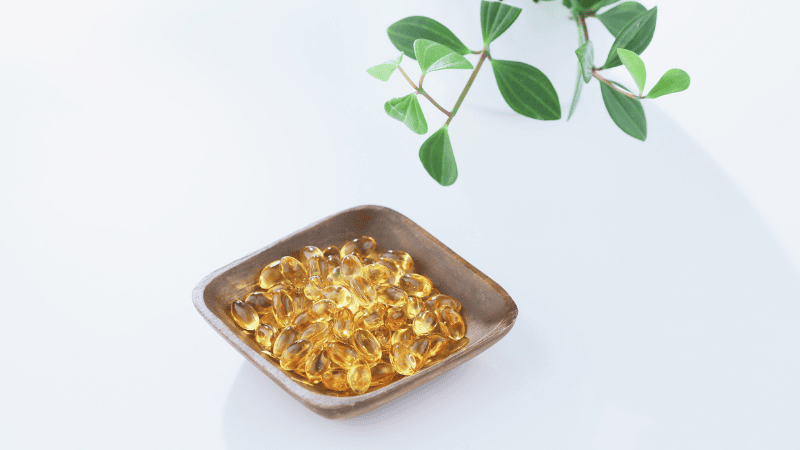
The Supplement Breakdown: Extinguishing the Fire
If you want to lower your inflammatory “background noise,” you need targeted interventions that respect biological absorption limits.
The Foundation: Omega-3 Fatty Acids (EPA/DHA)
Omega-3s act as the structural “peacekeepers” of cell membranes. They are precursors to resolvins, which actively “turn off” the inflammatory response.
- Dosage Guidance: Look for a high EPA-to-DHA ratio. Target 2,000mg–4,000mg of total Omega-3s daily.
The “Switch” Flippers: Curcumin and Resveratrol
These polyphenols inhibit the NF-kB pathway, the genetic master switch for inflammation.
- The Nuance: Avoid standard turmeric powder. Use a Phytosome or Liposomal delivery system; otherwise, 95% of the active curcumin will simply be excreted.
The Barrier Support: Magnesium Glycinate
Magnesium is a critical co-factor in regulating CRP levels. It also helps maintain the integrity of the blood-brain barrier, essentially “guarding the gate” against systemic cytokines.
- Dosage: 300mg–400mg taken in the evening to support the parasympathetic nervous system.
[Mastering Magnesium: Which form is best for your brain? → /guides/magnesium-glycinate-benefits/]
Conversion Layer: The Optimization Stack
Not all inflammation is the same. Choose your intervention based on your primary productivity leak:
- Best for Brain Fog: Liposomal Curcumin + DHA-rich Omega-3.
- Why: This targets the microglial activation directly. The liposomal delivery ensures the curcumin reaches systemic circulation, while DHA supports the structural integrity of your neurons.
- Best for Stress: KSM-66 Ashwagandha + Magnesium Glycinate.
- Why: This stack addresses the HPA-axis. By lowering cortisol, you prevent the secondary inflammatory cascade that ruins your afternoon focus.
- Best for Long-Term Use: Sulforaphane + Resveratrol.
- Why: These are “cellular housekeepers.” They upregulate your body’s natural antioxidant production (Nrf2 pathway), making you more resilient to environmental toxins over months of use.
Differentiation: What Most Supplement Guides Get Wrong
Most guides treat inflammation like a fire that needs to be “put out” entirely. This is a mistake. Acute inflammation is necessary for neuroplasticity and muscle growth. The goal isn’t zero inflammation; it’s inflammatory resolution.
Furthermore, many “top 10” lists ignore bioavailability. If your supplement isn’t formulated to cross the gut lining or the blood-brain barrier (like standard turmeric or low-grade Zinc), you aren’t optimizing your health—you’re just creating expensive urine. Real optimization requires standardized extracts and lipid-based delivery systems.
Safety & Disclaimer: Managing the Biological Fire
(Medical Risk Disclaimer): This content is for informational and educational purposes only. It is not intended to provide medical advice or to take the place of such advice or treatment from a personal physician.
- Dosage Caution: Do not exceed the recommended dosages on supplement labels without professional supervision. High doses of certain antioxidants can occasionally interfere with the body’s natural signaling.
- Who Should Avoid: Individuals on blood-thinners (like Warfarin) should exercise extreme caution with Curcumin and Omega-3s, as both have mild anticoagulant properties.
- Consult a Professional: Always speak with your healthcare provider before adding new supplements to your routine, especially if you have an autoimmune condition or are pregnant/nursing.
FAQ
How do I know if my brain fog is from inflammation? If your mental fatigue correlates with “puffy” eyes, digestive bloating, or afternoon joint stiffness, your brain fog is likely systemic, not just “mental.”
How long does it take to see results? Neurological clarity often improves within 14–21 days of starting high-dose Omega-3s and Curcumin, but the full metabolic reset typically takes 8 to 12 weeks.
Is coffee anti-inflammatory? Yes, coffee is a major source of polyphenols. However, if you are chronically stressed, the caffeine-induced cortisol spike can eventually become pro-inflammatory. Keep it to 1-2 cups before noon.
Can I get enough anti-inflammatories from food alone? While a Mediterranean-style diet is the foundation, reaching therapeutic levels of compounds like Curcumin or EPA often requires supplementation due to the degraded nutrient density in modern soil and the high stress-load of modern life.