
Walk into any supplement aisle — or scroll through any wellness account — and you’ll find magnesium positioned as the sleep mineral everyone’s been missing. That’s not entirely wrong. But “take magnesium for sleep” is about as specific as “eat better and exercise more.” The form matters, the dose matters, and critically, the type of sleep problem you’re dealing with matters.
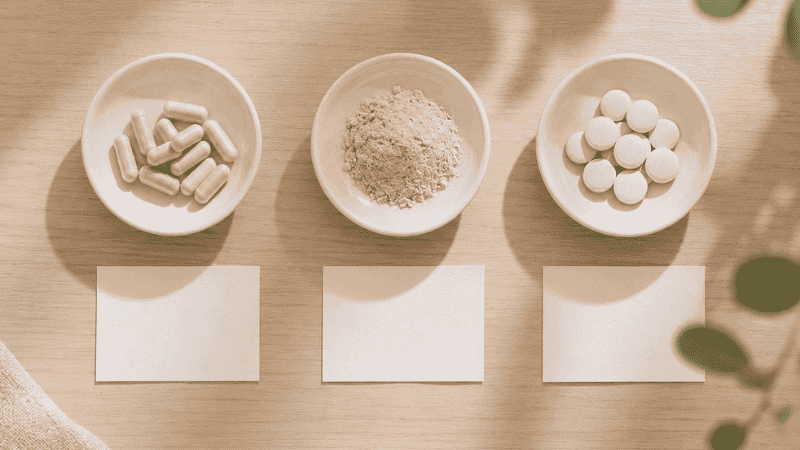
Magnesium glycinate, magnesium threonate, and magnesium taurate are the three forms most consistently associated with sleep support. They work through overlapping but meaningfully different mechanisms. One calms the nervous system broadly. One targets the brain directly. One adds a cardiovascular dimension that the others lack. Choosing the right one — or the right combination — depends on understanding what’s actually keeping you awake.
This guide covers what the research genuinely shows, how each form works, which sleep problem each is best suited for, and the practical information you need to make an informed decision. No brand rankings, no affiliate recommendations — just a clear framework for matching the form to your situation.
Key Takeaways
- Magnesium glycinate is the best-supported form for sleep in clinical research — the 2025 Schuster et al. RCT (155 adults, double-blind, placebo-controlled) found 250 mg elemental magnesium bisglycinate significantly reduced insomnia severity scores over 4 weeks. Effect size was modest (Cohen’s d = 0.2) but statistically meaningful and well-tolerated.
- Magnesium threonate is the only form designed to cross the blood-brain barrier. Its sleep evidence focuses on cognitive recovery and sleep architecture; it’s most relevant for people over 50, frequent night-wakers, or those with cognitive fatigue alongside sleep disruption.
- Magnesium taurate adds a cardiovascular dimension — taurine’s GABA-A activation and cardiac calcium regulation make it particularly relevant for sleep disruption with physical, somatic anxiety characteristics (racing heart, blood pressure sensitivity).
- The NIH sets the Tolerable Upper Intake Level for supplemental magnesium at 350 mg/day of elemental magnesium. Always read the Supplement Facts panel for elemental magnesium — the front-label number is compound weight, typically 5× larger than the actual magnesium content.
- Magnesium is not a sleeping pill. It supports the biological conditions that make sleep possible — reducing physiological arousal, supporting melatonin production, calming muscle tension. Give it 2–4 weeks of consistent daily use before drawing conclusions.
- For most people who haven’t tried magnesium before: start with glycinate at 200 mg elemental magnesium, 30–60 minutes before bed.
Does Magnesium Actually Help You Sleep?
Before getting into form comparisons, it’s worth being honest about what the evidence shows — and where its limits are.

Magnesium’s role in sleep regulation is mechanistically well-established. It activates GABA-B receptors (your nervous system’s primary “stand down” signal), supports melatonin production through enzymatic pathways, helps regulate cortisol via the HPA axis, and promotes muscle relaxation by regulating calcium in muscle fibers. These mechanisms are real and documented.
The clinical evidence, however, is more nuanced. A 2021 systematic review and meta-analysis found that magnesium supplementation reduced sleep onset latency by approximately 17 minutes and extended total sleep time by about 16 minutes in older adults with insomnia — meaningful, but not transformative numbers. The most current trial — Schuster et al., published in Nature and Science of Sleep in 2025 — enrolled 155 adults aged 18–65 with self-reported poor sleep and found that 250 mg of elemental magnesium bisglycinate daily for 4 weeks produced a statistically significant reduction in Insomnia Severity Index scores compared to placebo. The effect size was small (Cohen’s d = 0.2), and the researchers were explicit about this — but well-tolerated, with side effects occurring less frequently in the magnesium group than in the placebo group.
The honest summary: magnesium for sleep is supported by plausible mechanisms and emerging clinical evidence, but it’s not a guaranteed fix for everyone. It works best when magnesium insufficiency or nervous system over-activation is part of the picture. For people with primary insomnia driven by sleep apnea, clinical depression, or circadian rhythm disorders, magnesium addresses neither root cause.
Which Form of Magnesium Is Best for Sleep?
The answer depends on your sleep problem. Here’s the framework.
Magnesium Glycinate: Best for Most People Starting Out
Magnesium glycinate (also sold as magnesium bisglycinate — functionally the same compound) is magnesium chelated with glycine, an amino acid. This pairing gives it two advantages over simpler magnesium forms.
First, bioavailability. The chelated bond protects magnesium through the digestive tract and allows absorption through dipeptide transport channels that don’t depend on stomach acid. More of what you take actually reaches your bloodstream compared to magnesium oxide (roughly 4% bioavailability) or magnesium sulfate.
Second, glycine’s independent effects. Glycine is itself an inhibitory neurotransmitter that activates glycine receptors in the nervous system and — through a separate hypothalamic mechanism — promotes a mild drop in core body temperature. Core temperature reduction is one of the body’s primary signals for sleep onset. This is why magnesium glycinate isn’t just “magnesium that’s easier to absorb” — the glycine component actively contributes to the sleep-supporting effect.
Best for: Difficulty falling asleep, muscle tension at night, stress-related sleep disruption, general nervous system over-activation. Also the most cost-effective starting point for anyone new to magnesium supplementation.
Research support: The strongest form-specific sleep evidence. The 2025 Schuster RCT used bisglycinate specifically, making it the only form with a dedicated, well-powered sleep trial to date.
Typical dose: 200–350 mg of elemental magnesium (from 1,400–2,500 mg compound weight, depending on the product). Always verify the elemental magnesium figure in the Supplement Facts panel.
Magnesium Threonate: Best for Sleep Architecture and Cognitive Recovery
Magnesium L-threonate (often branded as Magtein) was developed specifically to cross the blood-brain barrier — the selective membrane that prevents most substances from entering brain tissue directly. Other forms of magnesium don’t do this efficiently; threonate was engineered to increase cerebrospinal fluid magnesium concentrations by a mechanism that involves the threonic acid carrier.
What this means for sleep: Brain magnesium concentrations influence synaptic plasticity, NMDA receptor regulation, and the neural processes that govern deep sleep architecture — particularly slow-wave sleep (deep NREM) and REM consolidation. These stages are where physical and cognitive recovery happens overnight. When brain magnesium is low — which becomes increasingly common with age — these processes are less efficient.
The research picture for sleep: Most of the strongest threonate research focuses on cognitive outcomes (memory, learning, cognitive flexibility in aging adults). Sleep improvements in these studies tend to be secondary findings. A 2026 industry-funded trial found lower resting heart rate during sleep and some subjective sleep improvement with threonate, but objective sleep measures from wearables didn’t reach statistical significance. The mechanistic rationale is sound; the sleep-specific evidence is still developing.
Best for: Frequent night-waking, feeling unrefreshed despite adequate sleep hours, adults over 50 where brain magnesium decline is more physiologically relevant, cognitive fatigue alongside sleep disruption. Less relevant for straightforward sleep-onset difficulty in younger adults.
Important note on dosing: Magnesium threonate provides approximately 144 mg of elemental magnesium per standard daily dose (typically three capsules of Magtein). This is meaningfully lower elemental magnesium than a typical glycinate dose, because threonate is a larger molecule. If you’re using threonate as your primary magnesium supplement, you may want to verify you’re meeting your baseline magnesium needs.
Magnesium Taurate: Best for Somatic Anxiety and Cardiovascular Sensitivity
Magnesium taurate is chelated with taurine, an amino acid that — unlike glycine — has significant cardiovascular activity alongside its neurological effects.
Taurine’s dual mechanism: Taurine activates both GABA-A receptors and glycine receptors (providing broader inhibitory nervous system coverage than glycine alone), and simultaneously regulates calcium movement in cardiac muscle cells. Elevated intracellular cardiac calcium is associated with palpitations, arrhythmia, and physical restlessness at rest. Taurine helps buffer this, contributing to a calmer resting heart rate and more regular rhythm.
What this means for sleep: If your sleep disruption has a somatic, physical quality — awareness of your heartbeat when lying down, occasional palpitations, blood pressure that runs high, physical agitation that you can’t mentally “think away” — taurate’s dual mechanism addresses something that glycinate doesn’t.
Best for: Sleep disruption with physical restlessness or cardiovascular sensitivity; somatic anxiety (the body expression of stress rather than the mental/cognitive version); adults with blood pressure in the higher-normal range. Magnesium taurate also has the strongest clinical evidence of any magnesium form for blood pressure reduction specifically.
Research support: Strong evidence in the cardiovascular domain; sleep-specific human RCTs are limited. The mechanistic logic for sleep is sound, but glycinate has more form-specific sleep trial data.
One practical note: Taurate has a lower elemental magnesium percentage by compound weight (~8–9%) compared to glycinate (~14%). A label reading “500 mg magnesium taurate” provides roughly 40–45 mg of elemental magnesium. Check the Supplement Facts panel.
Head-to-Head: Magnesium Forms for Sleep Compared
| Glycinate | Threonate | Taurate | |
|---|---|---|---|
| Primary sleep mechanism | GABA-B, glycine receptors, body temp reduction | Blood-brain barrier penetration, NMDA modulation | GABA-A, glycine receptors + cardiac calcium regulation |
| Best sleep problem | Falling asleep, tension, stress-related | Night-waking, poor sleep quality, cognitive recovery | Somatic anxiety, heart racing, BP sensitivity |
| Sleep RCT evidence | Strongest (Schuster 2025, 155 adults) | Limited sleep-specific; stronger for cognition | Limited; cardiovascular evidence stronger |
| Elemental Mg per dose | 200–350 mg (typical) | ~144 mg (Magtein standard) | ~40–90 mg (varies) |
| GI tolerability | Excellent | Good | Excellent |
| Cost | Lower | Higher (2–4×) | Moderate |
| Best for age group | All ages | 50+ particularly relevant | Adults with cardiovascular sensitivity |
| Onset for sleep | 1–3 weeks | 2–4 weeks | 1–3 weeks |
What Type of Magnesium Is Best for Sleep and Anxiety?
This is one of the most common questions, and the answer depends on which type of anxiety you’re describing.
Cognitive anxiety — racing thoughts, rumination, mental over-activation, inability to quiet the mind — responds well to magnesium glycinate’s neurological focus: GABA-B activation, HPA axis regulation, and cortisol blunting.
Somatic anxiety — physical tension, heart racing, chest tightness, physical agitation — is where magnesium taurate’s cardiovascular dimension becomes more relevant. The body expression of anxiety has a physiological substrate that glycinate’s primarily neurological approach doesn’t fully address.
For most people, glycinate is the rational first choice for sleep and anxiety combined. If anxiety has a pronounced physical component and glycinate alone hasn’t fully resolved it after a proper trial, adding or switching to taurate is the logical next step.
A 2024 systematic review in Cureus analyzed 15 randomized trials on magnesium for anxiety and sleep: five of seven anxiety studies and five of eight sleep studies showed improvements with magnesium supplementation — encouraging but with significant variability across study designs and populations.
The Right Dose: How to Read Your Label
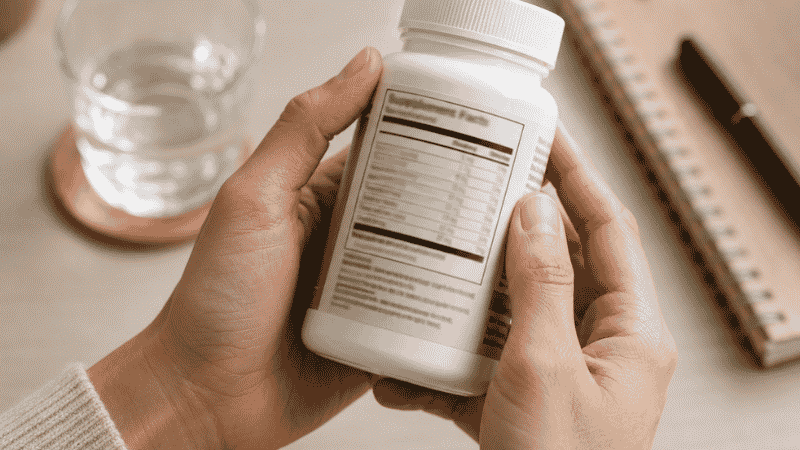
This is where most people unknowingly undermine their own results. The number on the front of your magnesium supplement is almost never the elemental magnesium dose — it’s the total compound weight.
Magnesium glycinate labeled “500 mg” provides approximately 70–100 mg of elemental magnesium. For sleep support, the evidence-supported range is 200–350 mg of elemental magnesium daily. At 70–100 mg per capsule, you’d need 2–4 capsules to reach a meaningful dose.
How to find the right number: Look at the Supplement Facts panel on the back of the bottle. Find the row labeled “Magnesium.” The milligram figure next to it is your elemental magnesium per serving. This is the only number that matters for dosing.
For sleep specifically: aim for 200–300 mg of elemental magnesium as a starting dose, taken 30–60 minutes before bed. Increase by 50 mg increments after 2 weeks if needed, staying at or below 350 mg/day from supplements total.
When to Take Magnesium for Sleep
Timing affects both effectiveness and medication safety.
For sleep: 30–60 minutes before bed. This allows the GABA-activating and body temperature-regulating effects to develop before you’re trying to fall asleep, not after.
With or without food: Magnesium glycinate is gentle enough to take on an empty stomach — it absorbs through dipeptide channels that don’t require food. A light snack is fine if you prefer it, but not necessary.
With medications: Important spacing requirements apply. Magnesium can reduce the absorption of fluoroquinolone antibiotics (ciprofloxacin, levofloxacin) and tetracyclines (doxycycline) by up to 50% — take the antibiotic 2 hours before or 4–6 hours after magnesium. Separate from levothyroxine by at least 4 hours. Bisphosphonates (alendronate) need at least 2 hours spacing.
How Long Does Magnesium Take to Work for Sleep?
Magnesium is not a sleeping pill. It doesn’t produce sedation on night one.
The mechanisms through which it supports sleep — GABA receptor support, cortisol regulation, magnesium tissue store replenishment — are cumulative. Most people notice subtle changes within the first 1–2 weeks: slightly easier to relax before bed, marginally less physical tension, mild reduction in nighttime waking. The fuller picture develops over 3–4 weeks of consistent daily use.
The 2025 Schuster bisglycinate trial found that most improvements in insomnia severity scores occurred within the first 14 days and were sustained thereafter — which aligns with clinical experience and the time required for magnesium to raise tissue stores meaningfully.
If you’ve been taking magnesium consistently for 4–6 weeks at a verified elemental magnesium dose in the 200–300 mg range and haven’t noticed any change, consider whether the sleep problem has a driver that magnesium can’t address — sleep apnea, clinical anxiety disorder, circadian rhythm disruption, or a medication side effect.
Can You Combine Magnesium Forms?
Yes — and for some people, combining glycinate and threonate addresses genuinely different aspects of sleep.
Glycinate + Threonate: Glycinate addresses the physiological sleep-onset conditions; threonate addresses brain-level sleep architecture. This combination makes most sense for adults over 50 who have both sleep-onset difficulty and poor sleep quality, or for anyone who has responded partially to glycinate but still wakes frequently.
Glycinate + Taurate: Relevant if both the neurological and cardiovascular dimensions of sleep disruption are present. The main consideration is total elemental magnesium — adding taurate to an existing glycinate dose typically adds 40–80 mg elemental magnesium, keeping total intake within safe limits for most healthy adults.
Magnesium + L-Theanine: A well-supported combination for anxiety-driven sleep disruption. L-theanine promotes alpha brain wave activity (relaxed alertness) and modulates GABA and glutamate through different receptor pathways than magnesium. They address complementary mechanisms without overlap or interaction.
Who Should Be Careful with Magnesium
Most healthy adults tolerate magnesium supplementation well at recommended doses. However:
Kidney disease is the most important contraindication. The kidneys excrete excess magnesium; impaired function can allow dangerous accumulation even at standard doses. Anyone with CKD, reduced kidney function, or abnormal kidney labs should not supplement magnesium without medical supervision.
Prescription medications: Multiple interactions require timing management — antibiotics, thyroid medication, bisphosphonates, diuretics, cardiac medications. If you’re on regular prescription medication, inform your doctor before starting magnesium.
Older adults (65+): Kidney function declines naturally with age. Start at the lower end of the dose range (100–150 mg elemental magnesium) and increase gradually.
For a complete breakdown of contraindications, drug interactions, and side effect management by group, see our dedicated safety guide: Who Should Not Take Magnesium? Side Effects, Drug Interactions & Safety Guide (C7)

Frequently Asked Questions
What is the best magnesium supplement for sleep? Magnesium glycinate (or bisglycinate) is the most consistently recommended form for sleep in clinical practice, backed by the strongest form-specific sleep evidence — including the 2025 Schuster RCT. It’s well-absorbed, gentle on the gut, and the glycine component independently supports sleep onset through body temperature regulation. Start at 200 mg of elemental magnesium before bed.
Which form of magnesium is best for sleep? For most people: glycinate. For frequent night-waking and cognitive recovery (especially over 50): threonate. For sleep disruption with somatic anxiety, palpitations, or blood pressure sensitivity: taurate. The best form is the one that matches your specific sleep problem — there is no universal answer.
Does magnesium help you sleep? The mechanisms are well-established and the clinical evidence is encouraging — though with modest effect sizes. A 2025 double-blind RCT found significant improvements in insomnia severity with magnesium bisglycinate over 4 weeks. A 2021 meta-analysis found magnesium reduced sleep onset latency by ~17 minutes and extended sleep time by ~16 minutes in older adults with insomnia. It works best when magnesium insufficiency or nervous system over-activation is part of the picture.
What is the best magnesium for sleep and anxiety? For cognitive anxiety (racing thoughts, rumination): magnesium glycinate. For somatic anxiety (racing heart, physical tension, blood pressure sensitivity): magnesium taurate. For both: consider combining them at appropriate elemental doses. Adding L-theanine (100–200 mg) alongside glycinate is also a well-supported approach for anxiety-driven sleep disruption.
How much magnesium should I take for sleep? 200–300 mg of elemental magnesium is a reasonable starting range. Always verify the elemental magnesium figure in the Supplement Facts panel — the front-label number is compound weight, not elemental magnesium. For glycinate labeled as 500 mg compound, actual elemental magnesium is approximately 70–100 mg.
Can magnesium help with insomnia? Magnesium can support sleep when insomnia is related to nervous system over-activation, magnesium insufficiency, muscle tension, or anxiety. It is not a treatment for insomnia caused by sleep apnea, clinical depression, circadian rhythm disorders, or chronic pain — for those conditions, the root cause needs direct attention.
What’s the difference between magnesium glycinate and magnesium citrate for sleep? Glycinate is the more targeted choice for sleep: better tolerated, no laxative effect at standard doses, and the glycine component adds independent sleep-supporting properties. Citrate is well-absorbed but has a notable laxative effect that can disrupt sleep at the doses needed for sleep support. Glycinate is the preferred form for evening, sleep-focused use.
The Bottom Line
The best magnesium for sleep isn’t determined by brand or price — it’s determined by which form fits your physiology and your sleep problem.
For most people starting out, magnesium glycinate at 200 mg of elemental magnesium before bed is the rational first choice: best-supported sleep evidence, gentlest on the digestive tract, and the most cost-effective entry point. Give it 4 weeks of consistent use at a verified elemental dose before drawing conclusions.
If glycinate helps with relaxation and sleep onset but you still wake frequently or feel cognitively foggy despite adequate sleep time, magnesium threonate is the logical addition — particularly if you’re over 50.
If your restlessness has a physical, cardiovascular quality — heart awareness, physical agitation, blood pressure sensitivity — magnesium taurate addresses a dimension the other forms don’t.
And if you’ve tried magnesium consistently and your sleep hasn’t moved, the question worth asking isn’t “which magnesium should I try next?” — it’s “what’s actually driving the sleep problem?” Magnesium is a powerful tool for the right situation. It’s not a universal solution.
Explore the Full Sleep Supplement Guide
Each article in this series goes deeper on a specific aspect of magnesium for sleep:
- Magnesium Glycinate for Sleep: Does It Actually Work, and Are You Taking It Right? (C1) — The complete guide to glycinate for sleep: mechanisms, realistic expectations, and what to do if it’s not working
- Magnesium Glycinate Dosage for Sleep: How to Read the Label and Get It Right (C2) — Label math, elemental magnesium calculation, and dosing by age and sex
- Magnesium Glycinate vs. Threonate: Which One Actually Helps You Sleep? (C3) — Side-by-side comparison with a sleep-problem-type decision framework
- When to Take Magnesium for Sleep: Timing, Food Pairing, and What Actually Matters (C4) — The 30–60 minute window explained, food pairing, and drug interaction timing
- Magnesium for Sleep and Anxiety: Does It Help With Both? (C5) — The anxiety–sleep loop and why the driver of your insomnia determines whether magnesium works
- Magnesium Taurate vs. Glycinate: Which Is Better for Sleep? (C6) — Taurine’s dual mechanism and the case for taurate in somatic anxiety and cardiovascular sensitivity
- Who Should Not Take Magnesium? Side Effects, Drug Interactions & Safety Guide (C7) — Complete contraindications, drug interactions, and side effect management by group
References
- Schuster J, Cycelskij I, Lopresti A, Hahn A. Magnesium Bisglycinate Supplementation in Healthy Adults Reporting Poor Sleep: A Randomized, Placebo-Controlled Trial. Nature and Science of Sleep. 2025;17:2027–2040. doi:10.2147/NSS.S524348
- Mah J, Pitre T. Oral magnesium supplementation for insomnia in older adults: a Systematic Review & Meta-Analysis. BMC Complementary Medicine and Therapies. 2021;21(1):125. doi:10.1186/s12906-021-03297-z
- Rawji A, Peltier MR, Mourtzanakis K, Awan S. Examining the Effects of Supplemental Magnesium on Self-Reported Anxiety and Sleep Quality: A Systematic Review. Cureus. 2024;16(4):e59317. doi:10.7759/cureus.59317
- Bannai M, Kawai N. New therapeutic strategy for amino acid medicine: glycine improves the quality of sleep. Journal of Pharmacological Sciences. 2012;118(2):145-148. doi:10.1254/jphs.11R04CP
- Slutsky I, Abumaria N, Wu LJ, et al. Enhancement of Learning and Memory by Elevating Brain Magnesium. Neuron. 2010;65(2):165-177. doi:10.1016/j.neuron.2009.12.026
- National Institutes of Health Office of Dietary Supplements. Magnesium: Fact Sheet for Health Professionals. Updated June 2022. https://ods.od.nih.gov/factsheets/Magnesium-HealthProfessional/
- Zhang Y, Chen C, Lu L, et al. Association of magnesium intake with sleep duration and sleep quality: findings from the CARDIA study. Sleep. 2022;45(4):zsab276. doi:10.1093/sleep/zsab276
- Abbasi B, Kimiagar M, Sadeghniiat K, et al. The effect of magnesium supplementation on primary insomnia in elderly: A double-blind placebo-controlled clinical trial. Journal of Research in Medical Sciences. 2012;17(12):1161–1169.