
We’ve all been there. It’s 3:30 PM, you’re staring at your computer screen, and suddenly, the vending machine downstairs starts calling your name. It’s not real hunger; it’s that nagging, intrusive craving that hits even when you’ve had a decent lunch.
For many in the sub-healthy category—dealing with high stress, erratic sleep, and fluctuating blood sugar—the struggle with cravings is real. This is where a high-quality appetite suppressant can be a strategic ally. It’s not a “shortcut” or a magic fix; think of it as a volume knob for your hunger, turning down the noise so you can make empowered food choices.
What Exactly is an Appetite Suppressant? (The Science of Fullness)
To understand how to suppress appetite, we first have to understand why we feel hungry. Our bodies use two main “hunger hormones”: Ghrelin (the “feed me” signal) and Leptin (the “I’m full” signal). When you are stressed or sleep-deprived, Ghrelin spikes, making you crave high-calorie, sugary foods.
An appetite suppressant works in one of three ways:
- Bulking the Stomach: Fiber-based suppressants expand in water, physically filling the stomach space.
- Hormonal Balancing: Certain extracts help optimize leptin sensitivity.
- Mood & Reward Regulation: Some help boost serotonin, reducing “emotional eating.”
Finding the Best Appetite Suppressant for Your Lifestyle
Not all suppressants are created equal. For sub-healthy individuals, I usually recommend starting with a natural appetite suppressant before moving to anything synthetic.
1. Glucomannan (The Root Powerhouse)
Derived from the Konjac root, this is the gold standard for fiber-based fullness.
- The Data: A study published in the British Journal of Nutrition found that consuming just 1 gram of glucomannan before meals led to significant weight management improvements compared to a placebo.
- Best For: Chronic snackers who feel “bottomless.”
2. Green Tea Extract & EGCG
This isn’t just about caffeine. EGCG helps inhibit an enzyme that breaks down norepinephrine, a hormone that signals the body to burn fat for fuel.
- Case Study: James, a 45-year-old accountant with a sedentary lifestyle, switched from mid-morning donuts to a high-quality green tea-based suppressant. Within 3 weeks, he reported that his “urge to graze” disappeared, allowing him to focus on his work until a late lunch.
3. Saffron Extract (The Mood Booster)
If you eat when you’re stressed or sad, saffron is your best appetite suppressant. It helps raise serotonin levels naturally.
- The Research: Clinical trials have shown that 176mg of saffron extract daily can reduce snacking frequency by up to 55%.
The Master Protocol: Dosage, Timing, and Temperature
The reason most people fail with an appetite suppressant is bad timing. You can’t take a pill while eating a burger and expect it to work. Follow this Pro-Blogger Protocol:
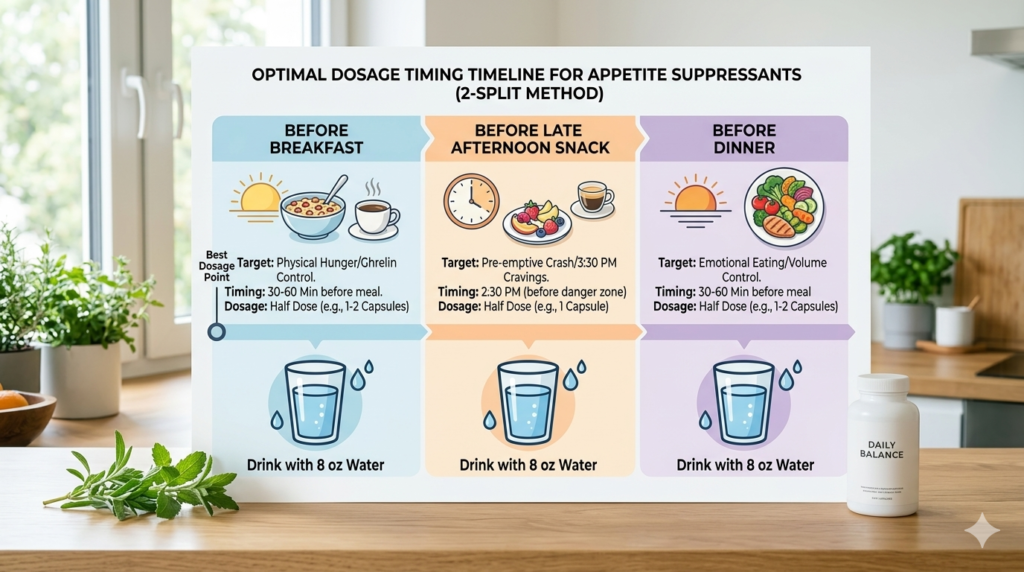
1. The “Golden 30-Minute Rule”
For water-soluble fibers like Glucomannan or Psyllium, you must take them 30 to 60 minutes BEFORE your largest meals. This gives the fibers time to expand and the extracts time to signal your brain.
2. The Hydration Multiplier
If you don’t drink enough water, fiber-based suppressants will cause bloating rather than fullness.
- Precision Dosage: Take your supplement with at least 8-12 oz (250-350ml) of water.
- Temperature Tip: Use room temperature water (around 68-72°F / 20-22°C). Ice-cold water can slow down the dissolution of certain herbal capsules, delaying the effect.
3. The Afternoon “Danger Zone”
For many, the hardest time is 3:00 PM to 5:00 PM. I recommend a split dose: half in the morning before breakfast, and half at 2:30 PM to pre-empt that afternoon crash.
Pros and Cons: A Realistic View
| Feature | Pros | Cons |
| Natural Options | High safety profile, improves gut health | Requires a lot of water to work |
| Stimulant-Based | High energy boost, immediate effect | Can cause jitters, “crash,” or insomnia |
| Fiber-Based | Very effective for physical hunger | May cause gas if you increase dose too fast |
FAQ: How to Suppress Appetite Safely?
Q: Can I take an appetite suppressant with coffee?
A: If your suppressant is stimulant-free (like Glucomannan), yes. However, if your supplement contains caffeine or green tea extract, be careful. Doubling up on stimulants can lead to heart palpitations and increased cortisol—the exact opposite of what a “sub-healthy” person needs.
Q: How long can I stay on these supplements?
A: I recommend the “8-week on, 2-week off” cycle. This prevents your body from becoming too accustomed to the supplement and keeps your natural hunger signals sharp.
Q: Will it work if I don’t change my diet?
A: It will help you eat less of your current diet, but for long-term health, use the “reduced hunger window” to introduce more protein and greens. It’s about quality and quantity.
Blogger’s Pro-Tips for “Hardcore” Hunger Days
- Prioritize Protein: An appetite suppressant works 2x better when your first meal of the day is protein-heavy (30g+). Protein triggers the release of PYY, another fullness hormone.
- The Sleep Connection: If you get less than 6 hours of sleep, your Ghrelin levels will be so high that no supplement in the world can fully stop the cravings. Aim for 7-8 hours.
- The Salt Trick: Sometimes we aren’t hungry; we are electrolyte-depleted. Try a pinch of sea salt in your water along with your suppressant.
Conclusion: A Gentle Step Toward Food Freedom
Reclaiming your relationship with food doesn’t mean fighting your body; it means supporting it. Whether you choose a fiber-rich natural appetite suppressant or a targeted metabolic booster, remember that these are tools to help you reach a state of “Food Freedom”—where you eat because you need fuel, not because you’re bored or stressed.
My Final Recommendation: Start slow. Don’t go for the maximum dose on day one. Listen to your body, drink your water, and watch how much easier it becomes to say “no” to that 3:00 PM donut.