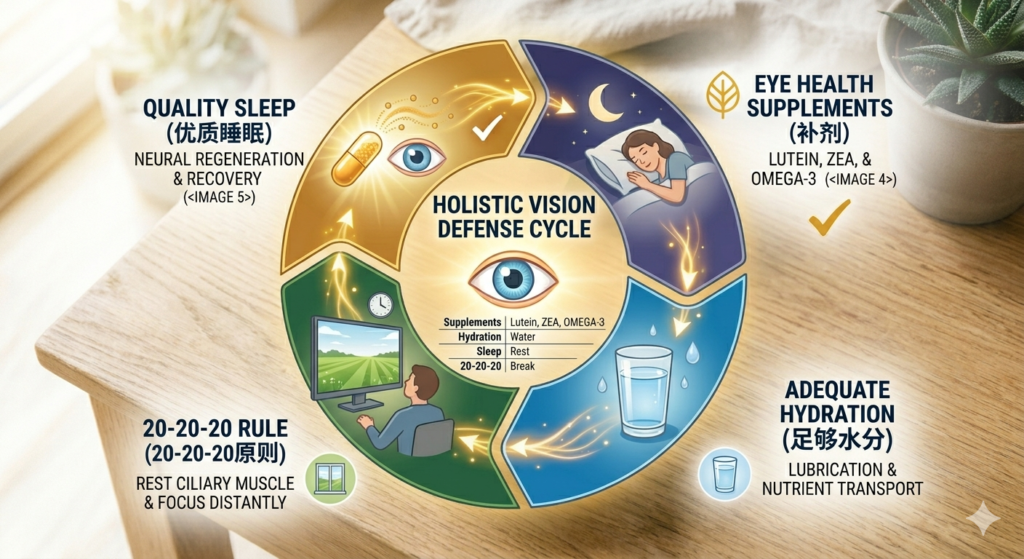
We’ve all been there. It’s 4 PM, you’re staring at a spreadsheet that’s starting to look like a blurred Monet painting, and your eyes feel like they’ve been rubbed with sandpaper. You’ve been diligent—you bought the “top-rated” eye vitamins from the pharmacy, you’re eating your carrots, and you’re wearing blue-light glasses.
But here’s the frustrating truth: Most vitamins for eye health never actually reach your eyes.
In the wellness world of 2026, “absorption” is the new “superfood.” If your supplement isn’t crossing the blood-retinal barrier, you’re essentially just creating expensive, neon-colored urine. Today, we’re going to fix that. As your resident health-optimizing peer, I’m breaking down how to choose vitamins of eyes that actually work, backed by the latest science and the “bio-hacks” that big brands often overlook.
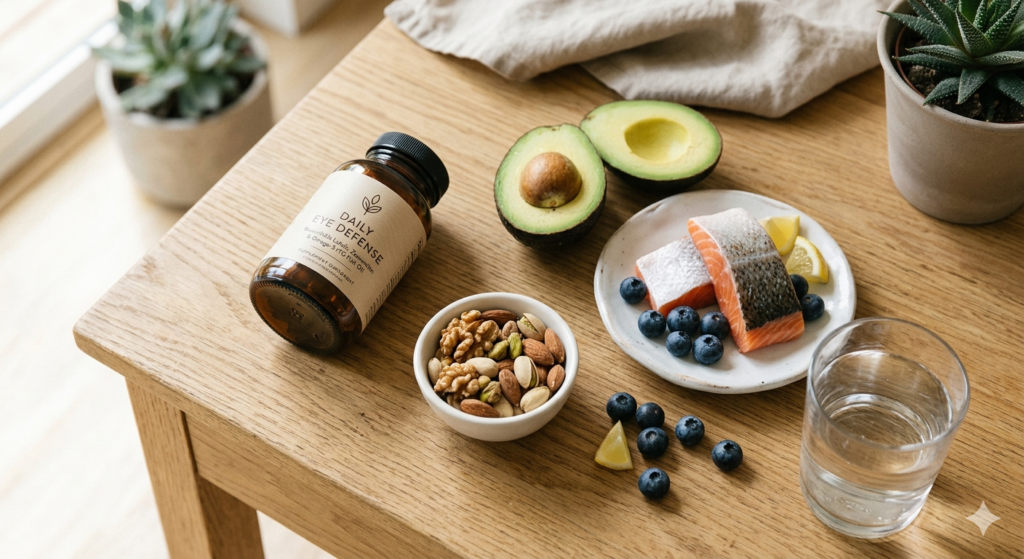
1. The “Invisible Bouncer”: Why Your Eye Vitamins Fail
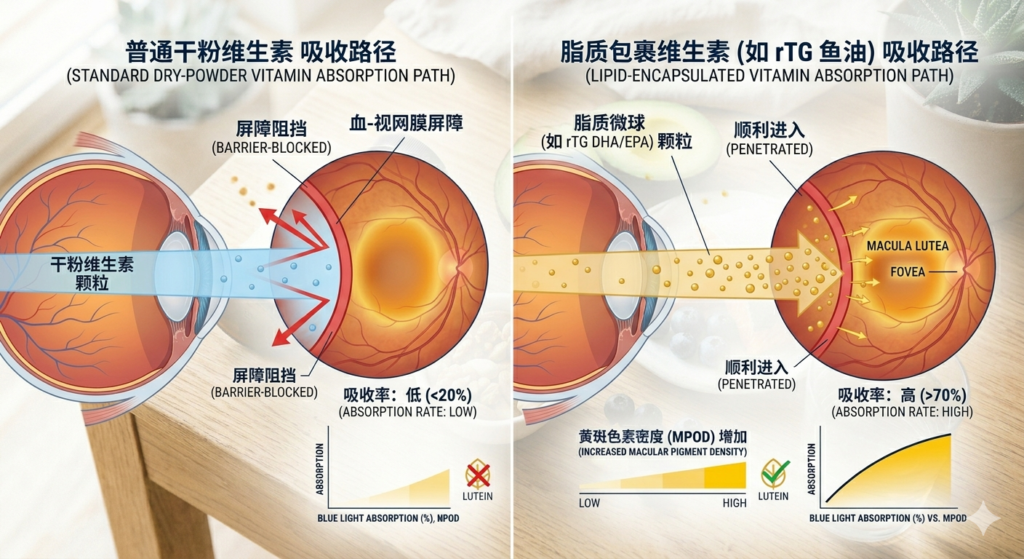
Your eyes are incredibly picky. They are protected by the Blood-Retinal Barrier (BRB)—a sophisticated biological “bouncer” that decides what nutrients get in and what gets kicked out.
Many generic vitamins for eye health use synthetic, dry-powder forms of nutrients. The problem? Your retina is looking for lipid-based (fat-loving) molecules. A 2025 study revealed that up to 70% of dry-powder lutein is excreted before it can even enter the bloodstream if taken without sufficient fat.
Real-World Case: “The 4 PM Blur” Meet Elena, a 38-year-old UX designer. She took a standard multivitamin for a year but still suffered from night-driving glare. After switching to a “Micronized Lipid” eye vitamin and taking it with her morning almond butter, her contrast sensitivity scores improved by 15% in just 90 days. The difference wasn’t the dose—it was the delivery.
2. The “Golden Stack”: Essential Vitamins of Eyes for 2026
If you’re looking at a supplement label, don’t just look for “Vision Support.” Look for these specific, high-bioavailability forms:
A. Lutein & Zeaxanthin (The 5:1 Golden Ratio)
These are your “internal sunglasses” that live in your macula.
- The Data: The landmark AREDS2 Study confirmed that a specific ratio of 10mg Lutein to 2mg Zeaxanthin is the gold standard for preventing macular decline.
- Pro Tip: Look for “FloraGLO®” or “Lutemax 2020®” on the label. These are patented, “free-form” carotenoids that mimic the nutrients found in leafy greens.
B. Omega-3s (The “Delivery Truck”)
You need Omega-3s—specifically DHA—to keep retinal cell membranes fluid.
- The Detail: High-quality eye vitamins should include Omega-3s in the Re-esterified Triglyceride (rTG) form. Avoid “Ethyl Ester” forms; they are cheaper but much harder for your body to break down and absorb.
C. Astaxanthin: The Muscle Relaxant
If you suffer from “screen fatigue,” this is your secret weapon. Unlike other antioxidants, Astaxanthin can cross the blood-retinal barrier to help the ciliary muscle (the focus muscle) recover from the strain of staring at a smartphone for 8 hours.
3. 📊 Comparison: Bioavailable vs. Standard Formulas
| Feature | Standard Eye Vitamins | Bioavailable Premium Stack |
| Lutein Form | Synthetic Esters (Low uptake) | Free-Form Micronized (High uptake) |
| Omega-3 Form | Ethyl Ester (Hard to digest) | rTG Form (Mimics natural fish oil) |
| Solubility | Dry Powder (Water-based) | Lipid-Matrix (Fat-based) |
| Added Perks | Fillers like Magnesium Stearate | Absorption Boosters (e.g., Black Pepper) |
4. Tailored Strategies for Modern Lifestyles
For the Corporate High-Performer
Your eyes are under constant “blue light bombardment.” You need a “High-Contrast Stack.” Focus on Lutein and Meso-Zeaxanthin. This helps sharpen the edges of text on your screen and reduces the “halo effect” during late-night laptop sessions.
For the Menopausal Transition
Declining estrogen levels often lead to dry eye syndrome.
- The Protocol: Increase your Omega-3 intake to 2000mg daily and add Sea Buckthorn oil (Omega-7). This lubricates the ocular surface from the inside out.
For the Academic Grind
If you’re pulling all-nighters, your vitamins for eye health should prioritize Anthocyanins (found in Bilberry). This helps with “dark adaptation”—how quickly your eyes adjust when you turn off your desk lamp.
5. The “Absorption Hacks”: Pro-Tips for Maximum Results
Even the best eye vitamins need your help to cross the finish line. Follow these three rules:
- The “Fatty Meal” Rule: Never take your eye vitamins with just a black coffee. You need at least 5–10g of healthy fat (yogurt, nuts, or eggs) to trigger the bile release necessary to absorb carotenoids.
- Temperature Matters: Store your bottle in a cool, dark place. High-end Omega-3 formulas are best kept in the refrigerator to prevent the delicate oils from going rancid (oxidizing).
- The Zinc Conflict: Many AREDS2 formulas contain high Zinc. Don’t take them at the same time as an Iron supplement, as these minerals compete for the same “transport lanes” in your gut.
6. FAQ: Clearing the Vision Confusion
Q: How long until I see a difference? A: Retinal pigments build up slowly. You may notice a reduction in light sensitivity after 4 weeks, but the full “visual clarity” benefits usually peak at the 90-day mark.
Q: Can I just eat more carrots? A: Carrots contain Vitamin A, which is great for night vision but does nothing for blue light protection. For that, you need the greens (Lutein), and you’d need to eat roughly 5 cups of cooked kale daily to match a professional-grade dose.
7. Conclusion: Investing in Your Outlook
Investing in eye vitamins is an investment in your most valuable asset: your perspective. In a world that demands more “screen time” than ever before, simply “hoping” your eyes stay healthy isn’t enough.
Look for high-bioavailability formulas, take them with a healthy fat, and give them the 90 days they need to work. Your future self—driving home at night without the glare, or finishing a workday without the headache—will thank you.
Gentle Suggestion: Start today by checking your current supplement bottle. If it’s a dry tablet, consider upgrading to a lipid-based softgel once you finish the bottle.