

It’s 11:30 p.m. You’re not worried about anything catastrophic. There’s no crisis, no emergency — just the ordinary accumulation of a full day: things left undone, tomorrow’s schedule, a conversation you keep replaying. Your body is tired. But your brain won’t stop.
This is the specific kind of sleeplessness that’s hardest to explain and hardest to treat. It’s not pain keeping you awake, not caffeine, not noise. It’s the particular restlessness of a nervous system that never quite got the signal to stand down.
It’s also the scenario where magnesium tends to generate the most genuine interest — and, honestly, the most genuine results. The connection between magnesium, anxiety, and sleep isn’t a marketing story. There’s real biology behind it. But “magnesium is good for sleep and anxiety” is a significant oversimplification of a more nuanced picture, and understanding that nuance is what separates a supplement that works for you from one that doesn’t.
This article covers how magnesium affects anxiety and sleep through different but overlapping mechanisms, which type of sleep problem it’s most likely to help with, what the research actually shows, and how to combine it intelligently — including with L-theanine, which has its own evidence base and works synergistically with magnesium for exactly this kind of problem.
Key Takeaways
- Magnesium supports both anxiety relief and sleep through distinct but overlapping biological pathways — primarily GABA receptor activation and HPA axis regulation.
- A 2024 systematic review in Cureus (Rawji et al.) analyzed 15 randomized trials: 5 of 7 anxiety studies and 5 of 8 sleep studies showed improvements with magnesium supplementation.
- The most important nuance: Sleep disruption caused primarily by anxiety or nervous system over-activation responds most consistently to magnesium. Magnesium’s evidence for broad, primary insomnia is weaker.
- Magnesium glycinate is the most consistently recommended form for this combination of goals — gentler on the gut, well-absorbed, and the glycine component has independent calming properties.
- Best magnesium for sleep and anxiety: magnesium glycinate at 200–350 mg elemental magnesium, taken 30–60 minutes before bed.
- Combining magnesium with L-theanine addresses complementary pathways and is one of the better-evidenced natural approaches for anxiety-driven sleep disruption.
The Anxiety–Sleep Loop: Why Fixing One Can Help the Other
Anxiety and sleep don’t just coexist — they feed each other in a loop that’s genuinely hard to interrupt from the outside.
Anxiety activates the HPA (hypothalamic-pituitary-adrenal) axis, triggering cortisol release. Cortisol is supposed to be at its lowest at night, signaling your body that it’s safe to rest. But chronic stress flattens that curve — sometimes it even inverts it, with cortisol spiking in the evening when it should be falling. The result is a nervous system that’s physiologically primed for alertness right when you need it to wind down.
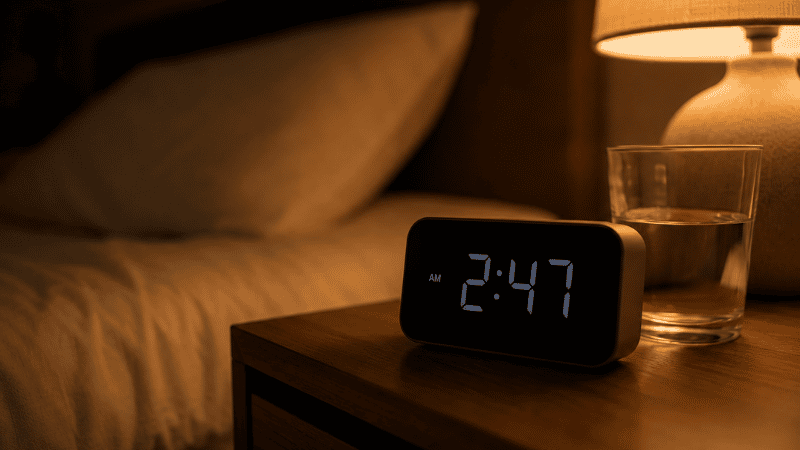
Poor sleep then makes anxiety worse the next day. Sleep deprivation reduces activity in the prefrontal cortex (the brain region responsible for rational regulation of fear and worry) and amplifies amygdala reactivity. You’re more reactive, less able to put things in perspective, more likely to catastrophize. Which makes the next night’s sleep harder. Which makes the anxiety worse again.
Magnesium enters this loop at multiple points — and that’s why it’s genuinely useful here, not just as a sleep supplement or an anxiety supplement, but as something that addresses the underlying nervous system state that drives both.
How Magnesium Works on Anxiety: The Two Key Pathways
Understanding the mechanism isn’t just academic — it helps you predict whether magnesium is likely to work for your specific situation.
The GABA Pathway
GABA (gamma-aminobutyric acid) is your nervous system’s primary inhibitory neurotransmitter — the “stand down” signal that quiets neural excitability. Magnesium binds to and activates GABA-B receptors, effectively turning up the volume on your brain’s calming system. It also blocks NMDA receptors, which are activated by glutamate (the excitatory counterpart to GABA). The net effect is a reduction in neural over-activation — the biological substrate of the racing-thoughts-at-night experience.
This is, notably, the same general system targeted by benzodiazepines (prescription anti-anxiety medications). Magnesium’s effect is far more modest and works through a different mechanism, but the direction is the same: more inhibition, less excitability.
The HPA Axis and Cortisol Regulation
Magnesium plays a regulatory role in the HPA axis — the stress response system that controls cortisol output. Low magnesium levels are associated with higher baseline cortisol and a more reactive stress response. Replenishing magnesium can help “put the brakes” on excessive cortisol signaling, which in turn supports the natural evening decline in cortisol that your body needs to prepare for sleep.
A 2017 study in Nutrients found that magnesium supplementation significantly reduced both subjective stress levels and cortisol concentrations in participants with mild to moderate stress. This cortisol-blunting effect is probably one of the more meaningful mechanisms for people whose sleep problems are clearly stress-related.
How Magnesium Works on Sleep: Related but Not Identical
Magnesium’s sleep mechanism overlaps with its anxiety mechanism — both involve GABA — but there are additional pathways specific to sleep:
Melatonin support: Magnesium is involved in the enzymatic pathways that produce melatonin. Studies in animal models have shown that magnesium deficiency results in reduced plasma melatonin levels. Supplementation may support the body’s own melatonin production, contributing to a more natural sleep-onset signal.
Muscle relaxation: Magnesium regulates calcium movement in muscle fibers. Adequate magnesium allows muscles to release contraction more fully. The physical tension many people carry into bed — tight shoulders, jaw clenching, restless legs — has a genuine physiological component that magnesium addresses.
Core temperature regulation (glycinate-specific): The glycine component in magnesium glycinate has an independent effect on body temperature, activating hypothalamic receptors that promote a mild drop in core temperature — one of the body’s key signals for sleep initiation.
The Most Important Question: Is Your Sleep Problem Anxiety-Driven?
This is where the nuance that most articles skip over becomes genuinely important.
A 2024 systematic review published in Cureus analyzed 15 randomized controlled trials on magnesium supplementation for anxiety and sleep. Five of eight sleep studies showed improvements in at least one sleep parameter. Five of seven anxiety studies showed reductions in anxiety measures. The authors noted, however, that the evidence is limited by small sample sizes and heterogeneous study designs.
More tellingly: experts in sleep medicine have noted that magnesium’s sleep benefits appear most consistently in people whose sleep disruption is driven by anxiety, stress, or nervous system over-activation — not in people with primary insomnia that has other root causes.
As sleep medicine specialists have observed, insomnia caused primarily by mild anxiety might improve with magnesium, but that doesn’t mean magnesium helps with insomnia more broadly. The mechanisms align specifically when anxiety is the driver.
This matters practically. If you lie awake because your mind is running — you’re replaying conversations, worrying about tomorrow, unable to “switch off” — magnesium is addressing the physiological substrate of that problem. If you lie awake for other reasons — pain, sleep apnea, a circadian rhythm disorder, clinical depression — magnesium is unlikely to provide meaningful relief, not because it doesn’t work, but because it’s the wrong tool for that specific problem.
Ask yourself honestly: is anxiety or mental over-activation the primary thing keeping you from sleep? If yes, magnesium has a reasonable evidence base to try. If no, or if you’re not sure, the section below on when to seek professional help is important.
What Is the Best Magnesium for Sleep and Anxiety?
Not all magnesium forms are equally relevant here. The mechanism that matters most for anxiety and sleep is GABA activation combined with systemic nervous system support — and the form that delivers this most effectively is magnesium glycinate.
Magnesium glycinate is chelated with glycine, an amino acid that:
- Has independent inhibitory effects on the nervous system through glycine receptors
- Promotes a mild drop in core body temperature that supports sleep onset
- Is gentle on the digestive tract, with minimal laxative effect even at higher doses
For anxiety specifically, magnesium taurate (chelated with taurine) is also worth knowing about — taurine itself activates GABA receptors and has cardiovascular-calming properties that may be relevant for people whose anxiety has a physical, somatic quality (heart racing, physical tension, difficulty breathing). But the evidence base for taurate is thinner than for glycinate.
Practical recommendation: Start with magnesium glycinate. If you’ve trialed it consistently for 6 weeks without improvement in anxiety or sleep, magnesium taurate is a reasonable alternative to explore.
Dosage for sleep and anxiety: 200–350 mg of elemental magnesium (not compound weight — see our dosage guide for how to read labels correctly), taken 30–60 minutes before bed.
Magnesium and L-Theanine Together: The Case for Combining Them
L-theanine is an amino acid found naturally in green tea that promotes relaxation without sedation — specifically by increasing alpha brain wave activity (the state associated with calm alertness) and modulating GABA and glutamate levels.
The reason magnesium and L-theanine work well together is that they address complementary aspects of anxiety-driven sleep disruption:
- Magnesium works on the physiological substrate: GABA receptor support, cortisol regulation, muscle relaxation, melatonin production
- L-theanine works more specifically on the cognitive and emotional dimension: reducing the subjective experience of mental racing, promoting a relaxed-but-present mental state rather than forcing sedation

A 2019 randomized controlled trial published in Nutrients found that a combination of magnesium, L-theanine, and several co-factors improved stress and sleep quality more effectively than magnesium alone in healthy adults. While this was a multi-ingredient formula (not just the two), it supports the logic that they work through additive rather than redundant mechanisms.
Practical approach:
- Magnesium glycinate: 200–300 mg elemental magnesium
- L-theanine: 100–200 mg
- Both taken 30–60 minutes before bed
This combination has no known safety concerns at standard doses and doesn’t cause morning grogginess — which is one of the reasons it’s often preferred over pharmaceutical sleep aids or high-dose melatonin for stress-related sleep disruption.
If Magnesium Isn’t Helping Your Anxiety or Sleep
Four weeks of consistent, correctly dosed magnesium glycinate is a reasonable trial period. If you’ve done that and noticed no change, work through this checklist before giving up:
Check your actual elemental magnesium dose. If you’ve been taking 400 mg of magnesium glycinate compound thinking that’s your dose, you’re probably getting around 55–80 mg of elemental magnesium — well below the clinical range. Check the Supplement Facts panel for the elemental magnesium number specifically.
Is your anxiety level manageable, or is it clinically significant? Magnesium can support mild-to-moderate stress and anxiety. Clinical anxiety disorders — generalized anxiety disorder, panic disorder, social anxiety disorder — require a different level of intervention. Nutritional support can be complementary to treatment, but it isn’t a substitute.
Is sleep apnea in the picture? This is underdiagnosed, particularly in women. Symptoms aren’t always loud snoring — sometimes it’s simply never feeling rested, having morning headaches, or waking frequently. Magnesium does nothing for sleep apnea; it requires direct treatment.
Are you depleting magnesium faster than you’re replacing it? High stress, 3+ cups of coffee daily, regular alcohol, intense physical training, and certain medications (PPIs, diuretics) all increase magnesium excretion. If several of these apply, you may need a higher dose or to address the depletion source.
When to Seek Professional Support
Magnesium is a nutritional support tool. It is not a treatment for anxiety disorders, clinical depression, or sleep apnea. Talk to a doctor or mental health professional if:
- Anxiety is significantly affecting your daily functioning — relationships, work, ability to leave the house
- You’ve had persistent insomnia for more than 4 weeks that isn’t resolving with sleep hygiene and nutritional support
- You experience panic attacks, intrusive thoughts, or anxiety that feels uncontrollable
- You have any combination of loud snoring, waking feeling unrefreshed, morning headaches, or your partner has noticed you stop breathing during sleep
- You’re experiencing mood symptoms — persistent low mood, loss of interest, hopelessness — alongside sleep disruption
Anxiety and sleep problems are genuinely treatable. Cognitive behavioral therapy for insomnia (CBT-I) has the strongest evidence base of any treatment for chronic insomnia, stronger than any supplement or medication. If nutritional approaches aren’t moving the needle, CBT-I is the most evidence-based next step worth exploring.
Frequently Asked Questions
Does magnesium help with both sleep and anxiety, or just one? The honest answer: it depends on the driver of your sleep problems. Magnesium has a reasonable evidence base for both — but its sleep benefits are most consistent when anxiety or nervous system over-activation is the primary cause of sleep disruption. For primary insomnia with other root causes, the evidence is weaker. A 2024 systematic review found improvements in 5 of 7 anxiety studies and 5 of 8 sleep studies using magnesium supplementation.
What is the best magnesium for sleep and anxiety? Magnesium glycinate is the most consistently recommended form for this combination — well-absorbed, gentle on the gut, and the glycine component has independent calming and sleep-supporting properties. Start at 200 mg elemental magnesium before bed and adjust from there.
Does magnesium glycinate help anxiety? It can, particularly for anxiety rooted in nervous system over-activation — the physical experience of stress (muscle tension, racing heart, difficulty relaxing). It works by supporting GABA activity and helping regulate cortisol. For clinical anxiety disorders, it can be a complementary support but isn’t a standalone treatment.
Can I take magnesium and L-theanine together? Yes, and for anxiety-driven sleep disruption, this combination is particularly logical. They address complementary mechanisms — magnesium works on the physiological substrate (GABA, cortisol, muscle relaxation); L-theanine works more on the cognitive and emotional dimension (mental racing, alpha wave promotion). No adverse interactions have been identified at standard doses.
How long does magnesium take to help with anxiety and sleep? Most people notice gradual changes over 2–4 weeks of consistent daily use. The mechanisms involved — cortisol regulation, GABA support, magnesium tissue stores replenishment — are cumulative rather than immediate. A fair trial is 4–6 weeks at a correct elemental dose before drawing conclusions.
Is magnesium for stress and sleep the same as for anxiety and sleep? Functionally, yes — chronic stress and anxiety involve the same biological systems (HPA axis, cortisol, GABA), and magnesium addresses both through the same pathways. The distinction is more semantic than physiological. Magnesium for stress and sleep is essentially the same mechanism as magnesium for anxiety and sleep.
What if magnesium makes me feel more anxious? This is uncommon but occasionally reported, particularly at high doses. Some people experience a transient increase in restlessness or heightened sensation when starting magnesium, possibly related to shifts in neurotransmitter balance as magnesium levels rise. If this happens, reduce the dose significantly (to 100 mg or less) and increase very gradually. If it persists, switch forms (try taurate instead of glycinate) or discontinue and consult a healthcare provider.
The Bottom Line
Magnesium for sleep and anxiety isn’t a guarantee — but it’s one of the more physiologically coherent interventions available for the specific problem of anxiety-driven sleep disruption.
If your nights look like a loop of mental over-activation, physical restlessness, and sleep that never quite delivers on its promise of rest, magnesium glycinate at 200–350 mg elemental magnesium is a reasonable, safe, and evidence-supported tool to try. Add L-theanine if the mental racing dimension is prominent. Give it 4–6 weeks of consistent daily use before drawing conclusions. And be honest with yourself about whether the anxiety component is something a mineral can address, or whether it’s pointing toward something that deserves more direct professional support.
The goal isn’t to find a shortcut around the anxiety. The goal is to give your nervous system enough physiological support that it can actually do what it wants to do — which, at 11:30 p.m., is rest.
Want to understand exactly how to dose magnesium glycinate and read your supplement label correctly? See our dosage guide: Magnesium Glycinate Dosage for Sleep: How to Read the Label and Get It Right (C2)
Wondering whether magnesium glycinate or threonate is the better fit for your sleep profile? Read the comparison: Magnesium Glycinate vs. Threonate: Which One Actually Helps You Sleep? (C3)
References
- Rawji A, Peltier MR, Mourtzanakis K, Awan S. Examining the Effects of Supplemental Magnesium on Self-Reported Anxiety and Sleep Quality: A Systematic Review. Cureus. 2024;16(4):e59317. doi:10.7759/cureus.59317
- Boyle NB, Lawton C, Dye L. The Effects of Magnesium Supplementation on Subjective Anxiety and Stress — A Systematic Review. Nutrients. 2017;9(5):429. doi:10.3390/nu9050429
- Zhang Y, Chen C, Lu L, et al. Association of magnesium intake with sleep duration and sleep quality: findings from the CARDIA study. Sleep. 2022;45(4):zsab276. doi:10.1093/sleep/zsab276
- National Institutes of Health Office of Dietary Supplements. Magnesium: Fact Sheet for Health Professionals. Updated June 2022. https://ods.od.nih.gov/factsheets/Magnesium-HealthProfessional/
- Rao TP, Ozeki M, Juneja LR. In Search of a Safe Natural Sleep Aid. Journal of the American College of Nutrition. 2015;34(5):436-447. doi:10.1080/07315724.2014.926153
- de Baaij JHF, Hoenderop JGJ, Bindels RJM. Magnesium in man: implications for health and disease. Physiological Reviews. 2015;95(1):1-46. doi:10.1152/physrev.00012.2014