
Here’s something worth knowing before you start a vitamin D supplement routine: vitamin D tells your body to absorb more calcium. That’s the whole point — and it’s well-established. What’s talked about far less often is what happens to that calcium after you absorb it.
Calcium is a mineral that needs a destination. It belongs in your bones and teeth — that much is obvious. What’s less obvious is that calcium can also end up in places you don’t want it: the walls of your arteries, the soft tissues around your joints, your kidneys. Whether calcium gets directed to the right places depends, in significant part, on a nutrient most people have never thought much about: vitamin K2.
Vitamin D and K2 work together in a way that’s more than complementary — it’s mechanistically linked. Vitamin D actually increases the production of proteins that only K2 can activate. If K2 isn’t present in adequate amounts, those proteins sit inactive, and the calcium that vitamin D helped you absorb doesn’t get directed with the precision your body needs.
This guide explains the biology behind that relationship in plain language, covers what K2 actually is and where it comes from, and gives you the practical information you need to supplement both intelligently.
Key Takeaways
- Vitamin D3 increases calcium absorption from the gut. Vitamin K2 activates the proteins that direct absorbed calcium toward bones and away from arteries and soft tissues.
- The two vitamins are mechanistically linked: vitamin D stimulates the production of K2-dependent proteins (osteocalcin and Matrix Gla Protein), but these proteins require K2 for activation. Without K2, they remain inactive regardless of how much calcium D3 helped you absorb.
- A 2017 narrative review published in International Journal of Endocrinology (van Ballegooijen et al.) confirmed that optimal concentrations of both vitamins are beneficial for bone and cardiovascular health, supported by genetic, molecular, cellular, and human studies.
- Vitamin K2 MK-7 (menaquinone-7) is the preferred form for supplementation — it has a half-life of approximately 72 hours compared to roughly 1 hour for MK-4, meaning it maintains active blood levels far more effectively with once-daily dosing.
- Dietary K2 is found primarily in fermented foods. Natto (fermented soybeans) is the richest source by a significant margin — Japanese women who eat natto regularly have serum MK-7 levels approximately 14 times higher than British women who don’t.
- For people taking vitamin D3 at doses above 2,000 IU/day, the case for pairing it with K2 is strongest. At lower doses, K2 is still beneficial but the urgency is less pronounced.
The Calcium Problem Nobody Talks About
When you take vitamin D3, your intestines become significantly more efficient at absorbing calcium from food. This is the mechanism by which vitamin D supports bone density — more calcium absorbed, more calcium available to build and maintain bone.
But here’s the part of the story that gets left out: your body doesn’t automatically know where to put that calcium. Calcium is a relatively non-specific mineral in the bloodstream. It doesn’t seek out bone on its own. It requires signaling molecules — specific proteins — to direct it to bone tissue rather than depositing it in arteries, soft tissues, or kidneys.
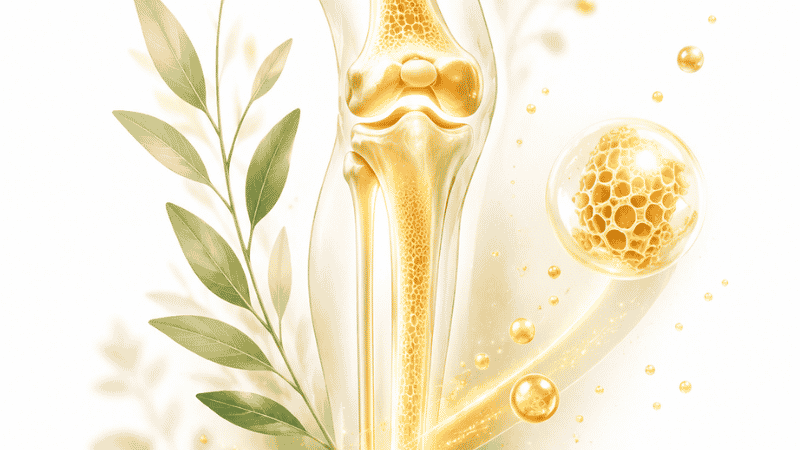
When calcium ends up in arteries, it contributes to arterial calcification and vascular stiffness — a process now recognized as a major factor in cardiovascular risk. This isn’t a theoretical concern. A phenomenon called the “calcium paradox” describes the clinical observation that low bone mineral density (too little calcium in bones) is often accompanied by higher rates of arterial calcification (too much calcium in arteries). The same calcium that should be in bones ends up in the wrong place.
Vitamin K2 is the nutrient that activates the proteins responsible for directing calcium correctly. This is not a vague or speculative relationship — it’s a specific molecular mechanism involving two well-characterized proteins: osteocalcin and Matrix Gla Protein.
How Vitamin D and K2 Work Together: The Two Key Proteins
Osteocalcin: Getting Calcium Into Bone
Osteocalcin is a protein produced by bone-building cells (osteoblasts). Its job is to bind calcium and incorporate it into the bone matrix. But osteocalcin only works when it’s been activated — and it requires vitamin K2 for that activation process, specifically through a chemical modification called carboxylation.
Here’s where the D3-K2 link becomes specific: vitamin D stimulates osteoblasts to produce more osteocalcin. More osteocalcin means more capacity to incorporate calcium into bone — in theory. But if K2 isn’t present in adequate amounts, that osteocalcin remains in its undercarboxylated (inactive) form. It can’t bind calcium effectively. Vitamin D increased your calcium absorption and increased osteocalcin production, but without K2, the system stalls.
Matrix Gla Protein: Keeping Calcium Out of Arteries
Matrix Gla Protein (MGP) is one of the most potent known inhibitors of vascular calcification — the process by which calcium deposits form in arterial walls. MGP is expressed in blood vessel walls and works by capturing calcium before it can be deposited in soft tissue. Like osteocalcin, MGP requires vitamin K2 for activation through carboxylation.
When K2 levels are insufficient, MGP exists primarily in its inactive, uncarboxylated form (ucMGP). Studies have found that elevated ucMGP levels — indicating K2 insufficiency — are associated with higher rates of arterial calcification and increased cardiovascular risk. Several cardiovascular outcome studies have found associations between K2 status and vascular health outcomes, though the evidence from intervention trials is still developing.
The practical implication: vitamin D3 supplementation increases the flux of calcium through your system. K2 is what ensures that calcium goes where you want it. The two proteins that handle this — osteocalcin for bone, MGP for arteries — both require K2 to function.
What Is Vitamin K2 — and How Is It Different from K1?
This is a point of genuine confusion that’s worth clarifying before going further.
Vitamin K is a family of fat-soluble compounds, not a single nutrient. The two main forms are:
Vitamin K1 (phylloquinone): Found abundantly in green leafy vegetables (kale, spinach, broccoli). K1’s primary role is in blood clotting — it’s the form involved in coagulation factor synthesis in the liver. Most people get enough K1 from diet if they eat vegetables. K1 has limited effect on the bone and vascular functions discussed above.
Vitamin K2 (menaquinones): Found primarily in animal products and fermented foods. K2 is the form that activates osteocalcin and MGP — the proteins involved in calcium direction for bone and cardiovascular health. K2 is where the D3-K2 synergy story lives. Most people do not get adequate K2 from typical Western diets.
This distinction matters because eating plenty of leafy greens — which you’re correctly told is healthy — doesn’t substitute for K2. K1 and K2 have largely separate functions. Getting your K1 from vegetables is great; it doesn’t address the calcium-direction function that K2 handles.
MK-7 vs. MK-4: Which Form of K2 Should You Choose?
Vitamin K2 exists in several subtypes called menaquinones (MK-n). The two forms most relevant to supplementation are MK-4 and MK-7.
MK-4 (menaquinone-4): Found in animal products like egg yolks, butter, and some cheeses. Has a very short half-life in the bloodstream — approximately 1–2 hours. Effective in studies, but requires multiple high doses per day (typically 1,500 mcg/day in therapeutic research) to maintain active blood levels. At typical supplemental doses (45–100 mcg), MK-4 may not maintain meaningful levels throughout the day.
MK-7 (menaquinone-7): Found naturally in natto (fermented soybeans) and, to a lesser extent, in certain aged cheeses. Has a significantly longer half-life — approximately 72 hours — meaning once-daily dosing maintains consistent blood levels. Research in postmenopausal women has shown MK-7 at 180 mcg/day to be effective for reducing undercarboxylated osteocalcin (the inactive form) and supporting bone mineral density.
The practical conclusion: For a once-daily supplement, MK-7 is the more effective and better-studied choice. The 72-hour half-life means you don’t need to time doses throughout the day or take high amounts to see an effect.
Recommended supplemental dose of MK-7: 90–200 mcg/day is the range most commonly used in research and clinical practice. Products combining D3 and K2 typically provide 90–120 mcg MK-7, which is appropriate for most healthy adults.
Vitamin K2 Foods: Where to Get It Naturally
Understanding dietary K2 helps put supplementation into context — and explains why deficiency is so common in Western populations.
Natto: The Exceptional Source
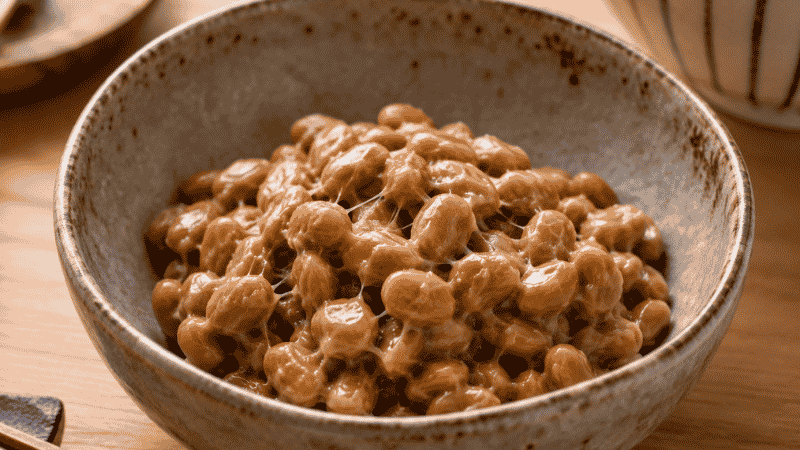
Natto is a traditional Japanese food made from fermented soybeans. It’s the richest dietary source of vitamin K2 by a significant margin. A single 100-gram serving of natto provides approximately 1,000 mcg of MK-7 — more than ten times the amount found in the next richest source.
Research comparing K2 status across populations has produced striking findings. Studies measuring serum MK-7 concentrations in postmenopausal women found levels of approximately 5.26 ng/mL in Japanese women in Tokyo (high natto consumption) versus 0.37 ng/mL in British women — a difference of over 14 times. This K2 disparity has been offered as one factor in the observed differences in hip fracture rates and cardiovascular calcification patterns between Japanese and Western populations.
Natto has a distinctive texture and flavor (sticky, pungent, and fermented) that takes some adjustment. For people who enjoy it or are open to trying it, regular consumption can meaningfully contribute to K2 intake without supplementation.
Other Dietary Sources of K2
Beyond natto, K2 content in foods is moderate and variable:
- Hard aged cheeses (Gouda, Edam, Brie): Contains MK-8 and MK-9, which are also biologically active, though less studied than MK-7
- Egg yolks: Contains MK-4; contributes modestly to K2 intake
- Butter and cream from grass-fed animals: Higher in MK-4 than grain-fed animal products
- Chicken liver: Contains MK-4 in meaningful amounts
- Certain fermented vegetables (limited): Sauerkraut and kimchi contain small amounts; much less than natto
The honest assessment: Unless you eat natto regularly or consume substantial amounts of high-quality aged cheese and animal products, Western diets typically provide limited K2. This is why K2 supplementation alongside D3 is increasingly discussed, particularly at higher vitamin D doses.
Vitamin D3 and K2 Supplement: What to Look For
If you’re supplementing vitamin D3 and want to pair it with K2, there are a few practical considerations for choosing a product.
Combined vs. separate supplements: Both approaches work. Combined D3+K2 supplements are convenient and ensure you remember both. Separate supplements offer more flexibility in dosing each independently, which may be useful if you want to optimize doses based on blood test results.
Form of K2: Look for MK-7, not MK-4, for once-daily supplementing. The label should specify which menaquinone form is used. MK-7 sourced from natto (sometimes labeled “natto extract” or “menaquinone from B. subtilis natto”) is the most common and well-studied form.
Dose of K2: 90–200 mcg of MK-7 is the range used in research. For general supplementation alongside D3, 100–120 mcg is a reasonable starting point.
Dose of D3: Depends on your baseline blood levels (see our dosage guide for details). Standard maintenance doses of 1,000–2,000 IU are appropriate for most people with sufficient vitamin D levels; deficiency correction typically requires more.
Fat-soluble formulation: Both D3 and K2 are fat-soluble. They absorb best when taken with a fat-containing meal. An oil-based softgel (olive oil, MCT oil, or similar base) improves absorption compared to dry powder capsules.
Third-party testing: Look for products with USP, NSF International, or Informed Sport certification, which verify that the contents match the label claim and that the product has been independently tested for contaminants.
Who Benefits Most from Taking D3 and K2 Together
The D3-K2 combination is particularly relevant for:
People taking higher doses of vitamin D3 (above 2,000 IU/day). Higher D3 doses increase calcium flux more significantly, making the directional function of K2 more important. Most practitioners who recommend D3 at 2,000–5,000 IU also recommend K2 alongside it.
Adults over 50, particularly women. Bone mineral density loss accelerates after menopause; arterial calcification risk increases with age. Both the osteocalcin (bone) and MGP (arterial) functions of K2 become more clinically relevant in this population.
People with cardiovascular risk factors. If vascular calcification is a specific concern — family history of cardiovascular disease, hypertension, or existing plaque — ensuring K2 adequacy is particularly relevant for the MGP-mediated protection against arterial calcium deposition.
People with osteoporosis or low bone density. The combined support for bone mineralization from D3 (calcium absorption) and K2 (calcium direction into bone via osteocalcin) is directly relevant to this condition. Several clinical trials in postmenopausal women have shown K2 supplementation improves bone mineral density and reduces fracture risk.
People with limited dietary K2 intake. If you don’t eat natto, aged European cheeses, or significant quantities of egg yolks from pasture-raised animals, your baseline K2 intake is likely low — particularly for MK-7.
Safety and Cautions
Both D3 and K2 are generally well tolerated at recommended doses for healthy adults.
Vitamin D3 safety: Vitamin D toxicity is rare at doses below 10,000 IU/day in healthy adults, but the NIH recommends staying at or below 4,000 IU/day without medical supervision. Blood monitoring is appropriate at higher doses or for people with conditions affecting vitamin D metabolism.
Vitamin K2 safety: K2 has an excellent safety profile with no established Tolerable Upper Intake Level, meaning toxicity from K2 supplementation has not been demonstrated at any commonly supplemented dose. The primary safety consideration is interaction with anticoagulant medications.
Critical caution — anticoagulant medications (warfarin/Coumadin): Vitamin K antagonizes the mechanism of warfarin. People taking warfarin or other vitamin K-dependent anticoagulants must not supplement K2 without explicit guidance from their prescribing physician. Even small changes in K2 intake can significantly affect anticoagulant dosing requirements. This is a non-negotiable medical consultation, not a general caution.
Vitamin K1 vs. K2 and anticoagulants: This caution applies to all forms of vitamin K, including K2. If you’re on anticoagulant therapy, consult your doctor before any changes to vitamin K intake.
When to Talk to a Doctor
For most healthy adults who aren’t on anticoagulant medications, D3 and K2 supplementation can be approached without urgent medical consultation. However, speak with a healthcare provider before starting if:
- You take warfarin, apixaban, rivaroxaban, or any other anticoagulant medication
- You have hyperparathyroidism or sarcoidosis (conditions that can increase calcium metabolism and complicate vitamin D supplementation)
- You have kidney stones or a history of hypercalcemia
- You’re pregnant or breastfeeding
- You’re taking medications that affect vitamin D or K metabolism (some anticonvulsants, long-term glucocorticoids)
- You’re considering doses of D3 above 4,000 IU/day — blood level monitoring becomes more important at higher doses

Frequently Asked Questions
Do I need to take K2 with vitamin D3? For most adults supplementing D3 at doses above 2,000 IU/day, pairing with K2 is a reasonable and increasingly recommended approach. At lower maintenance doses (400–1,000 IU), the urgency is less pronounced, but K2 is beneficial regardless given that most Western diets provide limited amounts. The combination supports both bone mineralization and the prevention of unwanted calcium deposition.
What is the best form of vitamin K2 to take with D3? MK-7 (menaquinone-7) is the preferred supplemental form. Its half-life of approximately 72 hours — compared to 1–2 hours for MK-4 — means once-daily dosing maintains consistent blood levels. A dose of 90–200 mcg of MK-7 daily is the range used in clinical research.
Can I get enough K2 from food without supplementing? If you eat natto regularly, possibly yes — a 100g serving provides approximately 1,000 mcg of MK-7. If natto isn’t part of your diet, the answer is likely no: aged cheeses and egg yolks provide some K2, but most Western diets fall significantly short of what research suggests is optimal. This is why K2 supplementation alongside D3 has become standard practice for many practitioners.
Does vitamin K2 conflict with any medications? The most important interaction is with vitamin K antagonist anticoagulants (warfarin/Coumadin). Vitamin K of any form — including K2 — directly affects how these medications work. If you take warfarin or similar drugs, do not supplement K2 without your doctor’s explicit guidance and monitoring. Other anticoagulants (apixaban, rivaroxaban) work differently and don’t interact with vitamin K in the same way, but discuss any supplementation with your prescribing physician.
How much K2 should I take with 5,000 IU of vitamin D3? At higher D3 doses (4,000–5,000 IU), most practitioners recommend 100–200 mcg of MK-7 K2 daily. The higher the D3 dose, the more calcium flux occurs, and the more important the calcium-directing function of K2 becomes. At 5,000 IU D3, medical supervision and periodic blood monitoring of both 25(OH)D and calcium levels is advisable.
Is vitamin K2 the same as vitamin K1? No — they have distinct functions. Vitamin K1 (found in leafy vegetables) is primarily involved in blood clotting. Vitamin K2 (found in fermented foods and animal products) activates the proteins responsible for calcium direction — osteocalcin for bone and MGP for arterial protection. Getting adequate K1 from vegetables does not substitute for K2.
The Bottom Line
Vitamin D and K2 are not simply complementary — they are mechanistically linked in a way that makes supplementing one without adequate amounts of the other potentially incomplete. Vitamin D3 increases your capacity to absorb calcium and stimulates production of the proteins that manage where calcium goes. Vitamin K2 activates those proteins. Without K2, the calcium-direction machinery doesn’t fully engage.
For most adults eating a typical Western diet without natto or substantial aged cheese, K2 from food is limited. If you’re supplementing D3 — particularly at doses above 2,000 IU — adding K2 in the MK-7 form (90–200 mcg daily) is a rational, well-supported approach.
The goal isn’t just to absorb more calcium. It’s to make sure that calcium ends up where you actually need it.
Want to understand how much vitamin D3 you should be taking — and how your blood test results translate to practical dosing decisions? How Much Vitamin D Should You Take Per Day? Dosage by Age and Group (C5)
New to vitamin D supplementation and not sure where to start? Vitamin D Deficiency Symptoms: How to Recognize the Signs and What to Do Next (C2)
References
- van Ballegooijen AJ, Pilz S, Tomaschitz A, Grübler MR, Verheyen N. The Synergistic Interplay between Vitamins D and K for Bone and Cardiovascular Health: A Narrative Review. International Journal of Endocrinology. 2017;2017:7454376. doi:10.1155/2017/7454376
- Maresz K. Proper Calcium Use: Vitamin K2 as a Promoter of Bone and Cardiovascular Health. Integrative Medicine (Encinitas). 2015;14(1):34-39.
- Fusaro M, Cianciolo G, Brandi ML, et al. Vitamin D and K as Important Partners in Calcium Homeostasis: A Narrative Review. Nutrients. 2023;15(7):1676. doi:10.3390/nu15071676
- Palermo A, D’Oria M, D’Angelo A, et al. Vitamin K2 in the Treatment of Osteoporosis: A Narrative Review. Nutrients. 2021;13(7):2194. doi:10.3390/nu13072194
- National Institutes of Health Office of Dietary Supplements. Vitamin K: Fact Sheet for Health Professionals. https://ods.od.nih.gov/factsheets/VitaminK-HealthProfessional/
- National Institutes of Health Office of Dietary Supplements. Vitamin D: Fact Sheet for Health Professionals. Updated August 2023. https://ods.od.nih.gov/factsheets/VitaminD-HealthProfessional/